Family Matters
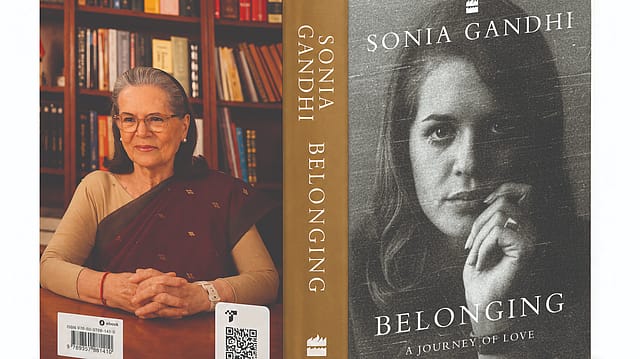
The lucidity of memory replaces the certainty of history in literature’s finest moments. That is why the tension between creative control and historical obligation cannot be missed in a good autobiography, the one in which the text of a life lived becomes one with the textures of the world that sustained it. Remembering is not redemption, but a passage through the labyrinths of the mind is catharsis for the traveller who believes their story is worthy of our validation. A biographer is a chronicler who has the luxury of sparing the conscience and the advantage of being the adjudicator of someone else’s life; a memoirist, ultimately the most authentic teller of one’s own story, has the freedom to censor as well as rewrite, all in the privacy of modulated reality.
The life of Sonia Gandhi has added sufficient dramatic tension to the politics of India. It began as a romance: the starry-eyed middle-class girl from the provincial town of Orbassano in Italy falling in love with the prince from the East. It stabilised as destiny’s daughter-in-law gaining access to the private person behind the public persona of the country’s most powerful woman who could play benevolent Mother India and vengeful goddess with equal élan. It stayed in the shadow as the wife who was reluctant to see her husband become the youngest prime minister who would dream of taking India to the 21st century. It overcame two assassinations that shook India, first of her mother-in-law at the peak of her power and paranoia, and then of her husband who was thriving in India’s affection and admiration for the charmer-moderniser. It exuded the aura of renunciation in a Central Hall melodrama in which a dutiful courtier was nominated as prime minister. It soared as the nation’s most powerful woman without being in power, the extra-constitutional arbiter of Lutyens’ Delhi, and Our Lady of Deliverance for the wailing legion of India’s oldest political tradition desperately clinging to a surname. All the while it alternated between the Sphinx and the Saviour. And currently it is waiting to see how long it will take for the son to restore the political trust a Dynasty usurped by the outsider has lost.
Belonging: A Journey of Love is this life in its unabridged version, or that is what memoirs intend to be. The narrative span is marked, intentionally or otherwise, by the front cover, where a black-and-white Sonia in her youthful allure stares at the camera, and the back cover, which has a colour photograph of the present-day Sonia in all her elegance with a book-lined backdrop. Between them, it is a story progressing from initiation to consolidation, consolation to control. The initiation part, the passage from the campuses of Cambridge to the private space of power, is more revelatory than restrained, and where we see the demure Sonia, in her triple-role as wife, daughter-in-law and mother, as a supporting character in a political thriller, incorporating in its sweep absolute power and sudden falls, inconsolable loss and miraculous comebacks. Navigating cultural traps and suffering identity attacks, she played the parts, but the story was never fully told. Belonging, as memoirs do, is about reclaiming one’s story from its retellings by others.
And it succeeds when the political is the context and she is the overwhelming text, which she is till the pundit with an amateur pamphleteer’s skill steps in, and when the personal becomes an aside, like the perfunctory mentions of her few frosty meetings with Modi. The last pages of this memoir are grievances and repudiations, as if the decline of the Dynasty is not an inevitability in a culturally recalibrated India but a subversion of democracy by the rightwing, powered by RSS. “What will be the long-term repercussions of the BJP’s divisive rule? Authoritarian regimes respond to popular resistance with increased repression, as India is also undergoing. But this regime is not here to stay,” she concludes, and she portrays herself as the last secular optimist, more Indian than her political tormentors. This only adds a whiff of bitterness to a story that has been told otherwise with a sense of detachment: the first person could have been turned into the third person with a simple computer command without losing the narrative effect.
A fairy tale that started in a café in Cambridge, you realise after turning the last page of Belonging, retains its silences and pauses. Who is struggling for words here, memory or history?