What Kerala and Punjab tell us about India’s Development?
Can a state become richer without creating enough jobs? The question lies at the heart of one of the most remarkable economic stories in post reform India.
Three decades ago, few people would have imagined that Kerala would overtake Punjab in per capita income. Punjab was the richest major state in the country. The Green Revolution had transformed it into the agricultural powerhouse of India and a symbol of post-Independence economic success. Kerala, by contrast, was celebrated for its achievements in education, health and social development rather than for rapid economic growth. In the early 1990s, Punjab ranked first among the major states in per capita income, while Kerala ranked eighth.
Today, the picture is very different. Kerala now reports a per capita income of about Rs. 1.9 lakh compared with about Rs. 1.6 lakh in Punjab. Kerala also has the larger economy, producing nearly Rs. 6.9 lakh crore of output compared with about Rs. 5.3 lakh crore in Punjab.
At first sight, the conclusion appears obvious. Kerala appears to have found the better path to development. The story, however, is more complicated. Despite becoming richer, Kerala continues to report higher unemployment than Punjab. The state that overtook Punjab still struggles to create enough jobs for many of its educated young people. The comparison therefore raises a much larger question than why Kerala moved ahead of Punjab.

Zeroing In on ECI
09 Oct 2026 - Vol 05 | Issue 41
Constitutional legitimacy versus political opportunism
How should economic success be judged? Should it be judged by higher incomes or by the ability to create enough good jobs? The experiences of Kerala and Punjab suggest that neither answer is sufficient on its own.
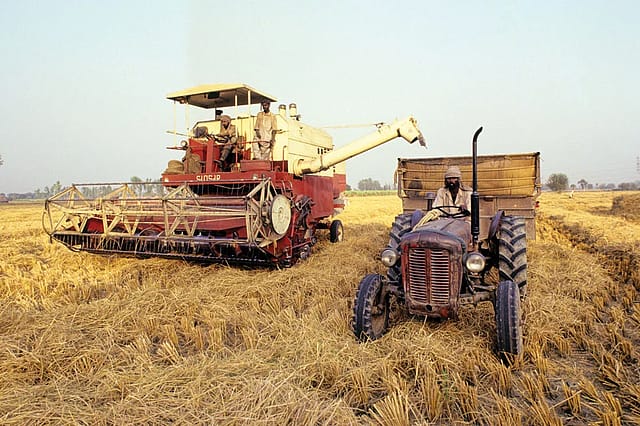
Punjab and Kerala began with different strengths and made different choices. Punjab built its prosperity on agriculture. Rising farm productivity generated higher incomes, transformed rural life and made the state central to food security in India. Agriculture remained the backbone of the economy long after economic reforms began. Manufacturing expanded gradually, but never became the principal driver of growth. Services grew steadily, although much later than in several other states.
Kerala followed a different path. Its greatest investment was in people. Better education and health created a skilled workforce. Migration and the money sent home by migrant workers strengthened household incomes and expanded demand for services. From the 1990s onwards, services became the principal source of growth. Workers also moved steadily away from agriculture into better paying activities.
The results unfolded gradually. Punjab grew faster during the 1980s. During the following decade, Kerala steadily closed the gap. By the early 2000s, Kerala had overtaken Punjab in per capita income. The gap has widened ever since. This transformation was not driven by one reform or one successful government. It was the outcome of decisions made over several decades in education, health, agriculture and economic policy.
Most discussions stop at this point. They should not. Kerala overtaking Punjab is an important milestone. Yet it is only the beginning of the story. The real question is what happened after Kerala became richer. If higher income alone measured development, Kerala would clearly be the winner. But development is about much more than the size of an economy. It is about whether growth creates opportunities for people.
This is where the comparison becomes particularly revealing. In 2023 to 2024, the unemployment rate in Kerala was about 11.5 per cent compared with about 8 per cent in Punjab. At the same time, the average weekly wage was nearly Rs. 4800 in Kerala but only about Rs. 3200 in Punjab. The contrast is striking. Kerala became richer. Punjab kept more people in work. Neither alone defines economic success.
Those three facts challenge the way economic success is often understood. Income, jobs and wages do not always move together. A state can become richer without creating enough employment. Another can provide work for more people but struggle to raise incomes at the same pace. Judging development through a single indicator therefore tells only part of the story.
Why did this happen? The answer lies in the different paths taken by the two states. Kerala invested above all in its people. Investment in education and health created a skilled workforce and supported the rapid expansion of services. These changes helped raise productivity, incomes and wages.
They also revealed an important limitation. Many of the fastest growing service industries reward skills but do not absorb workers on the scale once associated with manufacturing. Economic growth therefore outpaced job creation. Many educated young people continue to search for suitable work despite living in one of the country's most prosperous states.
Punjab illustrates a different challenge. Agriculture continues to employ a large share of the workforce. This has helped keep unemployment relatively low. Yet many workers remain in activities where incomes grow slowly. The shiftt into better paying occupations has therefore been more gradual, limiting the pace of income growth.
Neither state offers a complete answer. Together, they highlight one of the most important development questions facing India today. As India enters the next stage of development, the experiences of Kerala and Punjab become increasingly relevant.
Agriculture continues to employ millions of workers even as its contribution to national income declines. Services have become the largest contributor to economic growth, yet many of the fastest growing service industries do not generate employment on the scale required by a young and expanding workforce. Manufacturing therefore remains an essential part of India's future, not because it is inherently superior to services but because it can create productive employment for large numbers of workers.
The debate is often framed as a choice between manufacturing and services. The experiences of Kerala and Punjab suggest that this is the wrong debate. The real challenge is to build an economy that generates higher incomes, rising wages and enough good jobs. Focusing on one while neglecting the others will produce an incomplete picture of development.
This requires a balanced approach. Agriculture must become more productive and resilient. Manufacturing deserves renewed attention, especially industries capable of creating employment at scale. Services will remain an important driver of growth, supported by continued investment in education, skills, innovation and digital infrastructure. These sectors should complement one another rather than compete for attention.
The broader lesson extends well beyond Kerala and Punjab. Development is not simply about becoming richer. Neither is it simply about creating more jobs. It is about creating an economy where rising incomes, productive employment and better wages reinforce one another. Kerala reminds us that higher incomes alone do not guarantee enough employment. Punjab reminds us that employment without sustained improvements in productivity eventually limits prosperity.
India does not need another debate about growth versus jobs. It needs a development strategy that delivers both. That may be the most important lesson that Kerala and Punjab have to offer.