Courage Of A CEO: When The Buck Stops At The Top
As a business journalist, I have observed a common pattern among most CEOs in the corporate world. When the going is good and you write favourable stories about the company and its CEO, you are on his speed dial. But the moment the shit hits the fan, the CEO avoids you like the plague. You become persona non grata.
CEOs of companies caught in the eye of a storm usually panic and clam up. They switch off their phones and go under the radar. Even their corporate communications heads dodge you.
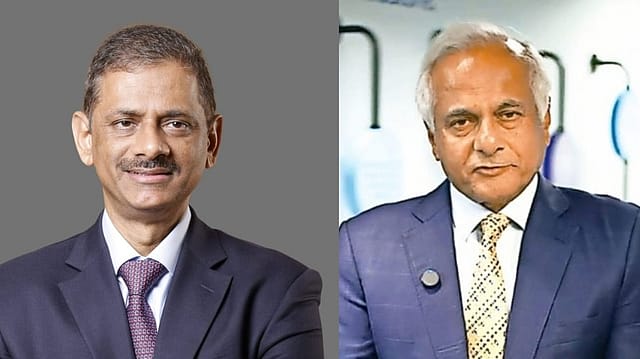
But there are impressive exceptions, like Vikram Singh Mehta of IndiGo and V Vaidyanathan of IDFC FIRST Bank. Both, in their own ways, demonstrated the courage to confront a crisis head-on. Result: They managed the damage effectively and avoided a prolonged hostile media backlash.

Zeroing In on ECI
09 Oct 2026 - Vol 05 | Issue 41
Constitutional legitimacy versus political opportunism
That's what leadership is all about — leading from the front and having the courage to say sorry.
To put the larger point I am making into perspective, let me elaborate. Recall how nearly 2.6 lakh IndiGo passengers across the country were stranded at various airports between December 2 and 11, 2025, when the low-cost carrier cumulatively cancelled 4,290 flights, leaving passengers scrambling for answers.
The massive disruption was caused by a severe shortage of available pilots following the implementation of new Flight Duty Time Limitation rules.
The incident dented Brand IndiGo.
Vikram Singh Mehta, a veteran corporate leader who had been serving as an Independent Non-Executive Director on the company's board, and moved to Chairman’s post on May 28, 2025 publicly acknowledged the airline's failure.
In a video message on social media, he said: “Thousands of our passengers were left stranded. Many missed important family events, business commitments, medical appointments and international connections. Baggage was delayed or misdirected. I know how much distress this has caused. I want to say very simply and very clearly, we are sorry.”
Such public admissions of failure by corporate leaders are rare in India. They require guts and conviction.
Likewise, one must give full credit to the 58-year-old V Vaidyanathan, MD & CEO of IDFC FIRST Bank, where a major fraud was detected. In an unusual move, instead of dodging the media, he took the bull by the horns the moment he learnt that a nearly Rs 590-crore fraud had been detected at one of the bank's branches in Chandigarh.
Vaidyanathan — popularly known as Vaidya — acted swiftly. The bank alerted the regulator, the RBI, informed the stock exchanges, filed an FIR with the police and appointed forensic auditor KPMG to investigate how the fraud had occurred.
And before journalists could even smell blood, the bank went public with the matter. On Sunday, February 22, 2026, Vaidyanathan held a conference call with investors and shareholders. This proactive move helped the bank put its version of events on record.
On Monday morning (February 23, 2026), business newspapers and dailies carried the IDFC FIRST Bank fraud story, largely on their inside pages, except Mint, which ran a two-column story below the fold.
There were no screaming headlines. By proactively communicating the facts, he managed to contain the reputational damage to a considerable extent.
To my mind, this was a masterstroke by Vaidya.
Somebody rightly said that anybody can lead a company in good times. But the real test for a CEO begins when things go sideways. Does the CEO go under the radar or take cover behind lawyers, PR executives and carefully worded press releases? Or does he simply step forward and say: “I am sorry. I will fix it”?
Here, one is reminded of the famous Chicago Tylenol case of 1982, which has become a guiding light for CEOs around the world. Johnson & Johnson's leadership acted swiftly when it learnt that seven people had died after consuming Tylenol capsules laced with potassium cyanide.
The incident caused nationwide panic. J&J recalled approximately 31 million bottles of Tylenol and halted production, even though the tampering had occurred at the retail level.
The company won widespread praise for its handling of the crisis and subsequently regained much of its lost market share.
Back home, two examples from the FMCG sector come to mind. Both created a national furore.
In October 2003, the Maharashtra FDA seized stocks of Cadbury chocolates after customers reported finding worms in Dairy Milk bars. This triggered a massive media backlash and a sharp drop in sales.
Initially, the company maintained that the problem arose largely from poor storage conditions at the retail level. But soon, Managing Director Bharat Puri realised the futility of merely defending the company.
He and his team changed tack and launched Project Vishwas, which involved improving the packaging and introducing heat-sealed wrappers. To restore consumer confidence, they roped in actor Amitabh Bachchan as brand ambassador.
In the advertisements, Big B personally vouched for the brand's quality improvements and reassured families that Cadbury chocolates were safe.
The campaign helped restore consumer confidence, and sales bounced back to pre-crisis levels within a few months.
Puri later summed up the philosophy beautifully: “It's not about falling down…it's about how you get up.” Indeed.
Another popular product that made headlines for days was our favourite 2-minute Maggi noodles.
In 2015, the Food Safety and Standards Authority of India (FSSAI) ordered a nationwide recall of Nestlé's Maggi instant noodles following allegations that laboratory tests had detected lead levels exceeding permissible limits. Regulators also raised objections concerning monosodium glutamate (MSG) and the allegedly misleading “No added MSG” labelling.
As the crisis deepened, Nestlé's global CEO Paul Bulcke flew to India. The company announced the withdrawal of Maggi noodles from retail shelves. Reportedly, it destroyed over 35,000 tonnes of Maggi noodles during the recall. That was June 2015.
Like Cadbury, Nestlé too faced a collapse in consumer confidence. But the multinational did not give up without a fight.
Nestlé India challenged the FSSAI ban in the Bombay High Court. Following the court's intervention, fresh tests were conducted at accredited laboratories. The new samples met permissible lead limits, paving the way for Maggi's return to retail shelves in November 2015.
It was a nightmare lasting several months, with sales taking a severe beating and the brand's image badly sullied. But by confronting the problem head-on, the company gradually won back its consumers.
The Maggi episode demonstrates how even a market leader can lose its dominant position and credibility almost overnight.
There are several such examples in India. But let me look beyond India's shores and draw lessons from global corporate leaders who have taken the bull by the horns.
Toyota: In 2010, during Toyota's massive safety-recall crisis, promoter and president Akio Toyoda personally stepped into the spotlight. He established a Special Committee for Global Quality, with himself as chairman, and publicly addressed the company's failures. He subjected himself to questioning and placed himself at the centre of the corrective exercise rather than delegating responsibility to his managers
Samsung: This is another striking example. In 2016, Samsung's Galaxy Note7 smartphones triggered a major crisis following reports of batteries overheating and catching fire.
Initially, Samsung issued a global recall. But when replacement devices also developed problems, the company did the unthinkable — it discontinued the Galaxy Note7 altogether.
Imagine the courage required to kill a flagship product into which the company had invested enormous resources!
Samsung also appointed independent organisations, including UL, Exponent and TÜV Rheinland, to investigate the problem. Once the findings were ready, its mobile chief, DJ Koh, publicly presented the results and apologised.
That certainly called for courage. Such transparency can go a long way towards rebuilding consumer confidence.
Whenever a crisis breaks out, the standard corporate response is predictable: “We regret the inconvenience”; “There were unforeseen circumstances”; “Certain processes failed”; or “We are reviewing the matter.”
Many CEOs fear that an apology will destroy stakeholders' confidence. Quite often, the opposite is true. A credible apology can help restore confidence. But there is a caveat: an apology without corrective action can become counterproductive.
It takes courage to publicly own failure.
Corporate courage, therefore, takes several forms:
· The courage to say, “I am sorry.”
· The courage to admit, “We got it wrong.”
· The courage to declare, “We will bear the financial loss.”
· The courage to recall or discontinue a profitable product.
· The courage to appoint an independent investigator.
· And, finally, the courage to say, “The buck stops with me.”
The last phrase was popularised by the U.S. President Harry S Truman. He famously kept a sign on his Oval Office desk that read: “The Buck Stops Here.” The message was simple: Ultimate responsibility rests with the person at the top. It cannot be passed on to somebody else.
In good times, if a CEO happily accepts the bouquets, then in bad times, he should be equally willing to face the brickbats.
After all, the true measure of a CEO is not how he celebrates success, but how he confronts failure.