Why Weight-Loss Drugs Could Change Your Next Round of Beer
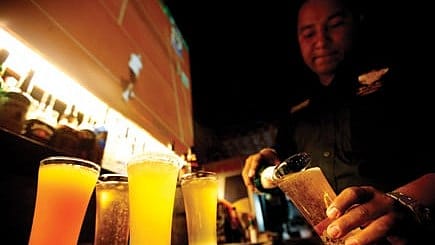
Your friends want another round. You are happy to stay but you simply don’t fancy another pint.
For a pub, that small distinction matters. The customer is still at the table. The next drink never reaches it.
That possibility is now exercising one of the world’s biggest brewers. Heineken has advised British hospitality businesses to adapt to customers using GLP-1 medicines, according to a presentation seen by Reuters. Its suggestions include half-pints, low- and no-alcohol drinks, and drinks paired with small plates.
The connection sounds unexpected. Why would medicines associated with diabetes and weight management change a beer order? The answer begins with appetite. It may extend to the desire for alcohol itself.
FIRST, WHAT ARE GLP-1 MEDICINES?
GLP-1 stands for glucagon-like peptide-1, a hormone involved in regulating blood sugar and appetite.
Medicines acting on its receptor mimic some of those signals. They can reduce hunger, increase feelings of fullness and slow stomach emptying. Semaglutide, used in Ozempic and Wegovy, belongs to this group.
Losing Memory
16 Oct 2026 - Vol 05 | Issue 42
The making of a medical and social emergency
Tirzepatide, sold as Mounjaro in India, acts on both GLP-1 and another hormone pathway called GIP. These medicines are often discussed together, although they are not identical. Their effects can change how much someone wants to eat. Researchers are also investigating how they influence alcohol consumption.
WHY MIGHT SOMEONE WANT LESS BEER?
There are several possible reasons. Feeling fuller may make another large drink less appealing. Some users report discomfort or feeling unwell when drinking. Others describe a quieter desire for alcohol: they could order another drink, but no longer particularly want one.
Those experiences need not have the same explanation.
The distinction is between deciding to resist something you want and finding that you want it less. Scientists are studying whether GLP-1 medicines affect the brain processes involved in alcohol craving and reward. That research offers a possible explanation beyond beer simply taking up space in the stomach.
IS THERE CLINICAL EVIDENCE?
Yes, although results from people with alcohol use disorder should be distinguished from everyday social drinking.
A 2025 randomised trial involving 48 adults with alcohol use disorder found that low-dose semaglutide reduced craving and some measures of consumption. It did not reduce every drinking measure, supporting further investigation rather than a single sweeping conclusion.
A subsequent 26-week trial studied people with alcohol use disorder and obesity. Participants received semaglutide or a placebo alongside cognitive behavioural therapy. The semaglutide group experienced a greater reduction in heavy-drinking days.
That is an important treatment-research development. It does not tell us exactly how much a typical pub customer will drink, or establish that every medicine in this broad category produces the same effect. Nor should these findings be read as instructions to self-medicate for alcohol problems.
WHAT IS HAPPENING OUTSIDE THE LABORATORY?
American household spending provides one indication of changing behaviour.
Reuters reports that Circana tracked households with a GLP-1 user between 2024 and 2026. After two years, those households spent about 7% less per month on alcohol than households without a user, including approximately 13.5% less on beer.
Spending is not the same as the quantity consumed: prices and the products selected also influence the bill. But it gives businesses another way to observe changes beyond individual anecdotes.
In Britain, Heineken is already translating the emerging pattern into advice about serving sizes and menus.
These are different pieces of the story: clinical research examines drinking outcomes; household data tracks purchases; hospitality businesses consider how to serve changing preferences.
WHY DOES ONE FEWER ROUND MATTER SO MUCH?
Consider a hypothetical group of four friends.
Normally, each buys three drinks over an evening. That produces twelve drinks. If each buys two instead, the table orders eight.
The friends may spend just as long catching up. The pub still provides the room, staff, heating, cleaning and atmosphere. Yet drink orders from that table fall by a third.
This is illustrative arithmetic, not a forecast of the medicines’ effect.
It explains why a pub can remain sociable and appear busy while earning less from a familiar occasion. Customer visits and customer spending need not move together. The commercial question becomes: what would these guests enjoy ordering now?
WHY OFFER HALF-PINTS OR ALCOHOL-FREE BEER?
Because different preferences require different choices.
A half-pint offers a smaller serving. A lower-alcohol beer changes the strength. An alcohol-free option provides another way to participate in the occasion.
Someone may want less liquid, less alcohol, a different taste or simply something to sip while friends continue drinking.
These options do not automatically replace a full-sized beer sale. A smaller serving still requires glassware and service; an alcohol-free drink does not necessarily answer a reduced appetite for beverages.
Their purpose is to give customers reasons to keep choosing the venue. A pub is selling somewhere to spend the evening as well as what goes into the glass.
COULD THE FOOD MENU CHANGE TOO?
Yes. Heineken’s advice includes pairing drinks with small plates.
The logic is easy to follow. A guest with a smaller appetite may prefer a modest portion to a substantial meal. Several appropriately sized choices can make a menu easier to navigate.
That could influence portion sizes, bundles and how a venue presents an evening’s food and drinks.
It does not mean every restaurant should shrink every plate. Customers have different needs, and smaller portions must still feel worth buying. The opportunity is to accommodate a changed appetite without making the guest feel that going out has become complicated.
IS BEER THE ONLY INDUSTRY ADAPTING?
No. The effects extend across consumer spending.
Reuters has reported growing interest in protein-enriched products as weight-loss-drug users reconsider their diets. Its reporting also describes increased demand for clothing alterations as customers’ existing wardrobes stop fitting.
That gives the story a wider significance.
A medicine can change more than a prescription bill. It can influence the size of a meal, the contents of a shopping basket, the fit of a jacket and the number of drinks ordered at dinner.
Businesses encounter those changes in different places. A tailor may receive more work while a pub receives fewer repeat orders.
WHERE DOES INDIA FIT IN?
The medicines are already here. Eli Lilly launched Mounjaro in India in March 2025. Novo Nordisk introduced Wegovy in June that year.
The market has subsequently expanded to include generic semaglutide products. Reuters reported on October 23 that Dr Reddy’s had added two brands to its portfolio, illustrating the growing range of offerings.
That establishes an Indian connection through access to treatment.
What the evidence reviewed here does not establish is a measurable nationwide effect on Indian beer sales. Britain’s pub experience cannot simply be transferred to India, where drinking occasions, purchasing patterns and treatment uptake differ.
HOW COULD AN INDIAN RESTAURANT NOTICE THE CHANGE?
Potentially through the order rather than an announcement.
Imagine a customer at a Bengaluru brewery choosing a smaller pour, or someone at a Delhi restaurant remaining for dinner while declining another drink. A Mumbai venue might find interest in smaller plates alongside its usual menu.
These are possible scenarios, not reported findings.
A venue observing them would also need to remember that people change their orders for many reasons: health preferences, budgets, driving plans or simply taste.
The useful response is a menu with appealing choices. Staff do not need to know someone’s medical history to offer a smaller serving or an alcohol-free drink.
DOES THIS MEAN THE END OF THE PUB ROUND?
It points to a possible change in its rhythm.
People may continue to value the conversation, music and company while wanting fewer drinks. For hospitality businesses, the task is to make that evening work for the guest and the venue.
The scale of the effect will depend on how widely medicines are used, how long people remain on treatment and how their preferences evolve.
But the question Heineken has put before British pubs is already relevant well beyond Britain.
When the customer still wants a night out but wants less to drink, what should the next round look like?