Anthropic’s $83 IPO: How One Buyer Made 7% and Another Lost 20%
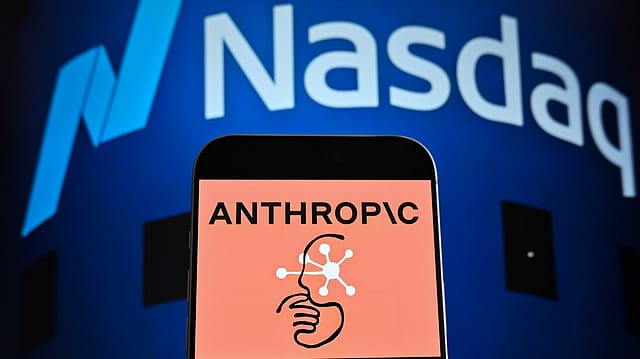
Two investors could have bought 100 shares each in Anthropic on Thursday, November 19, sold them at the same price on Friday and come away with entirely different stories about the biggest flotation in history. One would have made $591. The other would have lost $2,259. The difference was whether they could get in before the bell.
The first investor received an allotment at the IPO price of $83 and paid $8,300. The second bought when Anthropic began trading on Nasdaq at $111.50 and paid $11,150. By Thursday’s close, both holdings were worth $9,717. The headlines reported a 17% opening-day gain. The second investor, reading those headlines with the shares still in their account, was already down nearly 13%.

The Wealth Issue 2026
06 Nov 2026 - Vol 05 | Issue 45
Portraits of Dreamers and Doers under 35
Friday took another $826 off each holding. Anthropic finished at $88.91, leaving both investors with $8,891 before fees and taxes. The first had earned 7.1%. The second had lost 20.3%. More than half the opening buyer’s loss had happened on the day the IPO was being celebrated as a triumph.
So, what went wrong after the blockbuster listing?
For Anthropic as a fundraiser, remarkably little. It had sold its shares. Friday’s sellers could cut the value of the shares in their own accounts; they could not take Thursday’s money back from the company.
For Wall Street, however, there was an uncomfortable discovery. Investors had been eager to own the maker of Claude at $83. That said rather less than people had imagined about how many wanted to own it at $111.50. And by Friday, a similar dispute over price was running through almost every business involved in getting an AI answer onto a screen.
THE SELL-OFF WAS OLDER THAN THE STOCK
Anthropic was two trading days old as a public company. The market decline into which it had listed was already weeks old. The S&P 500 had peaked on October 6. By Friday’s close, it had fallen more than 10% from that high, the conventional definition of a correction. Friday itself was its seventh consecutive losing session. An IPO that took place on Thursday makes a poor explanation for a losing streak that began the previous week.
There had been several changes in the price investors put on risk. Reuters traced an acceleration in the sell-off to October, when persistent inflation revived the prospect of further interest-rate rises.

That matters particularly to a company promising large profits several years from now: the higher the return available elsewhere in the meantime, the less an investor will pay today for those future dollars. November’s US election added uncertainty over the political reception for new data centres. Nvidia had troubles of its own. Each development landed in a market where many investors were already counting on much the same set of companies to keep spending.
Friday’s closing numbers show how unevenly the blow fell. The Dow Jones Industrial Average lost 1.9%, the S&P 500 fell 3.7% and the Nasdaq Composite dropped 5.3%. The Philadelphia Semiconductor Index fell roughly 11%. The Nasdaq lost about a tenth of its value over the week and went into the red for 2026. Someone who owned chipmakers had a substantially worse Friday than someone who merely owned American shares.
Anthropic’s debut briefly offered the market a reason to hope. Here, at last, was a listed company selling access to the technology itself. Investors no longer had to buy a chipmaker, a cloud provider or a company with a large advertising business to get exposure to a frontier AI developer.
The opening trade showed what that distinction was worth to the keenest buyers. By the close, investors were asking what it was worth once those buyers had their shares.
THE NUMBER BURIED IN ANTHROPIC’S PROSPECTUS
The case for buying Anthropic begins with an impressive fact. Its quarterly revenue reached $16.96 billion, up 47% from the preceding quarter. That is money earned in a quarter, rather than an annual sales projection built by multiplying a particularly good month by 12. Customers were spending heavily on the company’s products before the first share ever traded. Friday’s closing price supplied no evidence that they had stopped.
The case for asking harder questions appears in the same company’s paperwork. Anthropic disclosed roughly $900.9 billion in aggregate purchase commitments and lease agreements, substantially all related to computing capacity and infrastructure. The figure includes short-term arrangements and leases that had yet to begin. It is neither a current loss nor a $900 billion loan due for repayment. It measures how much future spending the company had already committed to across agreements running over many years.
Why commit so far ahead? Because a customer can decide to use more Claude considerably faster than somebody can finance, equip and power another data centre. If Anthropic waits for a paying customer before ordering the capacity to serve them, the customer can go elsewhere. If it orders the capacity first, the cost can outlast the customer’s enthusiasm.
At the smaller end of its life as a start-up, the urgent question was whether enough people would want what it had built. At its IPO valuation, the question becomes how accurately it can forecast what those people will want years from now, and at what price.
There is already a useful test of that bargain. Reuters reported that Anthropic incurred $5 billion in additional computing costs during the quarter and generated less revenue per dollar of compute than in the preceding quarter.
One quarter cannot establish a trend. It does establish why revenue growth alone is an inadequate measure of success. A customer can use Claude more, pay Anthropic more and still leave shareholders with less of each additional dollar if the cost of serving that customer rises faster.
Nor did investors discover the commitments between Thursday evening and Friday morning. They were in the prospectus. The information was available to the buyer who paid $83 and the buyer who paid $111.50. What the second buyer had done, in effect, was pay a 34% premium for the same revenue, the same contracts and the same uncertainty over future profits. It took no deterioration in Claude’s abilities for that to become an expensive decision.
NVIDIA FELL HARDER. LOOK AT WHAT ITS CUSTOMER WAS BUYING
If Friday had simply been a vote against Claude, Nvidia should be difficult to explain. Its shares fell about 14% on the day and 23% over the week. It had a specific piece of bad news to absorb: Reuters reported that the US Securities and Exchange Commission was examining its accounting practices. That was a reported investigation, not a finding of wrongdoing. For shareholders in a company whose sales are watched as a measure of the entire AI boom, the distinction is important. So is the uncertainty an inquiry introduces.
Yet on the very day Nvidia plunged, two financial firms announced an enormous vote of confidence in demand for its equipment. Apollo and Goldman Sachs had priced approximately $44 billion of debt to finance the acquisition of Nvidia graphics processors and related equipment for SpaceX. Demand was strong enough for the financing to be increased. One senior tranche, worth $25.17 billion and maturing in April 2033, was priced to yield 8.259%, according to Reuters.
That financing tells us more about the week than the phrase AI bubble. An order on this scale is welcome business for an equipment seller. For the operation putting the chips to work, it comes with a price that can be read to three decimal places. The equipment must be installed, put to use and made to earn money while the financing has years left to run. A bond investor can be pleased with the yield and the security on offer while a shareholder worries about what will be left after the bills have been paid. Both can believe the chips will work.
SpaceX shares fell 7.7%. Tesla lost 7.6%. Those two moves are close enough to tempt a headline about Elon Musk and quite different enough to require care. The chip financing was for SpaceX. It would be wrong to explain the fall in Tesla by assigning it another company’s borrowing. What the two prices establish is that investors marked down both companies in a broad retreat from risk. Only one had just been named in a $44 billion GPU financing.
FROM AMD TO APPLE, THE DAMAGE HAD A PATTERN
The hardest-hit American technology stocks were clustered around the equipment rack. AMD lost about 13%, Micron more than 13%, Arm about 14% and Broadcom about 12%. These businesses sell different things: processors, memory, chip designs and networking or custom silicon. What connects them is the spending decision of the customer building out computing capacity. Delay a large installation and several suppliers can feel it, even when each has delivered perfectly good technology. The semiconductor index’s roughly 11% fall puts the scale in perspective. Anthropic, down 8.5%, actually fared better on Friday than the chip sector did as a group.
The large technology platforms also fell, though by strikingly different amounts. Meta dropped 5.9%, Amazon 4.1%, Microsoft 2.8%, Alphabet 2.7% and Apple 1.9%. A reader told merely that Big Tech tanked would miss the difference between losing roughly one dollar in seven on Nvidia and less than one in fifty on Apple. The market was selling across the sector, but it reserved its steepest markdowns for businesses whose valuations were particularly exposed to the pace of the buildout.
Amazon and Alphabet occupy a particularly interesting position. Their cloud businesses stand to earn money by supplying Anthropic with computing capacity. They are also among the strategic partners on which Anthropic has relied to finance its expansion. From the point of view of a cloud provider, a long-term capacity agreement is evidence of demand. From the AI developer’s side of the agreement, it is an obligation to spend. From an investor’s point of view, counting both as independent endorsements of the boom risks counting the same deal twice.
WHY A CLAUDE STORY REACHED A JAPANESE CABLE MAKER
By the time Wall Street opened on Friday, Asian investors had already spent a session selling the companies that make the physical parts of the AI boom. South Korea’s Kospi and Japan’s Nikkei 225 fell about 5% apiece. Taiwan’s market dropped roughly 6%. The timing rules out one easy explanation: Tokyo and Taipei could not have been responding to Anthropic’s Friday closing price in New York. They were responding to a retreat already under way.
Consider the range of names caught in it. In Japan, Kioxia, a memory manufacturer, fell 11.7%. Fujikura, whose products include optical fibre and cables, lost 12.2%. Chip-testing equipment maker Advantest dropped 10.3%, and Tokyo Electron, which supplies semiconductor production equipment, also traded sharply lower. A bet that began for many investors with the popularity of an American chatbot had travelled all the way down to the companies testing its chips and connecting its machines.
In South Korea, the selling reached SK Hynix and Samsung Electronics. The separately listed components business Samsung Electro-Mechanics fell 12.5%. In Taiwan, chip foundry TSMC lost about 5%, while power and electronics supplier Delta Electronics fell by the 10% daily limit. Foxconn and MediaTek were also sharply lower during the session. By Friday, the chairman of the Taiwan Stock Exchange was publicly reassuring investors about the operation of the market.
Europe showed the distinction between a national stock index and the companies most directly exposed to the sell-off. Germany’s DAX lost about 2.6%, France’s CAC 40 about 1.9% and Britain’s FTSE 100 about 1%. But in Dutch semiconductor equipment, the Wall Street Journal reported ASML down about 5% during European trading, with BE Semiconductor Industries and ASM International each down roughly 4.5%. A Dutch supplier of chipmaking equipment had more in common that day with its Japanese counterparts than with much of its home market.
India provided a useful counterexample. Indian equities recorded a fourth consecutive weekly gain, according to Reuters. In Friday morning trading, Moneycontrol reported the Nifty IT index up more than 1%, with TCS, Infosys, HCLTech and Tech Mahindra among the gainers. That was a morning reading, not a closing return. It nevertheless illustrates why “tech” is too broad a label: selling services to businesses that adopt AI is a different proposition from borrowing billions to install the hardware on which those services might run. India also had influences of its own, including foreign inflows and cheaper oil.
THE BUYER WHO DIDN’T HAVE TO SHOW UP
One last detail brings the story back to Anthropic. Morgan Stanley, the bank charged with helping stabilise the new issue, had an option familiar to IPO underwriters. Having allotted extra shares, it could cover that position by buying shares in the market or by exercising an option to obtain them at the offer price. With Anthropic closing on Thursday at $97.17, the bank exercised the full option at $83. Reuters reported the move on Friday.
The decision lifted aggregate gross IPO proceeds to about $93.5 billion and removed a potential source of open-market buying. It did not oblige Morgan Stanley to support the stock at $111.50, and it does not prove that the bank caused Friday’s fall. It does underline the very different bargains available in the same flotation. The company secured more capital. The underwriting bank could obtain shares at the offer price. The investor who arrived at the opening bell had to pay whatever the next seller asked.
The real test of this sell-off will come in the accounts. For Anthropic, the revealing numbers will be how much revenue each dollar of computing expense produces, how much cash the business consumes and how quickly the next round of capacity commitments comes due. For the chipmakers, watch whether customers keep their delivery schedules. For the lenders financing the equipment, watch whether the machines earn enough to service the debt. None of those questions was settled by two days of trading. All of them explain why genuine enthusiasm for AI can coexist with a brutal fall in AI stocks.
Back at $88.91, the two Anthropic buyers owned exactly the same claim on Claude’s future. One had a profit to show for it. The other needed the shares to rise more than 25% just to get back to the price of Thursday’s first trade. That is the part of the blockbuster debut its opening-day headline left out. A buyer could be right about the importance of the technology and still have paid far too much for it before lunch.