Why Are Big KFC, Wendy’s and Popeyes Franchisees Going Broke in the US?
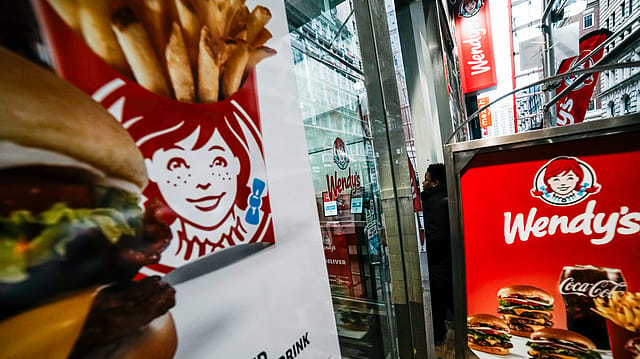
On September 15, the company behind KFC warned an operator of 84 restaurants that it could lose the right to sell chicken under the Colonel’s name. On September 16, Wendy’s sent a termination notice to a different company, one running 314 of its burger restaurants in the US. That operator filed for bankruptcy protection the next day. Seven weeks later, Wendy’s signed a preliminary agreement to buy up to 163 of those restaurants itself.
Why would Wendy’s want the restaurants back? And what had gone so badly wrong at the KFC operator that it owed more than $15.6 million in royalties on chicken it had already sold?
The names on the bankruptcy petitions offer a clue. Tasty Chick’n ran the KFC restaurants. Meritage Hospitality Group ran the Wendy’s. Earlier in 2026, Sailormen, which operated 136 Popeyes restaurants in Florida and Georgia, had filed for Chapter 11. So had the companies behind 65 Carl’s Jr. locations and 43 Subway stores. Those figures count restaurants the operators ran, not doors that closed. A customer ordering dinner would recognise every brand on that list and have little reason to know the name of the company paying the cook.

The Wealth Issue 2026
06 Nov 2026 - Vol 05 | Issue 45
Portraits of Dreamers and Doers under 35
WHERE DID THE OTHER $8 GO?
Thomas M. Scott, chief executive of Tasty Chick’n, left an unusually clear account in a Texas bankruptcy court. In FY2023, for every $100 his restaurants took across the counter, they earned $11.80 at restaurant level. By FY2026 to date, they were earning $4. The business had lost roughly two-thirds of its restaurant margin in three years.

You could follow the missing dollars almost to the till. Sales fell 11.4% in FY2024. They fell another 1.4% in FY2025 and were down a further 2.8% in FY2026 to date. Food, labour and rent grew more expensive. Meanwhile, about 37 restaurants faced substantial refurbishment or upgrade obligations through 2029. A quieter kitchen still had a lease. An ageing restaurant could still need money spent on it just as it was earning less.
Scott’s company began deferring royalties in mid-2025 and largely stopped paying them that November. By September 2026, Yum had issued its warning. Scott explained what losing the franchise agreements would mean: it would also trigger a default under the company’s loan agreement and strip the business of its value as an operating concern. After years of selling chicken, one of the most valuable things Tasty Chick’n still possessed was permission to call it KFC. It filed for Chapter 11 on November 16.
At Popeyes operator Sailormen, the pressure also came from the cost of borrowed money. An attempted sale of 16 restaurants fell through before the January filing. In court papers, Sailormen cited higher borrowing rates, inflation and difficulty finding qualified workers. Its landlords, suppliers and lender were all pressing for payment. By March, when it asked the court to approve a sale process, it was operating 119 of the 136 restaurants it had taken into bankruptcy. Here was a distinction with real consequences for an owner trying to raise cash: having restaurants to sell and having a buyer willing to complete the purchase were two different things.
THE CUSTOMER WHO COMES LESS OFTEN
The clearest evidence of what changed at the counter comes from customers themselves. A third of consumers surveyed by Revenue Management Solutions said they were spending less at restaurants than a year earlier. Among that group, 56% said they were visiting less often. A regular could order the same burger, fries and drink, pay more for all three and still spend less over the month. The sale the operator loses is the visit the customer skips.
In the third quarter of 2026, US quick-service restaurant traffic fell 2.6% year on year in the firm’s data. Average prices rose 2.6%. Net sales edged up 0.6%. An executive reading the sales line could report modest growth. The manager drawing up the lunch roster had fewer customers to serve. McDonald’s described much the same effect in its own US results: higher average bills largely offset a decline in guest counts.
An empty dining room can mislead, too. Delivery’s share of US limited-service restaurant traffic rose from 5% in 2019 to 12.4% in 2025. A family eating KFC on the sofa is still buying KFC. The harder question for the operator is what happens when the family still wants fried chicken and somebody else’s name is on the bag.
WHO GOT KFC’S CHICKEN ORDER?
In 2025, Raising Cane’s rang up $5.49 billion in US sales across 913 restaurants. KFC took in $4.68 billion across 3,523. A chain with barely a quarter of KFC’s American outlets was already selling more. And while KFC ended the year with 146 fewer US restaurants, Raising Cane’s added a net 92. Wingstop added 382.
So, did America open too many chicken shops? KFC itself was shrinking. Its rivals were finding hundreds of places where they believed another restaurant could earn its keep. The better question is local: how many chicken shops could a particular neighbourhood support, and which one would a family drive past to reach the one it preferred? In Memphis, more than a dozen area addresses appeared on a published list of 72 Tasty Chick’n locations closed or closing. Some had shut before the bankruptcy filing. National sales rankings cannot tell us who took the order at any one of those counters. They do make it hard to argue that Americans simply went off fried chicken.
WHY WENDY’S WANTED ITS RESTAURANTS BACK
Wendy’s said Meritage owed $27.4 million in overdue royalties, advertising contributions and other fees when it sent the September 16 notice. By the time Wendy’s reported its quarterly results, roughly 276 of the operator’s original 314 locations were still trading. On November 4, Wendy’s signed a letter of intent to acquire up to 163, subject to a definitive agreement, higher offers and court approval.
The apparent contradiction makes sense once you separate the restaurant from its owner. Wendy’s had lost confidence in Meritage’s ability to pay what it owed. It could still see value in particular locations, with kitchens already fitted out and customers who knew where to turn off the road. A restaurant could survive the failure of the company that ran it. The question was which restaurants somebody else wanted.
In Puerto Rico, the reach of a single owner became clear on November 5, when Encanto Restaurants filed for Chapter 11. A customer could have eaten pancakes at IHOP, taken the children to Pizza Hut and picked up dinner at KFC or Taco Bell, all without realising the same company ran the four restaurants. Encanto operated about 180 outlets and employed more than 3,000 people. Its creditors included an electricity supplier owed $3 million and a food and paper supplier owed $2.3 million. Four different signs above the door; the bills went to the same address.
WHO STILL HAS A SHIFT TOMORROW?
There is little evidence here of a worldwide retreat from fast food. In November, Yum China reported its 15th consecutive quarter of year-on-year growth in same-store transactions and said it was accelerating restaurant openings. Those were group figures, but they offer a useful check: in the month an American KFC operator filed for protection, a company selling some of the same brands in China was reporting more purchases at established restaurants.
Britain offers a closer parallel, and the clearest answer to why the identity of a franchise owner matters. In October 2025, DC London Pie, the company behind Pizza Hut’s British dine-in business, entered administration. Its administrators announced the closure of 68 restaurants and 11 delivery sites, with 1,210 jobs lost. A rescue deal preserved 64 sites and 1,277 jobs.
Roughly as many people kept their jobs as lost them. For someone turning up to work in a Pizza Hut uniform, the name on the shirt was the same. Which restaurant they worked in determined whether they still had a shift.