Man, Superman and Hitaysh Dhingraa: Can the Puresta Founder Fix India’s Skincare Problem?
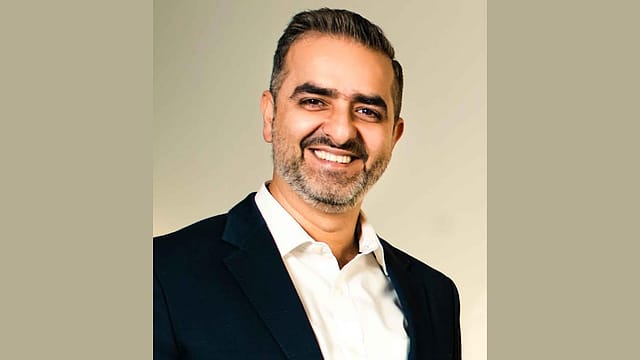
The first time Hitaysh Dhingraa sold a company, he found himself with a few million dollars in the bank and little idea what to do with the rest of his life.
He was 31. Letsbuy, the e-commerce company he had helped build, had been acquired by Flipkart after a little over two years. His mother was a clerk at Syndicate Bank, his father was retired, and Dhingraa was the family’s only earning member. Yet he was left without a routine or purpose.
“I was depressed, I was not doing anything. I didn’t know what to do,” he says in a conversation with OPEN Digital. He began waking up at 11 in the morning. The exit left him wondering what came next.
It was an early lesson in how deeply an entrepreneur’s identity can become tied to a company. He would return to building businesses until the process became less a career choice than a compulsion.

Zeroing In on ECI
09 Oct 2026 - Vol 05 | Issue 41
Constitutional legitimacy versus political opportunism
Today, as founder and chief executive of Puresta, a beauty and health platform bringing together its AI platform EVERQ and skincare brands SKINQ and SKINQ Rx, he is attempting a different kind of venture. Rather than compete for attention in a crowded market, he wants to help consumers identify what their skin needs, connect them with dermatologists and track whether treatment is working. His premise is that the industry has become good at selling skincare but has not done enough to establish whether consumers are buying the right products.
It is a bet shaped by three businesses, two exits and the mistakes Dhingraa says he continues to make.
An entrepreneur by accident
Dhingraa did not set out to become a serial entrepreneur. His first venture emerged after a multinational company where he ran the e-commerce business decided to shut that operation. He had a team of around 12 or 13 people; five decided to start Letsbuy, carrying forward work they understood rather than beginning with an unfamiliar idea.
It gave him a crash course in a still-nascent online retail market. Flipkart acquired it roughly two and a half years later.
A conversation with Sachin Bhatia, MakeMyTrip’s co-founder, who had also exited a business around that period, helped him find a way forward. They explored several ideas, including real estate, where companies such as Housing were attracting substantial funding, before settling on matchmaking. TrulyMadly grew out of a more deliberate search for an underserved market, unlike Letsbuy, which had emerged from circumstance. That deliberate search would shape his next venture.
Learning to sell grooming to men
Dhingraa began working on The Man Company in 2014; the brand launched in 2015 with partners including Bhisham Bhateja. Dedicated men’s grooming brands were far less developed then. The challenge was persuading men to pay attention to grooming.
“We were very new to beauty and personal care category when we started Man Company,” he says. The founders learnt about formulations, sourcing and product development while building the business. Dhingraa says the company grew to ₹240 crore in revenue and became profitable. Emami, which had earlier acquired a majority stake in its parent, Helios Lifestyle, agreed in August 2024 to buy the remaining 49.6 per cent, taking its ownership to 100 per cent.
The Man Company had drawn men into grooming. By his next move, beauty and personal care had become crowded with digital-first brands, performance marketing and influencer campaigns. He did not want simply to repeat the model. Strong gross margins would be a basic requirement, he says, but the larger question was what kind of consumer business was still worth building.
The answer was women’s skincare, a market he had not studied closely.
The research behind the next venture
In The Man Company’s final years, Dhingraa and his co-founder partnered with discovery platform Smytten to conduct focus groups and surveys with around 1,400 women over three to four months, he says. They wanted to understand women aged 21 to 30, whom they believed were driving consumption.
He estimates Tier 2 cities and beyond accounted for 45 to 50 per cent of online skincare sales and a large share of growth. These are company-research figures, not independently verified industry-wide estimates.
Consumers knew about ingredients such as salicylic acid, niacinamide and retinol, but that knowledge did not necessarily make them more confident. Someone with acne might try several two per cent salicylic acid serums without seeing improvement. Products could look different while formulations remained similar. Consumers, he argues, were frustrated at spending thousands of rupees a month without seeing results.
Dhingraa says many women named dermatologists rather than influencers for advice. Access to that expertise, however, was uneven. A consultation in major cities could cost ₹1,000 to ₹1,500, with products taking the total to ₹5,000 to ₹6,000, he estimates. Outside major cities, some women said they bought acne products from pharmacies because no dermatologist was available.
Dhingraa cites an estimate of 15,000 to 17,000 registered dermatologists in India, around 80 per cent of them concentrated in the top ten cities. The figure requires independent verification, but his conclusion was that products were plentiful while diagnosis and reliable guidance remained harder to obtain.
The opportunity, he concluded, was to build trust by helping consumers decide what not to buy.
Buying the foundation, not just the brand
Puresta emerged from a more deliberate process than Letsbuy or TrulyMadly. Instead of developing products from scratch, Dhingraa and his partners acquired a majority stake in HealthQ Life Science, the company behind SKINQ and SKINQ Rx, founded by dermatologist Dr Chytra V Anand. The acquisition gave Puresta existing formulations and a clinical foundation on which to build.
He describes the starting point as “zero point five to one”: the brands and formulations existed, and the task was to build a technology and service layer around them. The products were rebranded and repackaged, but formulations were retained. Dhingraa points to their development for Indian skin and climate, and to Dr Anand’s clinical experience in Bengaluru.
Puresta’s intended positioning is “outcome first”, with clinical claims on packaging and formulations using high-grade actives. With daughters aged 17 and 10, Dhingraa is sceptical that longer skincare routines are necessarily better. Consumers, he argues, should understand what their skin needs before applying concentrated ingredients.
He compares skincare to supplements: understand a deficiency before deciding what to take. Someone with mild acne may need a limited set of over-the-counter products; a person with a severe condition may need medical attention. Both can be poorly served by a system that recommends a product before establishing the problem.
How the platform is supposed to work
Users answer questions about their skin concerns and how long they have had them, then upload a selfie. Puresta’s AI tool assesses symptoms and places them in broad categories of mild, severe or critical. Dhingraa says it has been tested on more than 10,000 Indian patients, addressing what he sees as a bias in tools developed primarily using lighter, Caucasian skin.
For mild symptoms, the platform recommends over-the-counter products. For severe or critical concerns, it connects users with a dermatologist for a video consultation. Dhingraa says the initial consultations, lasting around 15 minutes, are currently free. Doctors may recommend SKINQ products or those from another brand, depending on what is appropriate.
That independence is central to the pitch: Puresta earns from product sales, not the first consultation, and Dhingraa says doctors can recommend other brands. Its credibility will depend on whether advice is based on need, not the company’s catalogue.
Users can upload a new image each week, track a skin score and return to the same dermatologist. Dhingraa says some pilot participants returned several times over two months. The model is young, and its claims must be tested against outcomes and repeat use. AI screening cannot replace a dermatologist, particularly for severe symptoms; the test is whether it directs users to appropriate care rather than a sales funnel.
Dhingraa says the company worked with around 45 to 50 dermatologists, or possibly more, to promote skin understanding before using active ingredients. Its first campaign involved college students aged 18 to 25 with acne. They used products for 30 days and posted before-and-after updates on their own social media accounts. The students were paid, he says, but expected to share actual results, including limited improvement.
Some saw substantial improvement; others only partial results. Dhingraa believes acknowledging uneven outcomes can be more credible than a conventional influencer endorsement.
Using AI beyond the selfie
Puresta’s technology ambitions extend beyond skin analysis. The HealthQ acquisition included Dr Anand’s library of around 900 videos and 170 blogs on skin health. Dhingraa says the material informs the company’s content strategy and is being made more discoverable through AI-powered search tools, including ChatGPT.
An in-house WhatsApp voice agent, trained on Dr Anand’s videos and blogs, answers questions about products, skin, diet and exercise in users’ own languages. AI also handles operational tasks such as reminder calls before consultations.
Dhingraa says it wants a curated range with continuing personalisation and consultation, not hundreds of products. The Man Company taught him that a consumer brand needs sourcing, formulation, distribution and attention. Puresta adds a harder requirement: evidence that a product does what it claims.
A different kind of exit
Dhingraa knew Emami’s takeover was coming: the investor wanted full ownership, and he and his partners weighed continuing against building something new.
This time, he prepared for the transition by booking travel in advance for a 12-month sabbatical across 11 countries. He also started Consumer Collective with friends, investing their own capital in early-stage consumer brands and companies supporting them. The stated aim was to help 100 entrepreneurs over the following decade. Dhingraa says he met around ten founders a week, evaluating deals, raising funds and deploying capital.
After 12 months, he was ready to return to operating a business; breaks, he says, tend to leave him bored after a few months.
He is more patient than he was at Letsbuy, but still makes mistakes: hiring the wrong people, choosing a bad angel investor, selling Letsbuy too quickly and entering a market too early. He admits to repeating hiring mistakes, relying on intuition and rewarding commitment.
At Puresta, he hired experienced leaders instead of the fresh graduates and interns he had relied on earlier. It did not work as neatly as expected: building from zero to one requires different skills from scaling from one to ten, and founders can find themselves pulled back into details even after hiring a leadership team.
Still hands-on and often among the last to leave the office, Dhingraa says hard work has stayed with him since his first job in Singapore. He is now more conscious of instinct’s limits and the cost of hasty decisions.
He says Puresta is intended to be his last venture. After two exits, he wants to build for the long term and eventually take the company public. “I think want to go for an IPO and build for eternity,” he says.
That ambition sets a higher bar than launching a skincare brand. Puresta must prove consumers will use diagnosis and follow-up services, doctors can work within a digital platform without compromising trust, and a product-sales business can put patient needs ahead of its catalogue. It must also demonstrate results in a field where treatments take time and outcomes vary.
Dhingraa’s earlier companies taught him how to find a market, build a brand and sell a business. Puresta is an attempt to turn those lessons towards a different problem. The opportunity, as he sees it, is not that India needs more skincare, but that consumers need a better way to decide which skincare is worth using.
Whether Puresta becomes a durable platform rather than another brand in a crowded category will depend on what happens after the selfie: the diagnosis, the treatment, the follow-up and, ultimately, the result.