Going Bonkers: Fake Nike, Fake Harpic & Real Trouble
Getting a Shark to back your brand is one thing. Getting the counterfeiters to leave it alone is another.
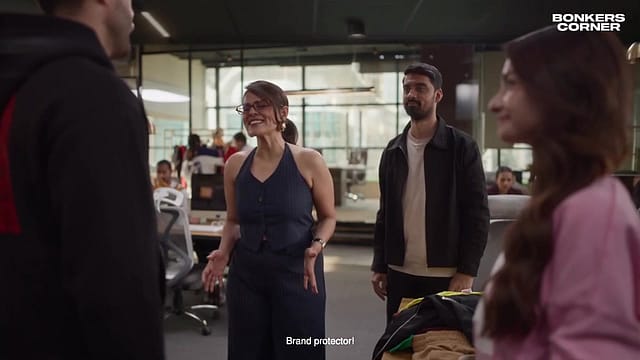
Namita Thapar has joined Bonkers Corner’s fight against fakes, appearing in a campaign with founder Shubham Gupta, Anushka Sen and Major Rishab Singh Sambyal. Thapar identifies Bonkers as her Season 5 solo investment. The investor has a business to protect as well as a message to deliver.
Her complaint opens a larger question. What happens when a brand becomes desirable enough to copy before it becomes powerful enough to protect itself? You pay to create the desire. Somebody else supplies the T-shirt.
THE LOGO WITHOUT THE BILL
India’s encounter with counterfeit sportswear considerably predates its direct-to-consumer startup boom. In January 2026, Delhi Police uncovered a unit allegedly making shoes bearing Nike, Adidas, New Balance and Skechers labels. A separate May operation targeted an alleged counterfeit Puma factory.
Losing Memory
16 Oct 2026 - Vol 05 | Issue 42
The making of a medical and social emergency
The attraction is understandable. Advertising makes the brand familiar. Celebrities make it desirable. The original price keeps it distant. A counterfeit offers a shortcut across that gap.
Marketing and branding experts reckon that aspiration does not become affordable simply because advertising makes it visible. A counterfeit can offer the recognisable symbol at a price the buyer can manage. "Some consumers are buying the social recognition attached to the brand, while knowingly giving up the assurance of the original,” says Ashita Aggarwal, professor of marketing at SP Jain Institute of Management & Research.
There is another uncomfortable possibility: buyers may believe the original’s premium mostly pays for its advertising.
UK Intellectual Property Office research published in September 2026 found that 78% of current counterfeit purchasers cited similar quality as a motivation; 74% cited a cheaper counterfeit price. Those are consumer perceptions, not a laboratory verdict on equivalence.
The challenge for brands goes beyond making the logo coveted. They must make the difference worth understanding.
NOBODY FLEXES THEIR TOILET CLEANER
Then the story reaches the supermarket shelf, and the explanation changes.
A Bengaluru police operation described in February 2025 seized purported counterfeit goods valued at approximately ₹1.8 crore, including products bearing Harpic, Lizol, Surf Excel, Tide, Red Label and other familiar names. In Surat, police uncovered alleged counterfeit Maggi and Everest masala production in July that year.
A toilet cleaner supplies little social prestige. Its familiar label supplies reassurance.
Brand building trains consumers to recognise names, colours and shapes quickly. Counterfeit packaging can exploit that recognition. The shopper who reaches for a familiar pack may believe they have made the sensible choice.
In fashion, some customers knowingly buy the imitation. With household products, the consumer may believe the product is genuine. "The counterfeit is exploiting a different asset: the confidence that a familiar name will deliver a familiar result,” says Aggarwal.
Nor must a fake carry an absurd discount. Surat police said the alleged counterfeit masalas were supplied at prices 10–20% below the originals. A saving of that size can resemble a perfectly ordinary retail offer.
The bargain hunter and the deceived customer need different explanations. An awareness film that treats them as the same person risks misunderstanding both.
EXPENSIVE CAN BE FAKE TOO
The global evidence further complicates the cheap-price theory.
In October 2024, European authorities described a network counterfeiting exclusive French wines worth up to €15,000 a bottle. Re-created labels and corks helped forged wine enter international trade at market value. The customer was paying for authenticity and receiving theatre.
In July 2025, British consumer organisation Which? assessed 23 of 34 selected cosmetic products bought from marketplace sellers as likely counterfeit. The investigation covered brands including CeraVe and The Ordinary; its targeted sample was not a measure of the entire market.
These cases expose the limits of telling consumers simply to distrust suspiciously low prices. Price itself can help make a deception convincing.
OECD–EUIPO estimates put international counterfeit trade at $467 billion in 2021. The report appeared in 2025; that number describes cross-border trade in the earlier year, rather than today’s total fake economy.
WHEN THE PROMISE IS TREATMENT
Medicines demand a more serious register.
An August 2026 government account of Operation Vajra described counterfeit and spurious preparations bearing names including Clavam-625, PAN-40, Betadine and Azithral. These were illicit products impersonating familiar medicines, not findings against the genuine brands.
In December 2025, the US Food and Drug Administration documented counterfeit Ozempic in the legitimate American drug supply chain, outside the manufacturer’s authorised distribution network.
Here, affordability can combine with urgency, shortages and limited access. WHO identifies complex supply chains, inadequate access to affordable medicines and weak oversight among the drivers. It also distinguishes substandard products from deliberately falsified ones: a quality failure alone does not prove counterfeiting.
Calling all of this aspirational consumption would miss the patient looking for treatment.
WHO PAYS FOR THE FAKE?
Back at Bonkers, the commercial argument needs evidence beyond a national alarm bell.
Thapar accuses e-commerce platforms of turning a blind eye. That allegation requires examination against documented complaints and platform responses. Amazon, for example, says it identified, seized and disposed of more than 15 million counterfeit products worldwide in 2024.
The ASPA–CRISIL 2025 survey also needs careful reading. Its 53% figure identifies respondents naming online aggregators as a channel through which they received counterfeits. The multiple-choice question did not measure purchase frequency.
Nor does every fake sold equal an original sale lost. A buyer deliberately choosing a cheap copy may never have paid the genuine price. Another buyer may have paid for an original and been cheated.
A brand’s exposure is wider than the sale it may have lost. It can spend money investigating complaints, proving authenticity and protecting its name. "The important question is which of those costs the business can actually demonstrate,” says Aggarwal.
That is the investigation Bonkers’ campaign invites: trace the listings, purchases, complaints and removals. Establish who knew what, and when. The imitation T-shirt and the falsified medicine belong in the same investigation because both impersonate a promise. The consequences differ enormously.
A logo is supposed to help the customer stop asking questions. The counterfeiter is counting on it.