EXPLAINED | Can Your Car Run on E100 & Will It Be Cheaper?
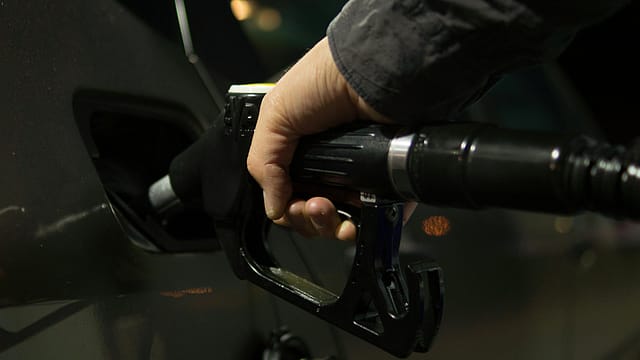
What if a cheaper litre buys you a costlier drive?
Imagine two fuel pumps. One offers the lower price. You fill up, drive away and discover that the saving has shrunk because the tank empties sooner.
That is the calculation worth keeping in mind as India opens a wider regulatory path for high-ethanol vehicles.
On October 26, the road transport ministry announced updated emission-certification provisions explicitly including E100 alongside E85. These fuels are intended for vehicles specifically designed and certified to use them.
The questions for a motorist follow quickly. Can my car use it? Will mileage change? And will the journey actually cost less?

Look Who's Talking Regime Change
23 Oct 2026 - Vol 05 | Issue 43
FIRST, WHAT DO E20, E85 AND E100 MEAN?
The E stands for ethanol, an alcohol that can be made from plant material. The number describes the ethanol content of the fuel.
E20 contains 20% ethanol by volume. E85 is described in the ministry’s announcement as containing up to 85%. E100 refers to fuel consisting predominantly of ethanol. Treat it as nearly pure ethanol; the label should not be read as a laboratory purity certificate.
Fuel specifications matter across countries too: American E85, for example, contains 51–83% ethanol depending on geography and season. The vehicle’s approved fuel specification is the practical guide.
CAN MY E20-COMPATIBLE CAR RUN ON E100?
E20 compatibility alone does not establish permission to use E85 or E100. Check the manufacturer’s declared compatibility and your owner’s manual.
The ministry says existing owners are not required to switch fuels or modify their vehicles.
High-ethanol operation involves engineering changes. The fuel pump, injection system and other components must suit ethanol’s properties, while engine controls must deliver the appropriate mixture and ignition timing. A label on a pump cannot make those changes to your car.
SO, WHAT MAKES A FLEX-FUEL CAR FLEXIBLE?
It can operate on different approved mixtures of petrol and ethanol using one fuel system. The engine-management system accommodates changes in the blend, and suitable components handle the fuel.
That flexibility has a defined range. A vehicle approved for one high-ethanol blend should not automatically be assumed suitable for every other blend. Manufacturer certification remains the deciding factor.
Think of flexibility as an engineered capability with limits. Ask the dealer to show those limits in writing.
WILL ETHANOL GIVE ME THE SAME MILEAGE?
A litre of ethanol contains roughly two-thirds of the energy in a litre of petrol. All else equal, replacing petrol with more ethanol reduces the energy carried in a tank of the same size.
But fuel economy also depends on the engine. Ethanol has a higher octane rating, meaning greater resistance to engine knock. An engine designed to exploit that property can improve efficiency.
The important distinction is between energy content and the vehicle’s ability to use it. Octane measures knock resistance; it does not tell you how many kilometres a litre will buy.
A universal mileage-loss percentage for every future E100 vehicle would therefore be misleading. Compare tested consumption for the particular model and fuel you plan to use.
HOW DO I WORK OUT WHETHER IT IS CHEAPER?
Divide the price per litre by the kilometres travelled per litre. The result is your fuel cost per kilometre.
Take a hypothetical compatible vehicle using either its approved petrol blend or E100. At ₹75 a litre, E100 is 25% cheaper to buy, yet the drive costs more. At ₹70, the calculation favours ethanol. These figures are not current pump quotes or performance claims. They show why a price discount needs a mileage comparison.
In this example, E100 breaks even at about ₹73.33 a litre. Your own break-even price will change with actual consumption.
WHY IS INDIA INTERESTED IN IT?
Domestic ethanol can substitute for part of the petroleum used in transport. India’s policy also connects fuel demand with agricultural production and processing.
Permitted feedstocks include sugarcane-related products, maize, specified foodgrains and agricultural residues. Different routes have different economics and resource requirements.
The next question is how much usable fuel can be supplied reliably, at what cost, and with what effect on other buyers of those crops. A supply chain that serves motorists must also work through the agricultural calendar.
IS IT AUTOMATICALLY GREENER?
Burning ethanol still releases carbon dioxide. Its climate assessment must include the fuel’s whole life: growing the feedstock, making fertiliser, processing the crop, supplying energy to the plant and transporting the fuel.
That is why the same fuel molecule can come with different production footprints. The US Environmental Protection Agency evaluates the combination of feedstock and production process when assessing a renewable-fuel pathway.
Water and land also matter. India’s ethanol roadmap flagged sugarcane’s water demands and recommended diversifying towards less water-intensive feedstocks. That issue becomes more significant as production scales.
Ask which crop, which process and which energy source underlie any claimed emissions saving. E100 describes the fuel; it does not disclose its entire environmental history.
WHAT CHANGES AT MY LOCAL PUMP NOW?
The certification announcement does not establish that E100 is available at every forecourt.
A practical rollout needs compatible vehicles, suitable fuel storage and dispensing, reliable supply, clear labelling and trained service networks. Those are separate tasks.
For a buyer, three answers must line up: the vehicle can use the fuel, the fuel is accessible, and the running-cost calculation works.
Until then, the useful number is the one on your vehicle’s compatibility guidance. The useful calculation is rupees per kilometre.