7-Eleven Shuts Shop in India. Did Quick Commerce Deliver the Knockout?
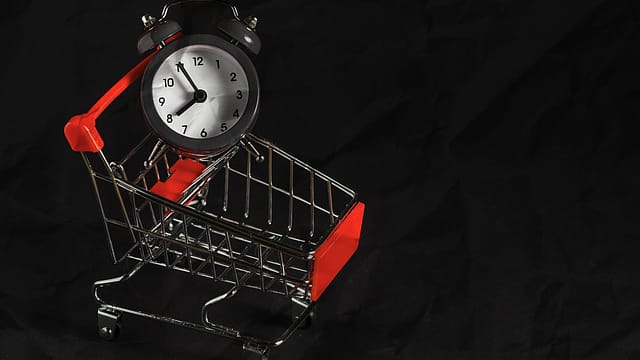
A store can be around the corner and still feel farther away than an app.
That is the challenge quick commerce presents to retailers selling products customers can order from the sofa. For a convenience store, being nearby now comes with a demanding comparison: nearby enough to beat having the purchase delivered?
7-Eleven’s Indian shutdown makes that question unavoidable.
Seven & i Holdings confirmed to AFP that its Reliance-operated network of 31 stores in Mumbai and Pune closed on September 30, 2026. The chain had reached approximately 60 locations at its peak. The company declined to explain the closure and retained an interest in exploring other ways to serve India.

Losing Memory
16 Oct 2026 - Vol 05 | Issue 42
The making of a medical and social emergency
Quick commerce is a plausible competitive pressure. The accounts and international experience make a verdict against a single culprit harder to sustain.
THE SALES WERE GROWING. SO WERE THE LOSSES.
7-India Convenience Retail’s financial statements contain an important complication.
Revenue from operations reportedly rose to ₹91.46 crore in FY26 from ₹63.63 crore in FY25, an increase of approximately 44%. Net loss widened to ₹89.89 crore from ₹72.94 crore.
Warehousing and distribution expenses increased to ₹16.09 crore from ₹6.93 crore. Their FY26 value was equivalent to approximately 17.6% of operating revenue. These percentages are calculations from the reported figures.
This was revenue growth without a viable overall cost structure. The figures do not show whether comparable stores sold more, whether expansion supplied the growth or which shopping occasions were lost to delivery platforms.
They also cannot establish that insufficient scale caused the distribution expense.
Explaining the gap between sales and operating costs requires more than assuming customers disappeared.
WHAT QUICK COMMERCE COULD HAVE TAKEN
The strongest competitive overlap is straightforward: familiar packaged products bought because they are needed soon.
A customer seeking a cold drink, snacks, toiletries or a small grocery top-up can compare visiting a shop with ordering through an app. Delivery changes the effort involved in that choice.
For a chain carrying much the same products as nearby retailers, it can weaken the value of proximity. The store must still pay for its location and operating hours while persuading enough people to visit.
Neighbourhood kiranas complicate the competition further. They already occupy the local-shopping position a new chain is trying to establish. A branded entrant has to demonstrate what it adds to that existing convenience.
This is the analytical case for quick commerce increasing pressure. Establishing its actual contribution to 7-Eleven’s losses would require evidence about customer switching, local competition and sales before and after delivery services expanded around particular stores.
Revenue growth at company level cannot settle that question. Neither can closure.
THE AMERICAN STORE IS SELLING MORE THAN A TOP-UP
The global record shows a format under pressure and adapting.
According to the US National Association of Convenience Stores, foodservice and merchandise sales reached $341.2 billion in 2025, up 1.7%. Average monthly transactions per store, including fuel transactions, nevertheless declined 2.7%.
Foodservice offers a revealing indication of the business model. It contributed 28.5% of in-store sales and 38.9% of in-store gross profit in 2025. The category includes prepared food and dispensed beverages.
Nominal sales growth and falling transactions can coexist. Higher sales dollars do not automatically mean more customer visits or better profits.
The foodservice contribution must also be distinguished from net profit after operating costs. It does, however, show why a convenience-store discussion cannot stop at packets and bottles.
The customer buying breakfast, coffee or a prepared meal gives the retailer another occasion to earn a purchase. The commercial challenge becomes competing for food demand as well as supplying essentials.
THAILAND PUTS DELIVERY INTO THE STORE MODEL
Thailand supplies a useful comparison within 7-Eleven itself.
CP ALL’s Q1 2026 company disclosure recorded 16,084 Thai 7-Eleven stores, following 139 additions during the quarter. Its stated strategy combines ready-to-eat food with online channels, including 7Delivery and All Online through its app.
The relevance lies in that combination. A physical network can support both shopping visits and orders placed remotely.
This does not establish the profitability of each delivery order or suggest that India can reproduce Thailand’s store density. It demonstrates that convenience stores and delivery can operate within the same business.
Japan offers another example. Lawson’s April 2026 presentation reported 4.5% growth in domestic existing-store sales for the year ended February 2026, alongside approximately 40% growth in its delivery business.
These businesses have established networks and capabilities that a small Indian operation cannot simply assume. Their experience nevertheless challenges the idea that doorstep delivery necessarily makes a convenience-store chain obsolete.
INDIA ALREADY HAD THE FOOD AMBITION
It would also be too easy to explain the Indian outcome by accusing 7-Eleven of forgetting local tastes.
Reliance’s October 7, 2021 launch announcement explicitly promised beverages, snacks and delicacies curated for local preferences, alongside daily essentials. Its first store was scheduled to open two days later in Andheri East, Mumbai.
The food proposition existed at the outset. The unanswered question is how consistently it gave customers a reason to return.
A distinctive, affordable breakfast or snack could make a store useful in a different way from a shelf of widely available products. Yet that purchase also faces competition from local eateries, cafés and food-delivery services.
Prepared food brings its own requirements: dependable quality, appropriate pricing, production and replenishment, and control over unsold stock.
The relevant comparison is therefore the complete shopping occasion. What does the customer want, what alternatives are available and can the store fulfil that need profitably?
An international brand name cannot answer those questions on its own.
LAWSON’S PLAN KEEPS THE QUESTION OPEN
Another Japanese chain has identified an Indian opportunity.
Plans reported in February 2026 envisaged Lawson starting with five directly operated Mumbai stores in 2027 and expanding to 100 Indian outlets by 2030.
Those plans predate 7-Eleven’s September closure. They should not be presented as a fresh decision made after assessing its rival’s shutdown, or as a guarantee that the timetable remains unchanged.
They do present a different proposition to test: whether another operator can assemble a customer offer and supply system that produces a better result.
A proposed entry provides no proof of success. Equally, one chain’s retreat cannot establish that every version of the format must fail.
WHAT THE SHUTTER DOES NOT TELL US
The decisive missing evidence concerns what happened within the Indian network: comparable-store sales, transaction frequency, food’s share of the basket, outlet contribution and the allocation of distribution costs.
That would help distinguish a weak customer proposition from a network that had not developed the economics to support it. Competitive pressure could worsen either problem.
The international comparisons suggest several possible responses: stronger food offers, better use of the store network and delivery that extends the customer relationship. Each still has to earn a return in its own market.
Quick commerce has raised the standard for what Indians can expect from convenience. A familiar product being available a short walk away now faces an alternative purchase journey.
7-Eleven’s Indian operation did not establish a sustainable business within that environment. The bigger lesson concerns what a store must sell beyond access to its shelves: a product, price or shopping occasion customers choose often enough to pay for the business behind it.