When ‘Hawa Badlegi’ Softens: Is Havells Stretching Its Own Platform?
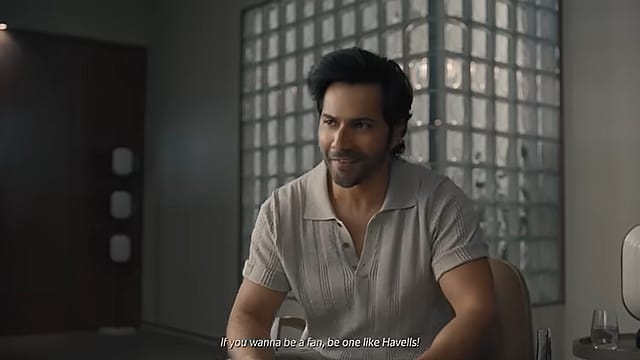
What happens when online trolls come face-to-face with the people they comment on?
That is the premise of Havells’ latest campaign under its long-running “Hawa Badlegi” platform. Rolled out during the Indian Premier League, the campaign brings together individuals and celebrities in a controlled setting where past comments are read out loud. The reaction is immediate. What once felt casual or humorous online often turns into discomfort, followed by quick reframing.
Across films featuring Varun Dhawan, Anurag Kashyap and Yuzvendra Chahal, the structure remains consistent. A comment is confronted. The tone shifts. The individual qualifies what they meant, often repositioning themselves as a fan rather than a critic. The campaign closes by nudging viewers towards being “better fans”.
As a piece of communication, it is built for the moment. The insight is rooted in a behaviour widely visible across social media. The execution is simple and repeatable. And the IPL provides the scale required to amplify it.
On its own, “Acche Fan Bano” works.

Exclusive: To the Heavens and Back
19 Jun 2026 - Vol 04 | Issue 76
Shubhanshu Shukla relives the space odyssey that put India into orbit
The question is where it sits.
Because Havells has placed this campaign under “Hawa Badlegi”, a platform that has historically carried a sharper edge. Earlier iterations engaged directly with social discomfort, addressing themes such as menstruation taboos, interfaith relationships, and surname identity. These were not just observations. They were interventions, designed to challenge entrenched thinking.
The current campaign takes a different approach. It reflects behaviour rather than confronting it. It encourages a shift in tone, but without pushing audiences into discomfort. The change is not drastic, but it is noticeable.
At the same time, the shift reflects a broader change in how advertising operates today.
As Falguni Vasavada, Professor of Marketing at MICA, explained, the effectiveness of brand communication is closely tied to context. Where a message appears, who it speaks to, and how it is consumed all shape its impact. From that perspective, comparing campaigns from different periods without accounting for shifts in media and audience behaviour may not offer a complete picture.
In the early 2010s, Havells was still building visibility in a television-led ecosystem. Mass media required strong, often provocative storytelling to capture attention at scale. Social issues provided that leverage, helping the brand stand out while signalling a clear point of view.
Today, the landscape is more fragmented and participatory. Digital platforms such as YouTube and Instagram host real-time cultural conversations. Themes like trolling and online behaviour are not just relevant but native to these environments. According to Vasavada, campaigns that engage with such behaviours are more aligned with how audiences interact with content today.
The IPL further strengthens this alignment by combining scale with cultural immediacy.
From this lens, Havells’ latest campaign can be seen as an evolution. It reflects the medium, the moment, and the mechanics of contemporary engagement, while still drawing from an established brand platform.
Yet, the strategic question remains.
“Acche Fan Bano” is a strong enough idea to exist independently. Its insight is current. Its execution is effective. Its relevance does not depend on an existing platform.
By placing it under “Hawa Badlegi”, Havells gains continuity but also expands the meaning of that platform.
Over time, this is where brand platforms are tested. Not when they fail, but when they stretch. Each new campaign redefines what the platform stands for. Sometimes that keeps it relevant. Sometimes it makes it less distinct.
If “Hawa Badlegi” once stood for challenging social norms, its current interpretation leans towards reflecting cultural behaviour. Both are valid directions. But they signal different levels of intent.
Havells’ latest campaign delivers on engagement and relevance. It fits the IPL. It speaks the language of the internet.
The more important question is what it does to the platform that carries it.
Because in adapting to the present, brands often reshape their own legacy.