Victoria’s Secret Finds Its India Voice in Triptii Dimri
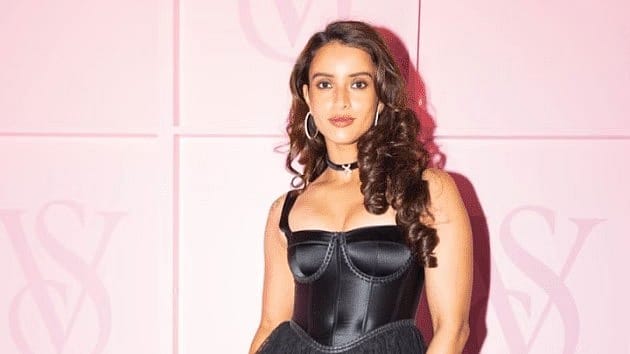
Victoria's Secret India named Triptii Dimri its first-ever Indian brand ambassador — a first not just for the brand's India operation, but in the company's entire global history. The announcement was made at an invite-only event, presided over by Abhishek Bajpai, CEO of Apparel Group India, the franchise conglomerate that operates Victoria's Secret in this market.
Strip away the event gloss and the campaign imagery and what you have is a straightforward strategic move: a global brand with 13 stores across seven Indian cities, operating through an aggressive franchise partner, deciding it can no longer speak to Indian consumers through aspirational distance. It needs a face. A local one. One that converts.
The question isn't why Victoria's Secret chose an Indian ambassador. That was inevitable. The question worth examining is why this ambassador, this brand, and now — and what the business logic behind each of those decisions actually looks like.
The Dimri Calculus
Triptii Dimri is 31 years old, trained at FTII Pune, and has spent the better part of eight years building a filmography that spans critically acclaimed OTT drama and Diwali-weekend blockbusters. That range is not incidental to this deal — it is central to it.

Open Minds 2026
26 Jun 2026 - Vol 05 | Issue 26
The power of ideas and arguments in 50 portraits
The numbers are hard to argue with. Her last four films — Animal (2023), Bad Newz, Vicky Vidya Ka Woh Wala Video, and Bhool Bhulaiyaa 3 (all 2024) — grossed over ₹1,510 crores combined worldwide. Bhool Bhulaiyaa 3 alone crossed ₹417 crores globally. In December 2024, IMDb ranked her the most popular Indian movie star of the year, ahead of Shah Rukh Khan, Deepika Padukone, Alia Bhatt, and Prabhas. That is not a niche, arthouse following. That is mass-market dominance.
But raw box office is only one part of the read. What makes Dimri particularly useful for a brand like Victoria's Secret at this specific moment is the nature of her public persona: aspirational but not remote, sensual but not cartoonish, credible in both prestige and commercial registers. She emerged from Anvita Dutt's quietly feminist OTT projects. She became "India's National Crush" via a Ranbir Kapoor action film. Both things are true simultaneously, and the tension between them is exactly what Victoria's Secret needs.
On the record
"She's fabulous, she's very very confident. What she's on the screen, outside also, she carries a very strong persona. These are the traits we look for in someone who represents a brand like Victoria. She's a perfect fit." — Abhishek Bajpai, CEO, Apparel Group India
The brand is in the middle of a global identity rebuild — moving away from its old language of unattainable physical perfection toward something looser, more self-referential, and more inclusive. Its revived fashion shows have leaned into this shift. Its ambassador roster globally now includes athletes, entrepreneurs, and pop figures who cut across conventional beauty categories. Dimri fits this new grammar. She has spoken openly about confidence as something imperfect and internally calibrated — not a performance, not a look.
"Initially it was fake it till you make it. Now it's about being sure of yourself, accepting the bad parts. Not every day is perfect — but having your back on those days, that's confidence to me,” Triptii Dimri said.
For a brand whose entire repositioning rests on exactly this kind of evolved confidence messaging, that is not a quote you have to coax out of a celebrity. That is a spokesperson who already thinks in your brand language.
The India Expansion: What's Actually Being Built
To understand this ambassadorship as a business decision, you have to understand what Apparel Group India has been doing on the ground over the past three years — because the ambassador announcement and the retail expansion are not separate stories. They are the same story at different stages.
Apparel Group is a Dubai-headquartered global retail conglomerate that operates over 85 international brands across 14 countries. In India, it entered as Victoria's Secret's franchise partner and has since executed a methodical city-by-city expansion: Mumbai and Delhi/NCR first, then Bengaluru, Hyderabad, Kochi, and most recently Chennai, where the 13th store opened in mid-2025 at Express Avenue Mall. Every store has been placed in a premium mall address — Ambience Mall, Phoenix Marketcity, Nexus Koramangala — signalling that this is not a volume play. It's a positioning play.
Thirteen stores across seven cities is a meaningful footprint, but it is also an inflection point. Below a certain store count, a brand can coast on its global reputation. Past that threshold, it needs local cultural equity — a reason for Indian consumers to feel a genuine relationship with the brand, not just recognition of a name they've seen abroad. The ambassador appointment is precisely that mechanism: converting international brand awareness into domestic brand affinity.
The Campaign
Dimri fronts the Summer Signature and Cool Air collections — wireless bras, satin sleepwear, and loungewear built around breathable fabrics and relaxed silhouettes. Three looks, styled by Anaita Shroff Adjania, ran across the launch campaign: a silk satin stripe pyjama set, a lingerie-and-denim street-style look, and a black-and-white fashion-forward ensemble with knee-high boots. The emphasis throughout is on comfort, ease, and individuality — a conscious tonal departure from the brand's older, more theatrical aesthetic.
The Representation Premium
There is a dimension to this deal that goes beyond brand mechanics and deserves its own analysis: what it means for Indian representation in global fashion at this level.
Indian-origin models have walked for Victoria's Secret in the past. Indian actresses have fronted international beauty campaigns. But a named, principal brand ambassador for Victoria's Secret — with a country-specific mandate and a seat at the campaign table — is a different category of relationship. It does not exist in the brand's history before this week.
The significance of that timing matters. This appointment comes as Indian consumers are demonstrably more resistant to campaigns that feel imported and culturally untranslated. The generation of Indian women that Victoria's Secret is courting — urban, educated, digitally native, 22 to 38 years old — has grown up with enough global cultural exposure to spot the difference between a brand that chose an Indian face and a brand that genuinely chose to speak to India. They are not the same thing, and that cohort knows it.
Dimri, who grew up in a family from Chamoli, Uttarakhand, studied psychology in Delhi, and trained at a government film school before grinding through years of modestly-received films before breaking through — carries a kind of earned authenticity that most brand ambassadors at this level don't. She is aspirational without being myth. That is a hard combination to manufacture, and Victoria's Secret didn't have to. It was already there.
What the Industry Should Watch
A few markers worth tracking in the wake of this deal. First: whether the ambassadorship extends beyond a single campaign cycle. A one-season arrangement is a promotional transaction. A multi-year partnership is a structural commitment to the Indian market — and the distinction will tell you a great deal about how seriously Victoria's Secret and Apparel Group view this market's long-term growth curve.
Second: whether competitors respond. Dimri's positioning in the aspirational Indian fashion space has now been anchored to one brand. Other global lingerie and premium innerwear players operating in India — or planning to — will need to think carefully about their own ambassador strategy in a market where the most credible face just got taken off the board.
Third: the omnichannel question. Apparel Group India has built a physical retail base, but Victoria's Secret's India digital and e-commerce presence is still developing. A celebrity ambassador of Dimri's reach and social following (she announced the partnership on Instagram to enormous engagement) is one of the most efficient mechanisms available for accelerating that side of the business. Watch whether the campaign investment extends into digital-first content, or stays concentrated in traditional media and in-store.
The brand has made a clear, data-backed, culturally coherent choice. The infrastructure is in place. The ambassador is right. The question now is execution — and whether Victoria's Secret India moves fast enough to convert this moment into the market position it's clearly building toward.