Trick, Treat or Business Opportunity? How ITC's Candyman Is Betting on India's Halloween Craze
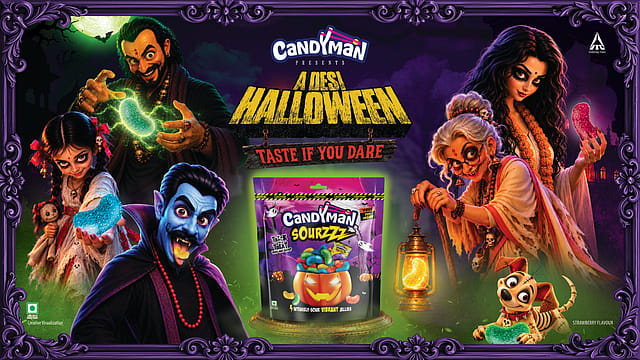
What happens when a ghost can no longer scare anyone? For Tangy Tantrik, it is a career crisis. Once known for sending people running, the ghost now finds himself struggling to frighten anyone. Enter Candyman, with a different proposition: what if fear could bring people together instead of driving them apart?
This is the premise of ITC's Candyman's latest Halloween campaign, 'A Desi Halloween'. Built around the thought, 'Darr sirf bhagane ke liye nahi, logon ko paas lane ke liye bhi hota hai', the campaign turns a familiar horror trope into a story about friendship and playful mischief. It also gives Halloween a distinctly Indian character, replacing the conventional Western imagery of ghosts and monsters with a desi supernatural personality.

Look Who's Talking Regime Change
23 Oct 2026 - Vol 05 | Issue 43
But beyond the campaign film, there is a larger business opportunity at play. As Indian consumers increasingly experiment with global celebrations, confectionery brands are looking at Halloween as another occasion to encourage candy consumption. For Candyman, the question is whether an occasion that has traditionally remained on the fringes of India's festive calendar can become a meaningful retail opportunity.
The Growing Business of Halloween
Halloween is not yet a mainstream Indian festival. Unlike Diwali, Christmas or even Valentine's Day, it does not have a deeply established cultural or gifting tradition here. Its popularity has largely been driven by international pop culture, social media, themed parties and younger consumers looking for occasions to dress up, socialise and experiment.
Quick-commerce platforms are also creating new opportunities around seasonal occasions. BigBasket has reported 200–300 per cent growth in demand for event merchandise across celebrations including Halloween, Christmas and Diwali, as per several media reports. While this is not evidence that Halloween has become a mainstream Indian festival, it suggests that retailers are finding ways to monetise occasions that encourage last-minute purchases and themed shopping.
These are platform-specific figures, not an indication of nationwide Halloween spending. But they offer an indication of how the occasion can generate demand for products associated with celebration and indulgence.
For ITC, this is where the opportunity lies. "With Candyman, we see an opportunity to build on the growing popularity of Halloween in India due to its relevance to the confectionery category," says Subash Balar, Vice President and Business Head – Chocolates, Coffee and Confectionery & NCD, Foods Division, ITC Ltd.
"By understanding how Indian consumers are embracing and adapting global celebrations, we are bringing a distinctly desi spin with this campaign that's closely linked to the brand personality of celebrating playful mischief," he adds.
The strategy is less about importing Halloween wholesale and more about adapting it to local sensibilities. That distinction matters in a market where consumers may be familiar with Halloween through films and social media but do not necessarily identify with its traditional imagery or customs.
Giving Fear an Indian Identity
ITC entered the confectionery business with Candyman and mint-o in 2002. Since then, Candyman has expanded across products and formats, including Eclairs, Fruitee Fun, Jelimals and Fantastik. The brand has increasingly used playful characters and flavour experiences to build recall among consumers.
Its Halloween association has also been developing over time. The latest campaign builds on the brand's Desi Halloween universe, with Tangy Tantrik returning as its central character. The idea is to create an identifiable property that can extend beyond a single advertisement and become associated with the occasion.
For Rakesh Menon, Chief Creative Experience Officer, Ulka, part of BBDO Group, India, the creative opportunity came from reversing the conventional role of horror.
"Horror has traditionally been about scaring people away. We loved the thought of turning that on its head and making horror something that brings people together," he says.
"Telling this story through an old school horror villain who painfully discovers that he can no longer scare people anymore felt like a wonderfully entertaining way of bringing the idea alive," Menon adds.
The character gives Candyman a storytelling device that is rooted in Indian humour and folklore rather than simply borrowing Halloween's familiar visual language. It also gives the brand an opportunity to build a recurring set of characters around the festival.
From Campaign Film to Quick Commerce
Candyman is also taking the campaign beyond advertising. Its partnership with Zepto will bring specially designed spooky masks featuring characters from its Desi Halloween universe to consumers. The brand will introduce an exclusive SKU on select quick-commerce platforms and tap into the popularity of get-ready-with-me content around Halloween dressing. Billboards and on-ground experiences will further extend the campaign.
The quick-commerce association is particularly relevant. Halloween celebrations often involve last-minute purchases, whether it is confectionery, masks, costumes or party accessories. Platforms offering rapid delivery can make it easier for consumers to participate without extensive planning.
For Candyman, the strategy also creates more opportunities for product discovery. A campaign that begins with a film can lead consumers to a themed product or an experience on a shopping platform.
This is part of a wider shift in seasonal marketing. Brands are increasingly trying to turn cultural occasions into retail moments through collaborations, limited-edition products and digital experiences. The challenge is to ensure that the activity generates purchases rather than just social media engagement.
Can Halloween Become a Habit?
The larger question is whether Halloween can sustain consumer interest beyond a few days in October. A sharp rise in sales on a quick-commerce platform does not automatically translate into a durable consumption habit. The occasion still has a relatively concentrated audience, particularly in urban markets, and its reach across smaller towns and households remains uncertain.
For confectionery brands, however, even a relatively small occasion can be useful if it creates an additional reason to buy. The category is built around impulse purchases and moments of indulgence. Halloween offers both, but brands will need to build familiarity and participation year after year.
Candyman's attempt to give the festival a local identity is one way of doing that. Rather than asking Indian consumers to adopt Halloween exactly as it is celebrated elsewhere, it is offering them a version with familiar characters, humour and social interactions.
The campaign may make a ghost smile rather than scare someone away. Whether it can make Halloween a regular date on India's confectionery calendar, however, will depend on what happens after the advertisement ends.