Supertails’ Diwali Ad Finds the Family Under the Table
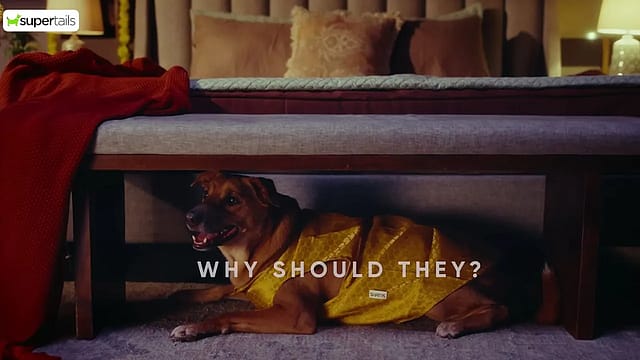
The ring light has found room under the table. So has Diwali.
A young woman attends to her make-up beneath the furniture. Elsewhere, sweets are being passed around and a card game is in progress. Everyone has dressed for the occasion. Everyone is also negotiating a rather unhelpful ceiling.
The family in Supertails’ No Bang Diwali film is making a determined effort to celebrate. The festivities continue through bent heads, cramped bodies and the occasional encounter with the woodwork. There is something endearingly Indian about this commitment to carrying on. The mithai has arrived. People will adjust.
For a while, the film lets us enjoy the ridiculous arrangement.
Then it shows us the dog. And the cat. Both are sheltering beneath furniture, wearing festive clothes. The question on screen is simple: “If you wouldn’t celebrate Diwali like this, why should they?”
Losing Memory
16 Oct 2026 - Vol 05 | Issue 42
The making of a medical and social emergency
The joke has brought us somewhere tender.
THE VIEW FROM DOWN THERE
We usually see Diwali from standing height. The lights, the decorations, the clothes, the photographs. Advertising has become exceptionally good at making these things glow.
Supertails lowers our gaze. Beneath all that preparation is a familiar place where a frightened animal may try to feel safe.
The film’s most effective decision is to give the humans the awkward experience first. The make-up, sweets and card game remain recognisable. Their relocation supplies the comedy. We understand the inconvenience before the animal appears.
That makes the eventual connection feel discovered.
There is affection in the treatment, too. The family feels familiar. Its members are busy with the small rituals that make a festival feel like itself. We can laugh at their predicament without being asked to dislike them.
The same generosity extends to the viewer. The film leaves room for someone to think: perhaps there is something I have overlooked.
Marketing and branding experts reckon that humour can make a difficult subject easier to approach because people stay with the situation before they feel they are being addressed. "Here, the family’s discomfort helps viewers recognise the animal’s experience,” says Ashita Aggarwal, professor of marketing at SP Jain Institute of Management & Research.
For a message about consideration, that is a considerate way to begin.
THE PERSON BESIDE THE DOG
Pet parents will recognise another part of the evening that festive advertising rarely dwells on.
Someone may be sitting beside a nervous dog while the gathering continues elsewhere. Someone may be checking the windows, finding a quieter room or watching for the next startled movement. Their celebration includes looking after a companion who cannot understand why familiar surroundings have suddenly become frightening.
An advertisement that notices this experience can offer a small, valuable form of recognition.
Dogs Trust’s fireworks guidance advises owners to let a dog hide where it feels safe, offer calm reassurance when it seeks attention, and avoid telling it off for behaviour caused by fear. It also recommends preparing a safe space and consulting a vet where needed.
That distinction matters when reading the film. There is nothing inherently wrong with the space beneath a table. For some animals, it can be a reassuring refuge. Helping a frightened dog does not mean pulling it out to join the photographs.
It means respecting what helps that particular animal feel secure.
The festive outfits in the film give its central observation extra poignancy. We have thought about how the animals will look during the celebration. Their comfort deserves the same attention.
And consideration need not stop at the front door. A community dog has no living room to retreat to. Cats, birds and other animals also share the neighbourhood in which the celebrations take place.
The film begins with pets. The kindness it asks for can travel further.
A VERY LARGE DOG IN HELSINKI
Other advertisers have found inventive ways to make this hidden experience visible.
For New Year’s Eve in 2022, Nordic pet-care company Musti Group brought a 20-foot virtual dog to Helsinki’s official celebrations. Created for its Be Aware of the Dogs campaign, the animated animal reacted to fireworks noise in real time, using a decibel meter connected to the screen.
A frightened dog would ordinarily disappear from the crowd’s view. This one became too large to overlook.
The campaign, created by Erma&Reinikainen, asked people to be more mindful about where they set off fireworks. Its ingenuity lay in bringing an absent participant into the celebration itself.
Supertails arrives at a related understanding through the opposite change in scale. Musti made the dog enormous. Supertails made the humans crouch.
Both help people notice an experience that their own enjoyment can obscure. Neither needs us to imagine an animal delivering a speech. A body reacting to its surroundings makes the point.
“Pet parents often understand these anxieties already," says Aggarwal. A campaign becomes more useful when it also reaches the neighbour, the visitor or the friend who has never seen how an animal reacts. “It gives them a situation they can recognise and a reason to be more thoughtful,” she adds.
A SOUNDTRACK FOR STAYING CLOSE
In Britain, Classic FM has developed another response: something people can use while they sit with their animals.
Its Pet Classics programmes pair calming music with advice from the RSPCA during fireworks season. The broadcaster has announced an expanded ninth edition for November 5–7, 2026, alongside a specially commissioned piano piece, When The Night Goes Quiet, by Noah Inada-Kim.
This is a different kind of brand intervention. A radio station uses its programming to accompany households through a difficult evening. The music is intended to help; it should not be mistaken for a guarantee that every anxious animal will settle.
There is warmth in the recognition that the audience includes a worried person and the animal beside them.
Taken together, these examples suggest a useful direction for animal-focused communication. Creative work can help us see the distress, understand the caregiver and offer support. Animals need not appear only as adorable extras or as objects of pity.
They can be the reason the communication exists.
MAKING ROOM
Supertails eventually brings its family back to a more comfortable celebration. A delivery arrives, the pets join the gathering, and the closing frames introduce the brand’s essentials, pharmacy, grooming and consultation offerings.
The commercial connection is clear. A pet-care business wants to be part of how households prepare for the festival.
There is a natural fit in that ambition. Caring for an animal involves everyday purchases, professional support and the decisions people make at home. The campaign gives those preparations an emotional context: helping the animal feel cared for through an unfamiliar, noisy evening.
“The strongest association available to a pet-care brand is that it understands the animal as well as the person buying for it,” says Aggarwal. That understanding becomes meaningful when it carries through into the advice, services and care people receive.
What stays with this film, though, is its invitation to look a little lower. The dog beneath the furniture is still part of the gathering. So is the person keeping it company. Perhaps this year someone will take their own plate to a quieter room, sit down nearby and stay awhile.
Diwali can happen there, too.