Retrosexual Act: Are Brands Chasing Nostalgia or Each Other?
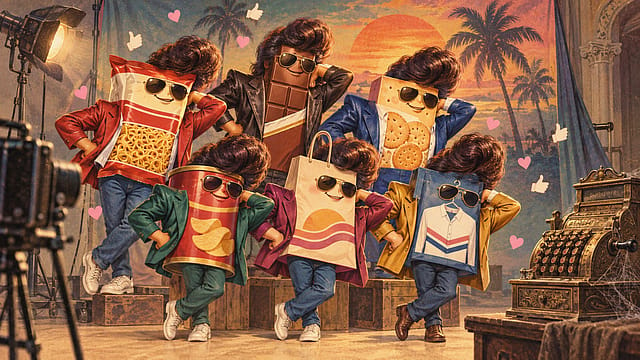
The hair has volume. Does the marketing?
Somewhere in an imaginary agency meeting, a perfectly respectable brand is being asked to grow a mullet. Its competitor has already grown one. The competitor has likes. The client has questions. The agency has until evening.
Nobody has asked what the customer needs. Everybody has seen what the competitor posted.
Welcome to the retrosexual act: advertising’s latest flirtation with yesterday, conducted with the urgency of a business terrified of missing tomorrow’s trend report.
Maggi, Instamart, Libas, Parle Hide & Seek, Haldiram’s and Cadbury have reportedly joined the AI retro wave, dressing their social content in the visual pleasures of another decade. Big hair, vintage styling, old-studio charm. The newest technology has opened a costume department for the past.

Zeroing In on ECI
09 Oct 2026 - Vol 05 | Issue 41
Constitutional legitimacy versus political opportunism
The pictures can be charming. The participation can be fun. The commercial question is considerably less photogenic: when the audience finishes admiring the makeover, does it have another reason to choose the brand?
A busy comments section can make a marketing team feel wanted. Building a business requires the customer to want something too.
FOMO Gets a Creative Department
There is a peculiar contradiction in brands competing for distinction by adopting the same look.
One brand discovers the format. Another spots the response. A third notices that the second has joined. Soon, the original consumer insight risks being replaced by a much simpler observation: the competition seems to be having a lovely time without us.
The brief practically writes itself. Make us one of those.
That is herd mentality with a purchase order. Its appeal is understandable. Choosing an unfamiliar idea means defending your judgement. Choosing a popular format comes with a ready-made supporting presentation: look how many people are doing it.
In that meeting, the competitor has quietly become the creative director.
AI makes the arrangement wonderfully efficient. A treatment that might once have required costumes, sets and a shoot can now be explored rapidly. The time saved is real. So is the temptation to skip the harder discussion about whether the brand has anything worthwhile to contribute. The machine can generate the picture. Somebody still needs to justify the brief.
A Like Is a Flirtation
The retrosexual metaphor is useful because it captures the distance between attraction and attachment.
Someone notices the brand. They smile. Perhaps they send the post to a friend. None of those responses is trivial. But a flirtation in the feed does not automatically become a relationship at the shelf.
The consumer might remember the hairstyle and forget the advertiser. They might remember the advertiser and buy their usual product. They might even try the product once and find no reason to return.
Stickiness begins when something specific remains: a recognisable character, a useful promise, a feeling consistently associated with that brand. Loyalty asks for more. The product has to satisfy. The service has to deliver. The experience has to survive a second encounter.
An AI portrait can take a delivery app back to 1985. The order still has to arrive on time today.
The available campaign coverage does not establish the sales or loyalty effects of these Indian executions. Declaring them failures would be as careless as declaring them triumphs because people clicked. The sharper objection is to the leap from a visible reaction to a business conclusion.
A heart beneath a photograph is an encouraging response. It is a very small document on which to build a declaration of lasting love.
What Survives the Makeover?
Professor Ashita Aggarwal of SPJIMR offers a useful way to examine that gap through her response to an earlier Cadbury campaign.
Discussing Dairy Milk’s 2021 cricket-film revival, she identified its value as an example of “how strategic core of the brand remains and adapts to evolving market”. Her emphasis was on a brand carrying its identity through change.
That observation puts a harder question to the current retro rush: what, exactly, survives beneath the styling?
In Cadbury’s #GoodLuckGirls film, a woman hit the century and her boyfriend ran onto the cricket field to celebrate. The familiar commercial returned with its gender roles reversed. The audience could recognise an old emotional scene while watching a contemporary story unfold.
Cadbury had something valuable to revisit: a memory already attached to Cadbury. The reinterpretation gave that memory another job.
Now imagine a rival chocolate brand reproducing the same scene. Its expensive tribute might leave viewers thinking fondly about Dairy Milk.
That is the distinction Aggarwal's observation helps expose. Recognition needs an owner. A cultural reference becomes strategically valuable when it reinforces the particular brand using it.
Apply that to an AI portrait. Remove the logo. Replace the pack. Substitute the competitor. If the execution works just as comfortably, the advertising may have made the decade more memorable than the advertiser.
The 1980s have acquired another sponsor. The sponsor still needs a reason to be there.
America Put Nostalgia on the Menu
McDonald’s supplied a more tangible answer in the United States in October 2022.
Its collaboration with streetwear label Cactus Plant Flea Market offered adults a boxed meal with a collectible toy. Familiar characters, including Grimace, Hamburglar and Birdie, returned in altered form. Childhood’s pleasure of opening a Happy Meal became something grown-ups could order.
The memory came with a meal attached. That commercial mechanism matters. A customer attracted by the collectible had a clear next action: buy the box. The nostalgia lived in something McDonald’s sold, drawing on a ritual associated with its own restaurants.
Within days, McDonald’s confirmed that some restaurants had sold out of the limited-edition experience. That demonstrates demand for the promotion, although it cannot establish how long the affection lasted.
There is plenty to question about selling adults another plastic childhood. Commercially, however, the journey was legible. Remember the excitement. Want the collectible. Order the meal. The customer could take the feeling home in a bag.
Britain Gave the Selfie a Brand History
Cadbury’s British anniversary work offers a second comparison, particularly awkward for anyone tempted to blame the technology.
For its 200th anniversary in 2024, the brand introduced My Cadbury Era with Bernadette and VCCP. People could upload a selfie and see their likeness placed into one of seven historic Cadbury advertisements. Original archive material supplied the basis for the AI-generated posters.
The consumer got the pleasure of becoming the subject. Cadbury supplied the world in which that transformation happened.
That is a more particular invitation than asking somebody to admire a vintage treatment. The user was entering Cadbury’s advertising history. The anniversary provided a reason for the invitation; the archive made the experience belong to the brand.
These American and British examples suggest two productive destinations for nostalgia: a purchase people can make and a brand memory they can deepen.
Neither guarantees loyalty. Both explain why the brand is participating.
The Indian retro rush deserves the same question. What does this particular execution add to the relationship with this particular advertiser? A fashionable filter cannot supply the answer merely by being fashionable.
The Brand Changes Clothes. The Customer Forgets Its Name.
A larger danger emerges when trend participation becomes a habit of constant reinvention.
Today the brand is an ’80s heartthrob. Tomorrow it borrows another visual universe. Next week it speaks in the voice of a meme. Each post may be individually competent. Together, they can resemble a wardrobe belonging to six different people.
What is the customer supposed to recognise across them?
System1’s Compound Creativity research examined consistency over five years, drawing on 80 brands in the IPA Effectiveness Databank and 136 in the Effie Case Library. It found that more consistent brands produced stronger advertising and reported greater brand and business effects. The evidence concerns sustained brand behaviour, giving marketers a reason to ask what successive executions build together.
A recurring character can develop new adventures. A familiar visual style can accommodate new jokes. A durable promise can find fresh cultural expression. Consistency leaves considerable room for invention.
But if every new trend requires the brand to acquire a new personality, the consumer is repeatedly being introduced to a stranger.
Marketing gets bored with its own work at its own risk. The customer has other things to remember.
The Right to Miss the Party
Of course, a social post is allowed to be a social post. A quick joke need not arrive carrying a five-year loyalty programme. A familiar brand can join the fun, entertain people cheaply and get back to work.
The trouble begins when joining every party becomes the work.
Then the calendar fills with borrowed occasions. The team gets exceptionally good at responding to everyone else’s ideas. The brand’s own story waits for a day when the internet is less busy.
That day is unlikely to arrive.
The useful discipline is knowing what a trend will do for the brand before asking what AI can do to the photograph. Sometimes the answer will justify participation. Sometimes a small, amusing post is all that is needed. Sometimes sitting out will be the more intelligent decision.
Return to the imaginary meeting. The rival’s mullet remains on the screen. Somebody wants approval before the trend expires.
Ask one question: when the customer encounters us tomorrow, what will this have helped them remember, want or choose?
If the only answer is that everybody else is doing it, the brand already has its diagnosis. The mullet can stay in the photograph. Herd mentality should not get the corner office.
By all means, bring back the 1980s. Just give the customer a reason to come back too.