Obesity, rewritten: The New Gospel of Weight Loss
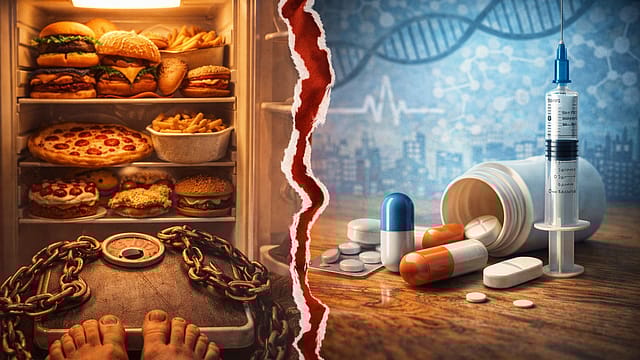
There was a time when weight was framed as a moral test. Discipline, indulgence, restraint — the vocabulary belonged as much to culture as to medicine. Doctors advised moderation, society prescribed shame and industry sold aspiration.
Today, weight comes with a prescription.
At the centre of this transformation stands Eli Lilly and Company, the nearly 150-year-old American pharmaceutical firm that has unexpectedly become the architect of one of the most consequential health narratives of the century: obesity as treatable biology.
Founded in 1876 by pharmacist and Civil War veteran Eli Lilly, the company did not set out to redefine appetite. Yet its latest class of metabolic drugs has done precisely that — turning weight loss from an act of will into an outcome of chemistry.
The scientific achievement is undeniable. The cultural consequences are less settled.

Rise of the Pivotal Power
18 Sep 2026 - Vol 05 | Issue 38
The BRICS declaration is a strategic victory for Modi
From Self-Control to Science
The excitement around drugs such as Mounjaro and its obesity-specific version, Zepbound, rests on clinical evidence showing substantial weight reduction alongside improved blood sugar regulation and cardiovascular indicators.
These therapies belong to a class of GLP-1 medicines that recalibrate appetite signals and metabolic response. Earlier entrants such as Ozempic, developed by Novo Nordisk, had already captured public imagination. Eli Lilly’s formulations appeared to push efficacy further.
Medicine had finally discovered what diets rarely delivered: predictable results.
But breakthroughs rarely leave the problem unchanged. Obesity, long interpreted through behaviour and environment, is increasingly described as hormonal destiny — a chronic condition requiring sustained pharmaceutical management.
The shift carries both compassion and convenience.
The Arrival of the Drug in Aspirational India
The scale of the underlying health challenge is becoming clearer. According to Kantar India’s GLP-1 Opportunity Index Report, released ahead of World Obesity Day, nearly 73 million urban Indians aged 15 and above are estimated to be overweight or obese, while over 101 million Indians live with diabetes, with another 136 million at pre-diabetic risk.
Yet awareness of next-generation metabolic therapies remains strikingly low. The report found that fewer than 5% of urban Indians are currently aware of GLP-1 treatments, despite nearly 85% of overweight individuals actively attempting to lose weight — highlighting what researchers described as a widening gap between intent and medical awareness.
India’s paradox sharpens here: a nation negotiating malnutrition and excess simultaneously now encounters a therapy priced beyond the reach of most citizens. Within private healthcare networks, Eli Lilly has emerged as an early reference point in prescription weight management. Access remains narrow, but aspiration travels faster than regulation.
The drug arrives first as conversation, then as signal.
The language shifts. One hears less about disease than optimisation: Better energy, controlled appetite and efficient living. Weight loss begins to resemble productivity enhancement.
This transition is now visible beyond clinics.
In recent months, Indian digital culture has seen a noticeable surge in conversations around GLP-1 drugs, particularly Mounjaro. Comedian Aishwarya Mohanraj referenced it in a video about slimming down in months. Podcasts, wellness creators and lifestyle influencers discuss medical weight loss with growing frequency. What once belonged to specialist endocrinology has entered everyday urban discourse — often detached from clinical context and reframed as curiosity, shortcut or self-improvement tool.
The pharmaceutical breakthrough, in other words, is travelling through humour, algorithms and long-form conversations faster than medical literacy can keep pace with it.
The Promise of the Pill
Eli Lilly’s anticipated once-daily oral GLP-1 drug, expected globally as early as 2026 subject to regulatory approvals, may further normalise pharmaceutical intervention.
An injection, after all, still signals illness. A pill belongs comfortably to routine life.
Ease of consumption, however, introduces a quieter question: when treatment becomes frictionless, who decides where therapy ends and enhancement begins?
Early trial disclosures suggest encouraging metabolic outcomes. Yet long-term dependence remains an open medical inquiry. Many patients regain weight after discontinuation — implying that effectiveness may depend less on cure than continuity.
In commercial terms, continuity is stability.
Advertising Without Judgment — and Not Without Purpose
Eli Lilly’s recent advertising campaigns have consciously abandoned the rhetoric of transformation. Instead, they speak of stigma, biology and misunderstanding. Obesity, the message suggests, is not failure but physiology.
The tone feels corrective, even humane.
Yet pharmaceutical history offers precedent: redefining illness often expands treatment markets. When suffering acquires diagnostic legitimacy, intervention follows naturally and persistently.
Modern drugmakers do more than sell treatment. They help shape the boundaries of what qualifies as treatable.
Weight, perhaps for the first time, is being rewritten in that vocabulary.
A Market Built on Permanence
Analysts now project obesity therapies to become among the largest drug categories globally. Food companies monitor consumption shifts. Insurers calculate long-term savings against lifetime treatment costs. Employers quietly study productivity correlations.
The enthusiasm is logical. So is the discomfort.
If millions must remain medicated to maintain metabolic balance, weight management moves from resolution to maintenance — from recovery to subscription.
The pharmaceuticalisation of everyday life advances not dramatically, but incrementally.
The Question Beneath the Cure
None of this diminishes the the lived reality of obesity or the legitimacy of medical intervention. For many patients, these therapies offer relief after years of failed diets and compounding frustration.
Still, the deeper question remains.
Is society witnessing liberation from biological constraint or a quiet outsourcing of self-regulation to chemistry?
The answer may lie somewhere between progress and dependence.
Eli Lilly and Company did not invent humanity’s struggle with appetite. It has, however, offered its most scalable solution yet. And in doing so, it may have transformed weight loss from a personal battle into one of the defining industries of modern medicine.