Life After the Founder: What Eternal’s Transition Really Tests
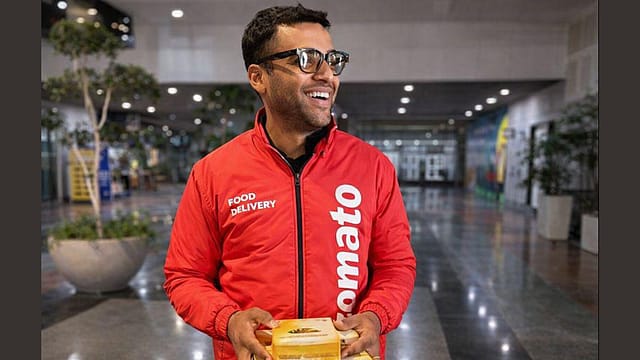
There are leadership changes and then there are moments that feel like an identity shift. Deepinder Goyal stepping down as CEO of Zomato is the latter. It’s not because CEO exits are unusual. It’s because Zomato was never just a company. It was a personality: Loud, opinionated, restless, occasionally reckless and unmistakably alive. For over a decade, that personality had a face. And it was Goyal’s.
This transition raises a question far older than Zomato: when does a founder’s influence stop fuelling growth and start becoming a single point of cultural dependence? “Every institution finally needs a constitution,” reckons Shubhranshu Singh, board member at the Effie Lions Foundation. Founder-led brands, he underlines, eventually face a reckoning: whether their identity lives inside systems and culture, or remains trapped in one individual’s temperament.
Zomato’s brand has always played out in public. Its irreverent social media voice, appetite for experimentation, and willingness to take positions—often before calculating consequences—mirrored Goyal’s leadership style. This closeness wasn’t incidental. In the early days of startups, instinct outruns structure. Speed matters more than process. Personality fills the gaps where systems don’t yet exist. Over time, instinct becomes habit. Habit becomes culture. And culture, if left unchecked, begins to look indistinguishable from the founder himself.
In India, several large brands still orbit a founder-shaped centre of gravity. Patanjali is inseparable from Baba Ramdev’s worldview. Paytm’s relentless optimism and voracious ambition mirror Vijay Shekhar Sharma’s personal journey. These brands gain energy, credibility and attention from their founders. But they also inherit their volatility. When the individual falters, the brand has little insulation. The downside of personality-led scale is fragility.

India's Action Hero
27 Mar 2026 - Vol 04 | Issue 64
Riding the Dhurandhar Wave
But there are companies that have been charting a different route. At Bajaj Auto, Rajiv Bajaj is visible, vocal and influential, yet the brand does not depend on his presence in popular discourse. Its identity—engineering-led, performance-driven, unsentimental—resides in products and strategy, not personality. The same institutional clarity runs through companies like Infosys, Biocon and Apollo Hospitals, where leadership transitions have occurred without disturbing what the brand fundamentally stands for.
This is the lens through which Zomato’s transition will be judged. Not succession, but encoding. The real test, points out Singh, is whether Zomato’s clarity of vision, speed of decision-making and appetite for experimentation are embedded into systems or whether they still carry a founder premium tied to Goyal’s presence.
Yet this entire debate plays out far above the level of everyday consumption. “The end consumer is largely indifferent,” says brad guru Ambi MG Parameswaran. Someone ordering a ₹200 biryani is not auditing leadership structures or governance frameworks. For most users, performance matters more than personality. The founder conversation belongs to investors, analysts and a small but vocal online audience, he reckons.
That distinction is critical because modern brands operate on parallel planes. They are cultural symbols for some, financial instruments for others, and frictionless utilities for most. A leadership transition can unsettle one plane while leaving the others untouched. Stock prices may react. Industry chatter may spike. Usage often continues without interruption.
Which brings us to the least romantic, most important truth: transitions are not optional. They are structural. No organisation built to endure can remain dependent on one person’s intuition indefinitely. As scale grows, judgement must yield to process. Instinct must be translated into principle. The founder’s role shifts from decision-maker to architect.
Harish Bijoor sees this moment not as dilution, but reconfiguration. Goyal has built Zomato with enough confidence to let it operate beyond him. “A leadership change, then, signals readiness for the next phase and not uncertainty,” says Bijoor, who runs an eponymous brand consulting firm. The founder’s imprint doesn’t vanish. It hardens into muscle memory.
So, the question isn’t whether Zomato can survive without Deepinder Goyal at the helm. The sharper question is whether Zomato has become enough of itself to no longer need him at the centre.
The answer won’t come from announcements or assurances. It will surface slowly in how decisions get made, how risks are priced, and how the brand behaves when no single individual is expected to explain it. For Indian brands watching closely, the lesson is clear. Founders give brands their first voice. Institutions ensure that voice doesn’t fall silent when the founder steps back.