Inside Wonderchef’s IPO Bet: Ravi Saxena on Growth in a Slowing Market
For years, India’s kitchen appliances industry rode steady demand and predictable growth cycles.
But Ravi Saxena isn’t calling it a boom.
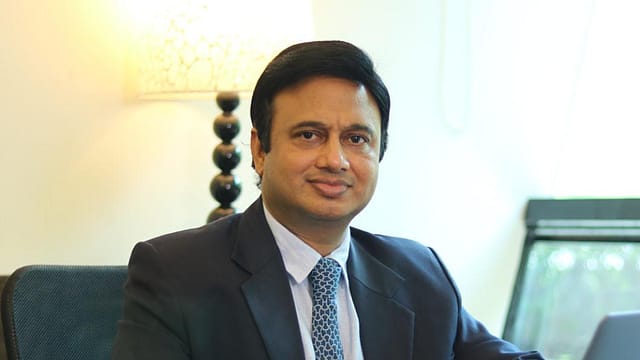
In an exclusive conversation with OPEN Digital, the Founder and CEO of Wonderchef pushes back on the narrative. “The industry had a rush for one or two years,” he says. “After that, growth has largely stagnated.”
It is an unexpected note from a founder heading toward an IPO. Most public-market stories open with acceleration. Saxena opens with a plateau.
Wonderchef, the kitchenware and home appliances brand he co-founded with celebrity chef Sanjeev Kapoor, reported operating revenue of Rs 421 crore in FY25, according to filings with the Registrar of Companies. The Mumbai-based company is now preparing for an initial public offering that could value it at around Rs 1,800 crore.
The Vanguard
21 Aug 2026 - Vol 05 | Issue 34
BJP Rearmed for 2029
Interestingly, the investor pitch isn’t built on a surging category. It rests on something tougher: outpacing the market even as the market slows.
A market that is growing, but unevenly
On paper, India’s kitchenware opportunity looks substantial. A Grand View Research report estimates India’s kitchenware market at $5.2 billion in 2024, with projections suggesting it could nearly double by 2033.
The demand drivers are visible. Urban homes are shrinking. Working hours are stretching. Cooking habits are changing without completely westernising. Consumers want convenience but not necessarily ready food, as per the report.
But durable goods don’t behave like fast-moving consumption categories. A mixer grinder or pressure cooker isn’t replaced every year. Growth doesn’t hinge on first-time buyers alone. It depends on persuading existing households to upgrade.
Saxena believes that shift is already underway.
Pointing to listed competitors, he says industry growth has hovered in the low single digits in recent years. Wonderchef, he claims, has grown at roughly 17% over the same period.
The comparison reflects how challenger brands often frame themselves against legacy players. Whether that performance gap holds once the company lists remains an open question.
Selling appliances through people, not algorithms
One of Wonderchef’s more unusual bets came early.
While most kitchen brands relied heavily on distributor networks, Wonderchef built multiple channels simultaneously. Today, roughly 30% of its sales come from digital platforms. But Saxena insists online growth was never the starting point.
Instead, the company invested in what it calls a women entrepreneur network. More than 82,000 women across over 1,000 towns demonstrate Wonderchef products through home gatherings.
“I don’t like calling them influencers,” Saxena says. “Influencer is social media. This is real.”
The format sounds almost old economy in an era dominated by performance marketing dashboards. Guests sit together, watch demonstrations and ask questions before buying.
In smaller towns, where organised retail penetration remains limited, familiarity still drives purchase decisions.
It may also be addressing a trust gap that many digital-first brands struggle to bridge. By the time a customer encounters Wonderchef online, the product often isn’t unfamiliar. Someone they know has already used it.
Innovation, grounded in irritation
Listen to Saxena describe product development and a pattern surfaces. Most innovations are not futuristic ideas but solutions to everyday annoyances.
Mixer grinder lids flying open. Non-stick coatings wearing out quickly. Tea boiling over the minute you look away.
“If you see older mixer grinders, you had to stand holding the lid,” he says.
Wonderchef’s Nutri Blend introduced transparent locking jars. The company extended warranties on cookware when competitors offered shorter coverage. It later introduced coloured cookware in a category long defined by uniform design.
More recently, it launched automated appliances such as pressure cookers, cooking robots and a chai maker that automatically releases milk during brewing to prevent spillover. About 6,000 units of the chai maker have already been sold, claims Saxena.
Not every innovation becomes mass adoption. But frequent experimentation allows the company to identify what sticks. Last year alone, Wonderchef introduced nearly 50 new products.
Aspirational, not premium
Despite its design-forward positioning, Saxena resists the premium label.
“We are not like German brands,” he says, referencing companies such as Bosch and Siemens.
Instead, he calls Wonderchef aspirational.
The distinction matters. Indian consumers often seek upgrades that feel modern but remain affordable. Appliances must signal lifestyle improvement without appearing indulgent.
Even marketing campaigns increasingly reflect changing household roles. Wonderchef advertisements frequently show men cooking, positioning convenience as a way to redistribute domestic work rather than merely modernise kitchens.
The surprising economics of online
Conventional wisdom suggests ecommerce compresses margins. Saxena argues the opposite. “Digital is actually our most profitable channel,” he says.
Unlike direct-to-consumer startups that spend heavily on customer acquisition, Wonderchef claims it spends roughly 7% of sales on digital marketing. Brand familiarity built offline reduces advertising dependence online. Marketplace commissions, he adds, are often lower than combined distributor and retailer margins in physical trade.
Still, the relationship between online and offline remains intertwined. Customers increasingly research products digitally before purchasing wherever they feel comfortable. The sale may happen online. The conviction often begins elsewhere.
Manufacturing honesty
On sourcing, Saxena offers a level of candour rarely heard in consumer branding conversations. “Hardware can be Chinese. Software is ours,” he says.
India, he notes, still lacks manufacturing ecosystems for several appliance categories, particularly coffee machines. Many products are imported in semi knocked down form and assembled locally. Around 95% of Wonderchef’s portfolio is now made or assembled in India, largely due to regulatory requirements.
But Saxena resists overstating localisation. “There is no shame in buying globally,” he says. “Just don’t claim it as innovation.”
Built on partnership
Wonderchef’s creation are closely linked to Saxena’s partnership with chef Sanjeev Kapoor. Before launching the company, Saxena had spent years building businesses for Sodexo and later working with the Landmark Group. Kapoor encouraged him to build a consumer facing brand around kitchen upgrades and healthier cooking habits. Asked if Wonderchef would exist without Kapoor, Saxena offers a candid reply. “No. I would have done something else.”
The shift underway
Five years ago, cookware accounted for nearly 70% of Wonderchef’s revenue. Today, appliances drive most growth. Repeat customers contribute about 42% of sales, suggesting adoption across categories rather than one time purchases.
The transition mirrors how Indian kitchens themselves are evolving. Cooking spaces are becoming less static and more technology assisted.
Yet scale brings new expectations. An IPO transforms a founder narrative into quarterly scrutiny. Growth claims will soon be measured against public disclosures rather than internal comparisons. Wonderchef’s bet is that distribution depth, continuous innovation and aspirational positioning can help it grow even when industry momentum weakens. Whether that conviction survives public scrutiny is yet to be seen.