Karwa Chauth Advertising: Love, Libas & a Date With the Moon
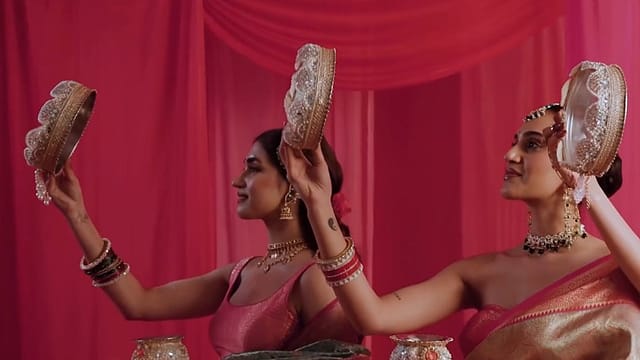
The moon has an unusually busy appointment book on Karwa Chauth. Couples are waiting, families are gathered, and somewhere in the preparations there is a fashion label hoping its outfit makes the photographs.
Libas has found its place in those preparations with Lal Ishq – A Celebration of First Karwa Chauth. Its three-part campaign follows a newlywed bride through getting ready, family rituals and the moonrise ceremony shared with her husband. Clothing accompanies the occasion from its anticipation to its closing gesture.
The first Karwa Chauth gives an apparel brand a particularly useful setting. The bride is entering an experience she may have watched other women in the family observe for years. Familiar customs become personal. An outfit chosen for that day has a chance to acquire a memory beyond its first wearing.

Look Who's Talking Regime Change
23 Oct 2026 - Vol 05 | Issue 43
That is the connection Libas wants to make. Its marketing head, Nisha Khatri, reportedly describes how “clothing becomes part of the experience and the memories associated with it”. The brand’s own Lal Ishq edit supplies the shopping possibilities, including sarees and suit sets in festive colours. The emotional story and the collection sit comfortably beside each other.
Karwa Chauth offers advertisers an unusually complete narrative. There is preparation, waiting, a relationship at its centre and an anticipated ending. Fashion, beauty, jewellery, food and gifting businesses can each find something relevant within the day.
The interesting choices begin when they decide which part to claim.
Bollywood had already dressed the occasion
Hindi cinema gave advertisers plenty to work with.
In Dilwale Dulhania Le Jayenge (1995), Karwa Chauth becomes part of Raj and Simran’s romance, with both lovers fasting. Kabhi Khushi Kabhie Gham (2001) gives the occasion the scale and glamour of “Bole Chudiyan”. Baghban (2003) uses the fast to express the attachment between an older couple separated by their circumstances. Across these films, the ritual accommodates youthful longing, lavish family celebration and enduring companionship. The clothes, gestures and emotional expectations become part of its screen appeal.
Kajol has acknowledged the consequences with some amusement. In an interview in 2023, she reportedly said DDLJ and K3G had helped turn a simpler ceremony into a large function and a fashion occasion, raising expectations about clothes and jewellery. Cinema certainly did not invent Karwa Chauth, and its contribution cannot be isolated as a sales figure. It did help make the celebration aspirational and widely recognisable. Advertisers could enter a setting whose romantic meaning audiences already understood.
Libas works within that familiarity. Its bride’s first celebration needs little explanation. The occasion carries much of the feeling before the brand begins telling its story.
There is creative value in respecting that attachment. A woman may enjoy dressing for Karwa Chauth without wanting an advertisement to explain her marriage to her. A familiar ritual can provide enough pleasure on its own.
A gift that says you have been paying attention
Milton approaches the festive season through a different relationship question: how well do you know the person receiving your gift?
Its 2026 Diwali and Karwa Chauth communication builds on “I Know You”, connecting its gifting range with an understanding of someone’s preferences and everyday habits. The products include Copper Elegance, The Couple’s Edit and Charm gift sets.
The proposition gives a practical household brand a way into an occasion associated with romance. Familiarity becomes affectionate. Knowing what someone likes, uses or reaches for every morning can make an ordinary object feel considered.
That is a useful commercial distinction in a crowded gifting season. Price and presentation remain important, but the campaign gives the buyer another way to judge a purchase: whether it feels right for its recipient.
Palmonas, meanwhile, has found room to smile at the advertising surrounding the festival. Its 2026 Karwa Chauth execution plays with the conventions of an elaborate emotional jewellery commercial, turning the production itself into a comedy involving a troublesome moonrise sequence. The joke eventually leads to its 9KT gold proposition.
There is affection in recognising a familiar advertising performance. Audiences have seen enough moonlit jewellery films to understand the setup. A brand can invite them to enjoy the machinery behind the sentiment while still making an entirely straightforward request to consider its products.
These approaches can coexist. Libas offers immersion in the occasion; Milton makes attentiveness part of gifting; Palmonas acknowledges that the audience knows how festive advertising works. Their competition concerns the place each brand can earn within a shared celebration.
Marketing and branding experts reckon that a culturally familiar occasion gives brands an emotional starting point, but relevance depends on the role the product can credibly play. Dressing, gifting and sharing a meal offer different possibilities. "The strongest connection comes from understanding what people value in the celebration and giving the brand a useful place within that experience," says Ashita Aggarwal, professor of marketing at SP Jain Institute of Management & Research.
When the husband joined the fast
Advertisers have also used Karwa Chauth to explore reciprocity within marriage.
Shaadi.com’s #FastForHer, launched in 2014, encouraged husbands to fast for their wives. The initiative asked men to participate in a ritual whose familiar representation centred on the wife’s devotion. Shaadi’s own account identifies equality in marriage as its purpose.
For a matchmaking business, that is a relevant conversation. Helping people find a partner naturally raises questions about the kind of partnership they hope to build. The campaign carried the brand beyond the wedding into the relationship that follows.
BharatMatrimony’s 2022 Let Feelings Shine introduced a complication. A husband insists on fasting alongside his wife despite having an important boxing trial the next day. Concerned about him, she breaks her fast early so that he will eat too.
The story gives both people something to consider. His gesture expresses solidarity; hers responds to his immediate needs. Affection involves paying attention to the person receiving it.
That provides advertising with a richer source of drama than a declaration about being the perfect spouse. Couples can mean well, disagree and find a resolution without losing the tenderness of the occasion.
Dabur’s story continued after the controversy
Dabur’s Fem campaign encountered a much sharper dispute in 2021.
The commercial showed two women preparing for Karwa Chauth, with their relationship revealed through the closing ritual. The same-sex representation attracted support as well as opposition. Then Madhya Pradesh home minister Narottam Mishra threatened legal action unless the advertisement was withdrawn. Dabur subsequently removed it and apologised for unintentionally hurting sentiments.
The episode exposed the pressures around representing a religious occasion through a relationship that departed from its conventional advertising portrayal. Appreciation and political hostility existed simultaneously. The backlash could not reasonably be treated as a verdict from every viewer.
It would also be misleading to end Dabur’s Karwa Chauth history there.
In 2023, Dabur Amla worked with poet Priya Malik on Jadon se Mazboot Riwaaj – Karwa Chauth Special. Dabur’s FY24 annual report describes the campaign as presenting the observance as a voluntary expression of affection. Malik’s changing understanding of the occasion supplied the personal perspective.
Fem itself returned to the occasion in 2025 with rapper Agsy, using individuality and women’s choices as the campaign’s stated themes.
Those later campaigns deserve to be part of the account. They show continued engagement with the festival and with questions about how women choose to participate. There is insufficient evidence to describe them as a response strategy devised after the controversy. They do establish that the advertising conversation continued.
Even a food brand can observe the fast
Some of the more inventive interventions begin with a practical observation.
For Karwa Chauth in 2019, Swiggy arranged gift boxes for delivery partners to take home to their wives. Alongside familiar festive items such as bangles, bindis and henna cones, the boxes contained helmets. More Powerful Than Prayer connected the wish for a husband’s safety with something he could wear on the road.
The connection gave the campaign substance. A delivery business had a direct reason to discuss road safety, and the festival supplied an emotionally intelligible way to introduce it. The idea does not need an invented claim about reduced accidents to remain worth examining.
Masterchow found another opening in 2025. Working with tgthr, it paused its usual appetising food imagery for a 12-hour #TheKarwaChauthPause, substituting deliberately unappetising content in support of people fasting.
The humour came from noticing the audience’s circumstances. A food brand had temporarily made resisting its feed easier. It remained recognisably interested in food while adjusting how it behaved around people who were waiting to eat.
Plenty of room beneath the same moon
Together, these campaigns show why Karwa Chauth continues to interest advertisers. Its recognisable gestures leave room for very different stories about dressing, companionship, gifts, care and choice.
The limitations deserve attention too. A beautiful film does not establish sales, and a thoughtful gesture does not demonstrate a change in household behaviour. Mutual fasting in an advertisement tells us what a brand chose to portray. It cannot tell us how every marriage works.
What advertising can do is make certain experiences visible and memorable.
Libas has chosen the anticipation of a first celebration. Other brands have found meaning in a husband joining the fast, a carefully selected present or a helmet tucked into a gift box. Bollywood helped enlarge the romantic imagination around the occasion. Advertisers keep finding smaller, commercially relevant moments within it.
For Libas, the ambition is easy to understand. Years from now, the bride may remember the people around her, the wait for the moon and what she wore that evening.
A fashion brand would be delighted to remain in that photograph.