Jockey Gets Personal: How ‘Feels Like Me’ Reflects the Changing Business of Women’s Innerwear
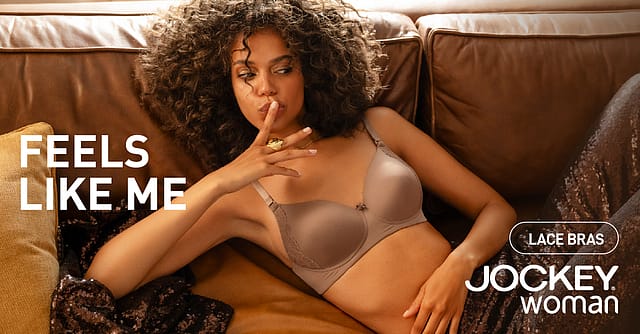
A bra that works under a fitted T-shirt may not be the one a woman reaches for when wearing a dress with a plunging neckline. A long day at work, a flight across the country and an evening out can bring different demands, even for someone who knows exactly what she likes. The challenge for an innerwear brand is to cater to these differences without making the shopping experience needlessly complicated.
Jockey’s new campaign, Feels Like Me, builds on this premise. Launched by Page Industries, the exclusive licensee of Jockey International in India, the campaign showcases the brand’s women’s range through different outfits, occasions and everyday situations. Seamless styles, bras designed for different necklines, everyday support and options for dressier occasions are presented as choices for different versions of the same woman.
Look Who's Talking Regime Change
23 Oct 2026 - Vol 05 | Issue 43
The proposition is less about discovering comfort than about finding the right fit for a particular preference or occasion. For Jockey, that creates an opportunity to showcase the breadth of its portfolio while encouraging consumers to look beyond a single go-to style.
The campaign also raises a larger question for the business: as India’s innerwear market expands and consumers encounter a wider choice of brands and designs, how can established players turn product variety into stronger customer loyalty?
A market of competing choices
The commercial opportunity is considerable. Ken Research estimates that India’s overall innerwear market was worth $10.9 billion in 2025 and projects it to reach $15.9 billion by 2031, with a compound annual growth rate of 6.49 per cent. Its separate estimate for women’s innerwear puts the segment at approximately $5.4 billion in 2025, with growth projected to outpace that of the broader category. These are market-research estimates rather than audited industry figures, but they indicate the scale of the opportunity.
The market is not, however, a single contest between established brands. Jockey competes with players such as Enamor, Amante and Triumph, alongside digital-first businesses such as Zivame and Clovia. Consumers can explore different fits, fabrics, designs and price points across exclusive brand stores, multi-brand retailers and online platforms. The expanding choice makes product differentiation more important, but also raises the bar for communicating why one product deserves a place in a consumer’s wardrobe.
For brands, the opportunity lies in understanding that a wider range does not automatically translate into greater demand. Consumers need to recognise the differences between products and understand which ones suit their needs. The challenge is to make that choice easier, whether through product descriptions online, in-store assistance or campaigns that connect a design to a specific dressing requirement.
There is also a commercial logic to encouraging consumers to consider more than one style. A woman who finds a product that works under a particular outfit may have a reason to return for a different cut, level of support or design. The objective is not simply to sell a larger number of products at one time, but to build a relationship in which the brand remains relevant across different occasions.
That strategy is not unique to innerwear. Across apparel, brands have expanded beyond a core product to offer more specialised options for work, travel, exercise and leisure. In innerwear, however, the relationship between design and the garment worn over it offers a particularly direct way to explain why different products might matter.
Building a brand beyond the product
Jockey’s history in India is instructive because the brand has already made the transition from a category-led offering to a broader lifestyle proposition.
Founded in the United States in 1876, Jockey began with hosiery before expanding into underwear. It introduced the Jockey brief in the 1930s and subsequently built a reputation around comfort and product innovation. Its women’s line, Jockey for Her, was launched in 1982.
In India, the brand’s growth has been closely tied to Page Industries, which was established in 1994 to bring Jockey to the domestic market. Operations began in 1995, and the company gradually expanded its distribution and product portfolio. The business moved beyond its original innerwear categories into bras, socks, athleisure and other apparel, while building a network of exclusive brand stores alongside its wider retail presence.
Page Industries’ scale provides context for the new campaign. In its FY2024-25 annual report, the company reported revenue of ₹4,934.9 crore, a retail network of more than 110,000 touchpoints and annual production capacity of 250 million pieces across 16 manufacturing units. Its business spans premium innerwear, athleisure and swimwear.
The numbers underline the infrastructure behind the brand, but scale alone does not guarantee that consumers will remain engaged. An established player must keep its offering relevant to changing preferences while maintaining the product consistency that helped build its reputation. A broader range is one way of doing so, provided consumers can see a meaningful distinction between the products on offer.
For Jockey, women’s innerwear presents an opportunity to deepen its relationship with a consumer base that may already know the brand through other products. The question is whether the brand can translate that familiarity into a more considered relationship with its women’s range.
When comfort becomes personal
“Today’s woman is constantly evolving, and so are her expectations from what she wears,” says Nihal Rajan, Chief Marketing Officer, Jockey India.
“At Jockey, we believe that comfort is deeply personal, and no single style can define what feels right for every woman or every moment. With ‘Feels Like Me’, we celebrate this individuality while showcasing the breadth of our range, thoughtfully designed to bring together comfort, fit and style.”
The campaign’s central idea is to connect these product differences to familiar situations rather than present the range as a catalogue of designs. The approach gives Jockey a way to communicate several product benefits within one larger message: women do not have to choose a single style to represent their preferences.
The campaign will roll out across outdoor, digital, social and connected platforms, with influencer collaborations and lifestyle, fashion and product-led content. The new women’s range is available at Jockey Exclusive Outlets, multi-brand retail stores, online marketplaces and the brand’s website.
The challenge is that individuality can become a generic advertising promise unless it is supported by a product experience that consumers find genuinely useful. A campaign can explain the difference between a seamless style and one designed for a particular neckline, but the consumer still needs the right sizing, fit, quality and availability. In a category where preferences are personal, the gap between what an advertisement promises and what a product delivers can determine whether a purchase is repeated.
There is another consideration. More choices can make shopping more relevant, but they can also make it harder to decide. The brands that benefit most from an expanding assortment may be those that help consumers navigate it, rather than simply adding more products to the shelf.
For Jockey, that makes Feels Like Me an exercise in both brand communication and product discovery. It attempts to show how a familiar brand can remain relevant across different wardrobes and occasions, without assuming that every woman has the same requirements.
The campaign’s success will ultimately depend on more than its reach or recall. Relevant measures would include the performance of the women’s range, repeat purchases, consumer response to different product categories and whether the campaign helps shoppers understand the assortment better.