Is Every Toilet Seat Sanitiser Now Called Pee Safe?
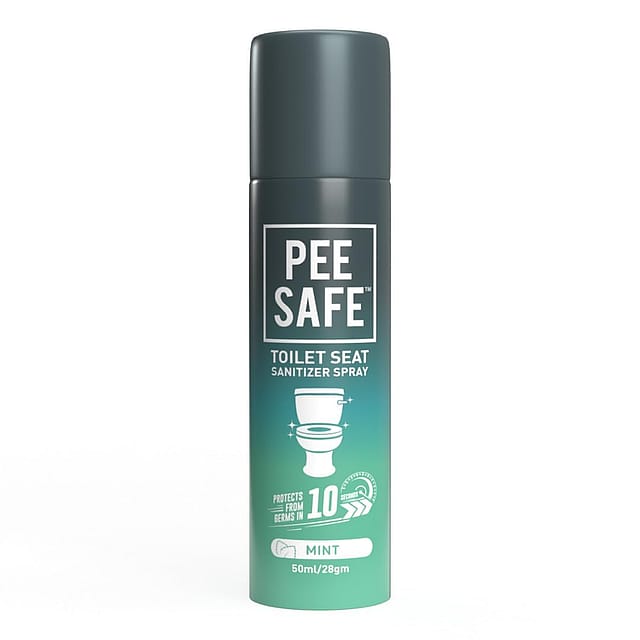
The security officer was working his way through a row of handbags when he stopped at a small spray bottle. He turned it over in his hand and asked, “Is this Pee Safe?”
Three women stood in line, and each had a toilet seat sanitiser in her bag. One by one, as their turns came, all three said yes.
There was one small problem. The bottle in my bag was Sirona.
Nobody corrected him. Perhaps there was no need. He knew what the product was, and the name that came to mind was Pee Safe. It was a little like asking for a Coke when what you want is a cola, or saying Xerox when you mean photocopy.

The Era of Forever Wars
30 Oct 2026 - Vol 05 | Issue 44
Coping with an explosive Middle East
It was an amusing exchange, but it stayed with me as a measure of brand recall. Had Pee Safe reached the point where its name stood in for an entire product category, whichever bottle a woman happened to be carrying?
The lanes of Banaras
A trip to Banaras offered another glimpse of how familiar the product has become.
The city’s narrow lanes are crowded with pilgrims, tourists and locals heading for the ghats. Visitors spend hours moving between temples, markets and the riverfront before going down to the Ganga for a holy dip. There is plenty to see, eat and photograph. Finding a clean public washroom is the less glamorous part of the itinerary.
Public toilets may exist, but availability and maintenance are different things. For women travelling through unfamiliar places, the search for a usable washroom becomes a calculation of distance, timing and how long they can comfortably wait.
A foreign tourist I spoke to called the spray a practical travel essential. “You never know what the washrooms will be like, especially when you’re moving around all day,” she said. A woman from Agra described how it had crept into her routine. “I didn’t always carry one. Now it’s just another thing I put in my handbag.” A woman from Bombay took a similar view: a small spray was worth carrying when the state of a public washroom was uncertain.
Different travellers, different bags, much the same concern.
That is the habit Pee Safe set out to build. And it did not begin with a large market waiting to be tapped.
A habit that had to be explained
In 2013, Srijana Bagaria developed a urinary tract infection after a road trip. The experience led her and her husband, Vikas Bagaria, to look closely at the difficulties women face when using public washrooms. They began working on a portable toilet seat sanitiser, which was launched in April 2017 under Redcliffe Hygiene. The idea was simple: a small spray you could carry in a handbag and use before sitting on a public toilet seat.
The harder task was explaining why anyone needed it.
Hand sanitisers were already familiar. A spray for toilet seats was a different proposition. Consumers had to understand what it did, when to use it and why it deserved a place beside their other travel essentials. Pee Safe was not just selling a product. It was trying to make a new hygiene habit acceptable.
Marketing did much of that work. Its 2019 #CleanIsNotSanitized campaign, launched around World Toilet Day, reached out to more than 200 influencers to share their experiences of public washrooms. It used celebrity associations, including actor Anita Hassanandani. In 2021, the To-Let-Go campaign combined online activity with giveaways and public awareness initiatives. More recently, Hygiene Ki Aadat took the message to offices, colleges, petrol pumps and highway rest stops, built around an instruction designed to stick: “Spray. Sit. Flush. Spray.”
The campaigns tied the product to a recognisable anxiety, the uncertainty of using a public toilet. They also gave consumers a name to reach for when that anxiety struck.
Which brings us back to the officer at the airport.
What recall does and doesn’t prove
There is a difference between being an early mover and inventing a category. Portable toilet sanitisers existed in India before Pee Safe. A product called Elavo, for instance, launched in 2012. Pee Safe’s more defensible achievement is that it brought the product into wider consumer conversation and built a recognisable brand around it.
The distinction matters because recognition is not ownership. An officer using Pee Safe as a generic name makes a striking anecdote, but it does not establish market share, and it does not mean shoppers always pick Pee Safe when they buy. Sirona, Carmesi and other brands sell in the same space, and retail listings show several toilet seat sanitisers competing for the same consumer. I was, after all, carrying one of them.
Still, Pee Safe has had a first-mover advantage in building awareness around a product that was once unfamiliar. The company is now trying to spend that recognition on something much larger.
Beyond the handbag
Its portfolio now stretches past toilet hygiene into menstrual care, intimate hygiene, grooming and sexual wellness: sanitary pads, tampons, menstrual cups, intimate washes and wipes. It has built FURR, a grooming-focused sub-brand, and Domina, a sexual-wellness brand. The thinking is to serve women across life stages rather than rely on one product that may be bought only occasionally.
The logic is commercial. A toilet seat sanitiser may be bought before a holiday or a long journey. Menstrual and personal-care products can drive repeat purchases. The larger opportunity is to move from being the brand a woman remembers in a public washroom to the one she regularly finds in her shopping basket.
But stretching a brand carries risk. Consumers may associate Pee Safe strongly with toilet seat sanitiser without automatically trusting it for every other personal-care need. In menstrual care, grooming and wellness, it faces established players and newer digital-first brands. Recognition in one category is a useful starting point, not a guarantee of success in another.
The numbers suggest the strategy is gaining traction. Redcliffe Hygiene reported revenue from operations of ₹82.5 crore in FY25, up from ₹57.3 crore in FY24, with a net loss of around ₹4 crore. In January 2026, it raised $32 million in a Series C round led by OrbiMed, including primary and secondary capital.
The dark store
Distribution is the next part of the story. Pee Safe says it reaches around 55,000 retail outlets across 100 Indian cities and sells in 22 international markets. Online sales are increasingly important, and quick commerce has emerged as the most significant channel.
In an October 2026 interview with Inc42, co-founder Rithish Kumar said quick commerce accounts for nearly 40 per cent of the company’s domestic revenue. Direct-to-consumer and ecommerce together contribute 35 per cent, and offline retail the remaining 25 per cent. The brand has expanded to more than 6,500 dark stores, with nearly half its quick-commerce sales coming from Tier II cities and smaller markets.
That is a notable turn for a product first positioned as a travel essential. Quick commerce lets a consumer buy a hygiene product at the moment of need instead of planning a trip to a store. It also gives Pee Safe a route into smaller markets, where familiarity with the brand may still be forming.
It took work to make the channel pay. According to Kumar, the company spent nearly two years sorting out inventory and replenishment challenges. He also said quick commerce delivers double-digit contribution margins, against single-digit margins on traditional ecommerce. These are contribution margins, not overall profit, but they explain why the channel now anchors the company’s growth plans.
The next bottle
Pee Safe is now looking beyond its original categories. Within, its new women’s nutraceutical brand, is meant to take the business into gut health, metabolism and hormonal wellness. Founder Vikas Bagaria has said the company is targeting revenue of around ₹250 crore in FY27, against approximately ₹130 crore in FY26, and has outlined a possible IPO in FY29–30. Within carries a three-year revenue ambition of ₹100 crore. These are company targets, not achieved numbers.
The ambition is substantial. The next phase will test whether Pee Safe can do more than leverage the recall it built around one product. It must persuade consumers to choose its newer offerings, defend its position against competitors and turn rapid growth into sustainable profitability.
One distinction is worth making plainly. The original product grew out of a personal experience with a UTI, but a toilet seat sanitiser should not be understood as a guaranteed way to prevent urinary tract infections. Its proposition is surface hygiene and reassurance when using shared facilities, not medical protection.
Back at the security counter
The officer never knew the bottle in my bag was Sirona. He had a product in mind and a brand name ready for it. That moment does not prove Pee Safe owns the category. It does show the kind of recall brands spend years trying to build.
The harder question is what comes after. Can Pee Safe stay the first name women think of when they need a toilet seat sanitiser, even as rivals crowd in? And can that name come to mean something in menstrual care, grooming and wellness?
For now, the company has made a small spray bottle part of a much larger conversation about hygiene. Its next test is to ensure that consumers remember the brand not only because they need a sanitiser, but because they want what it sells.