IPL 2026: What JioStar’s ‘Ek Hoke Dekh’ says about changing IPL fandom
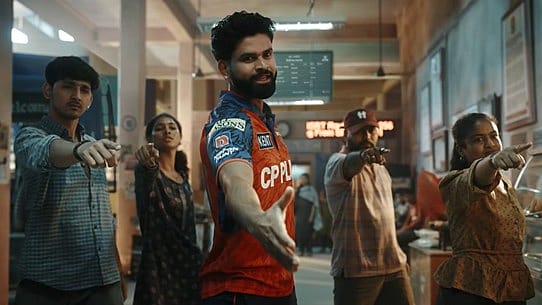
JioStar’s latest campaign for the 2026 season of the TATA IPL opens not in a stadium, but in a tea shop—where a familiar argument over identity quickly escalates. Before it can settle, a set of unlikely mediators step in: cricketers who, for two months every year, belong to cities they were not born in.
The film, titled Ek Hoke Dekh, features Ruturaj Gaikwad, Shreyas Iyer, Krunal Pandya, Tilak Verma, and Mohammed Siraj. Its message is simple, and not new: the IPL may divide fans by franchise, but it also offers a temporary suspension of everything else that usually divides them.
That duality is what JioStar appears to be leaning into this season.
Nearly two decades into the league, the IPL has evolved from a cricket tournament into a cultural event with its own rituals, loyalties, and language. Team allegiance remains central, but the larger draw increasingly lies in the shared spectacle—millions watching the same moment, often across platforms, often together.
The campaign reflects that shift.
Instead of foregrounding rivalry, Ek Hoke Dekh focuses on belonging. Players are shown being embraced by fans from cities far removed from their origins—a dynamic that has quietly become one of the league’s defining features. A player from Maharashtra becomes a Chennai favourite. A Hyderabad bowler becomes a Bengaluru crowd hero. Geography blurs, at least for the duration of the tournament.
Survival Instinct
22 May 2026 - Vol 04 | Issue 72
India navigates global economic turmoil with austerity and smart diplomacy
For broadcasters, that blurring is useful.
“It has become a social phenomenon,” said Siddharth Sharma, Head of Content, Sports at JioStar, pointing to how IPL viewership now cuts across regions and demographics. The network’s pitch this year is less about who you support, and more about showing up for the event itself.
The idea is not without precedent. IPL campaigns have long oscillated between rivalry and unity, but the balance appears to be shifting. As the league matures, the emphasis is moving from team-specific narratives to the scale of collective participation.
That shift also aligns with how the IPL is consumed today. With streaming on JioHotstar alongside television broadcasts, the experience is no longer confined to a single screen or setting. Viewership is fragmented, but the event remains shared.
The campaign, created by ZeroFifty and produced by Jamic Films, attempts to capture that contradiction. It acknowledges rivalry, but resolves it quickly. Conflict is a starting point, not the story.
For the players involved, the narrative mirrors their own IPL journeys. “While we belong to a certain part of the country, the fans in the home city of our franchises accept us as their own,” Gaikwad said, describing a phenomenon that has helped shape modern IPL fandom.
The larger question, however, is whether unity sells as effectively as rivalry.
Franchise loyalty remains the league’s most visible driver of engagement, from merchandise to social media wars. But for broadcasters operating at national scale, the bigger opportunity lies in expanding the emotional perimeter of the event—making the IPL feel less like a contest between teams and more like a shared national moment.
That is the space Ek Hoke Dekh is trying to occupy.
As the IPL enters its 19th season, with a mix of established stars and emerging players, the on-field contest will remain the primary draw. But off the field, the messaging is evolving.
The league may still be built on competition.
The broadcast narrative, increasingly, is about convergence.