From Royce’ to Onitsuka Tiger to Le Mill: Decoding Samir Gadhok & His Audacious Consumer Bets
Earlier this year, Burgundy Brand Collective acquired Le Mill — the Colaba boutique that, for over a decade, has been India's most credible address for international luxury fashion. The deal amount was undisclosed. But anyone who knows what Le Mill represents — the first Indian home for Saint Laurent, Loewe, Chloé; a store that educated the Indian luxury consumer before the Indian luxury consumer knew it needed educating — understood that this was not a routine transaction.
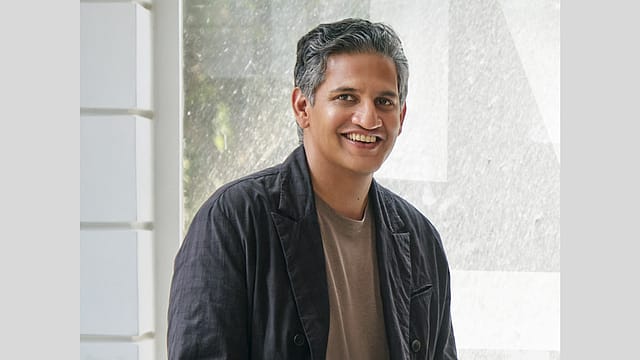
For Samir Gadhok, Director at BBCO, it was the fashion vertical his company had been missing. But when you sit down with him, you realise the Le Mill acquisition is also something else: the clearest articulation yet of a thesis he has been building since 2012.
The thesis started with chocolate.
In 2013, BBCO opened its first Royce' store on the ground floor of Palladium, Mumbai. Royce' — a Japanese confection from Hokkaido, built on exceptional local dairy — sold out in three weeks when they'd budgeted for three months. "We saw immediately that we were onto something," Gadhok says, "because of the positive response."
What that response told him wasn't just that Indians liked good chocolate. It was something more structural. "There's a consumer who really slices through your typical demographics of income, age, sex — essentially a consumer type united by the idea of having a really high quality, unique product. It could be a billionaire or an upper middle class professional who just wants a great product and is willing to spend some money on it."
Exclusive: To the Heavens and Back
19 Jun 2026 - Vol 04 | Issue 76
Shubhanshu Shukla relives the space odyssey that put India into orbit
That consumer became BBCO's north star. Around them, Gadhok began assembling a portfolio — one great brand per category, nothing more. Royce' for chocolate. Onitsuka Tiger for footwear. Papabubble for confectionery. Ligne Roset for furniture. Jacadi Paris for childrenswear. "We'd rather do one thing in one category with the right brand, right partnership, right product, than flood the market with products just to stick to a category."
Fashion was the glaring gap. Le Mill filled it.
But to understand why Gadhok wanted Le Mill specifically — and not just any fashion label — you have to go back further, to France.
At INSEAD, where he met Avani Raheja, his wife and co-founder, the two travelled through the country extensively. What lodged in his mind wasn't Paris or its grand maisons. It was something more granular. "In every little town you'd go to, there'd be one specialty store for the local product or the local wine. That really opened our eyes to the idea of luxury that wasn't necessarily just the big brands or the big companies you hear about."
He returned to India in the early 2010s with that image. The timing was, on the surface, terrible. "People were saying, 'Are you crazy? Everyone loses money in retail, don't do it.'" Future Group had just hit its first major financial troubles. The retail optimism of the 2000s had curdled. "But both of us felt very strongly that the consumption opportunity in India is no different from the rest of the world. If you present really interesting, unique, compelling products, it might not be immediate, but it's just a matter of time before Indian consumers respond to it."
He was, in retrospect, right. But it's the kind of rightness that required conviction before the evidence arrived.
Gadhok is careful about the word luxury. Careful enough that BBCO doesn't use it at all. "The problem with the term luxury is it's totally open to interpretation. That's actually why you won't see us use the word luxury anywhere on our website — why leave it open to interpretation?"
The customer he'd rather describe is "the globalised Indian — someone who has travelled the world, possibly studied internationally, consumed global media, but is still rooted in their Indianness." The geography, he argues, matters less than the mindset. "Whether they're in Bombay, Delhi, Hyderabad, Bangalore or Calcutta, they have more in common than not. We'd rather use words like specialty, niche, boutique — and speak to the mindset, not the price point."
This is precisely who Le Mill had spent fourteen years serving. Founded by Cecilia Morelli and Julie Leymarie — two French women who made Mumbai their home — the boutique became, over time, something that cannot be built quickly: genuine taste authority. Its 4,000 sq ft Colaba space carried Loewe, Jacquemus, Dries Van Noten, MM6 Maison Margiela alongside Indian names like Bodice, Péro, and Phantom Hands. It pioneered WhatsApp shopping before the industry caught on. It was, by any measure, irreplaceable.
So when the acquisition came together, Gadhok was candid about what the stakes were. "You're the first person who's asked me this, but it's something we really thought deeply about — because Le Mill is a point of view. When you buy into a brand like that, you're not just buying the brand. You're buying a silhouette, a material, an occasion."
Two things gave him the confidence to proceed.
The first was continuity. Julie Leymarie stays on, continuing to lead buying and brand relationships. The retail team, the CEO — all remain. "We knew there was continuity on a day-to-day basis. The entire front-end team, the retail team, the CEO — they all remain, and we have excellent relationships with them." The institutional knowledge — the relationships with international houses, the curatorial instinct — did not leave with the founders' equity.
The second was what BBCO could actually bring. "A broader sense of the market — we're present in ten or eleven cities, not just Bombay. There are customers like this all across the country; they just don't have access or the bridges to connect them. We're already seeing that just one month into the business."
And then there's the infrastructure question — the unglamorous but decisive part. "Whether it's real estate relationships, HR, tech capabilities — we have all of that in-house or at scale. For a one-store operation like Le Mill, that would have always been a challenge." Expansion beyond Mumbai is now on the table.
BBCO's broader ambition is to occupy a lane that currently has very few players: neither the conglomerate scale of Reliance Brands or Aditya Birla, nor the single-store boutique. A curated, specialty, nationally-distributed platform. "Brands aren't choosing us because we're better or worse," he says of the larger players. "It's that in this instance, there's a better alignment of vision, opportunity, and sustainability."
The model remains stubbornly offline — 80 to 85 percent of BBCO's business happens in stores. Gadhok has watched the D2C wave with detachment, noting how platforms drew brands online with subsidised margins, then slowly reclaimed them. He sees retail going the other direction. "People will look to retail as a way to disconnect from the online world, to take in someone else's sense of taste and curation." For the specialty consumer he's been courting since 2013, he argues, this was always true.
BBCO’s revenue from operations rose 14.6% to ₹125.5 crore in FY25 from ₹109.5 crore in FY24, while net profit declined 37.5% to ₹2.5 crore from ₹4 crore a year earlier, as per regulatory filings accessed by Tofler.
Gadhok said the company is targeting ₹200 crore in revenue in FY27, up from ₹120 crore in FY24, and plans to nearly double its store count to around 65 over three years. The numbers are ambitious. But then, so was opening a Japanese chocolate shop in Mumbai in 2013 when everyone said retail was a graveyard.
Gadhok sold out in three weeks. He's been proving the same point ever since — just with a longer runway and a considerably more expensive product mix.