Five Generations, 162 Years & a 31% Discount: Why Did the Zaveris Sell TBZ to GRT?
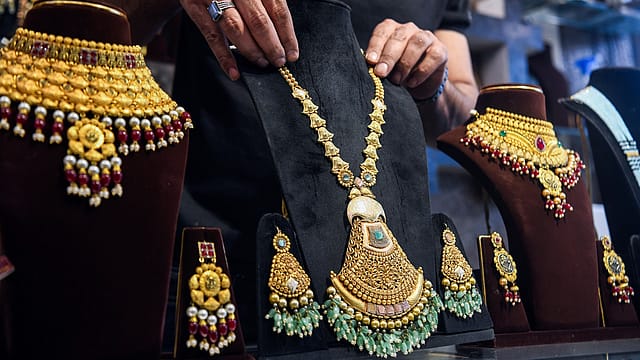
Five generations spent 162 years building the name. One agreement will remove it from the family ledger.
On August 31, Chennai-based GRT Jewellers signed a share purchase agreement to acquire the Zaveri family’s entire 74.12 per cent stake in Tribhovandas Bhimji Zaveri, better known as TBZ-The Original. GRT will pay up to ₹1,033.7 crore for 4,94,59,775 shares and make the mandatory open offer for another 26 per cent of the listed jeweller, according to the transaction announcement.
If the transaction clears its regulatory and closing conditions, GRT will take sole control. The Zaveris will leave the promoter group. A family that carried TBZ from a small store in Mumbai’s Zaveri Bazaar in 1864 to the stock exchanges in 2012 will no longer own the company bearing its name.

Zeroing In on ECI
09 Oct 2026 - Vol 05 | Issue 41
Constitutional legitimacy versus political opportunism
Jewellery businesses constantly sell gold. Jewellery families rarely sell history.
That makes the first question emotional: why did the Zaveris leave? The second is financial: why did they agree to leave at ₹209 a share when TBZ closed at ₹305.70 on the day the deal was announced?
The ₹1,034-crore Discount
The arithmetic is unusually stark. The promoters are selling about 4.95 crore shares. At the maximum price of ₹209 each, GRT’s bill comes to approximately ₹1,033.7 crore. TBZ’s closing price valued the same block at more than ₹1,512 crore.
The apparent gap is nearly ₹479 crore. The agreed price is about 31.6 per cent below the quoted price. This is not a rounding error hidden inside an acquisition announcement. It is the central mystery of the transaction.
The qualification matters. A traded market price is not the same thing as the price of a negotiated controlling block. The market can be thin, volatile or carried by expectations that disappear once an agreement is examined. A family selling almost three-fourths of a listed company in one transaction may accept certainty, liquidity and a clean exit over the price displayed for comparatively small quantities on a screen. The SPA also contains adjustments and the open-offer calculation may tell public shareholders more about the regulatory economics of the deal.
Yet control usually commands a premium. Here it appears to have been surrendered at a discount.
The timing sharpens the question. TBZ is not being rescued from an operating collapse.
In FY26, its consolidated revenue rose 22.2 per cent to ₹3,203 crore. Profit after tax almost tripled to ₹202.3 crore from ₹68.4 crore, according to the company’s FY26 disclosures. The momentum continued into the first quarter of FY27: revenue increased 34.8 per cent to ₹841 crore and profit rose 56.9 per cent to ₹32.9 crore.
The stock closed close to its 52-week high. The business had just produced its strongest annual profit in years. Then the family sold control at a price the market had left far behind.
The Zaveris and GRT have not publicly explained the discount, the family’s reason for exiting or whether succession influenced the decision. Until they do, any answer remains inference. But the disclosed facts permit a harder conclusion: this was not simply a weak company taking the first cheque available. It was a negotiated departure.
A Dynasty Leaves Its Own Name
TBZ’s value has always exceeded its inventory.
The company began in 1864, when Tribhovandas Bhimji Zaveri opened a store in Mumbai’s Zaveri Bazaar. The family built its reputation in a trade where trust was the original certificate of authenticity. TBZ says it introduced a jewellery buyback guarantee in 1938, long before organised retail turned assurance into a sales pitch.
Shrikant Zaveri, representing the fifth generation, became the public face of the modern company. TBZ listed in 2012 and tried to convert a powerful western Indian name into a national chain. It now operates 37 stores across 28 cities, with a strong presence across Maharashtra, Gujarat and several northern and eastern markets.
That history makes the sale more consequential than an ordinary promoter exit. The buyer is not acquiring only showrooms, inventory and customer data. It is acquiring inherited trust in a category where a wedding purchase can represent a family’s savings, status and memory in the same box.
The risk also travels with the name. GRT must decide whether TBZ remains a distinct brand, whether its management and design identity survive and how aggressively the chain is integrated. Push too little, and the buyer may fail to extract the promised scale. Push too hard, and it may damage the heritage for which it paid ₹1,034 crore.
GRT is buying a shortcut. It must avoid turning that shortcut into an erasure.
GRT’s Escape Route From the South
The acquisition is easier to understand from Chennai.
GRT began in 1964, a full century after TBZ. It has grown into a formidable private jewellery group with dozens of showrooms, a powerful customer base and a presence extending beyond India. But its strength has also created a geographic cage.
ICRA said in May 2026 that more than 70 per cent of the GRT Group’s revenue had come from Tamil Nadu during the previous five years. More than 40 per cent came from Chennai alone. Such concentration is profitable when the home market is strong and dangerous when regulation, competition, weather, local consumption or regional economics turn hostile.
Building a comparable network across western and northern India would take years. Every new city would demand property, inventory, staff, marketing and, most difficult of all, trust.
TBZ delivers the package immediately.
GRT gets 37 stores, a recognised listed brand, access to cities where its own identity is weaker and a jewellery house rooted in Mumbai rather than Chennai. It also gets a chance to diversify without teaching an unfamiliar market to pronounce a new name.
This is why the transaction is larger than one jeweller buying another. Indian jewellery retail is consolidating around scale, organised trust, financing capacity, national brands and the ability to carry enormous inventories without suffocating cash flow. Titan’s Tanishq, Kalyan Jewellers, Malabar Gold & Diamonds and other large chains have spent years pushing beyond their regional origins. GRT has chosen acquisition over pilgrimage.
TBZ spent 162 years building the road out of Zaveri Bazaar. GRT can now use it to travel out of South India.
Can Chennai Express Travel North?
Buying the road does not guarantee that customers will travel on it.
India has seen southern companies buy brands rooted in the West. The outcomes suggest that geography can be acquired much faster than cultural permission.
In 2009, Chennai-based CavinKare bought Mumbai’s Garden Namkeens, a brand built around western Indian snacks such as farsan, chivda and sev. It retained the Garden name and followed the acquisition with an ₹80-crore manufacturing plant in Maharashtra. Garden survives inside CavinKare’s portfolio, but it did not become the national snacking giant that the combination of a western palate and a southern FMCG machine appeared capable of producing.
The closer jewellery parallel comes from Kalyan Jewellers. The Thrissur-born chain acquired a majority stake in Mumbai-based online jewellery company Candere in 2017 and bought the remaining 15 per cent in 2024. Crucially, it did not repaint Candere as Kalyan. It preserved the younger brand, moved it from online retail towards an omnichannel model and gave it room to pursue a more affordable, contemporary customer. Candere reported revenue of about ₹164 crore in FY25 and had 73 stores by March 2025, although it remained loss-making.
Marketing and branding experts reckon that the lesson is more complicated than “southern buyer succeeds” or “regional brand fails”. CavinKare bought regional taste. Kalyan bought a digital proposition. GRT is buying inherited trust.
"The acquisition gives GRT distribution, but distribution is not the same as acceptance,” says Ashita Aggarwal, professor of marketing at SP Jain Institute of Management & Research. Jewellery is intensely local. Wedding customs, design preferences, the importance of gold versus diamonds and even the relationship with the family jeweller change across regions. GRT’s smartest move may be to remain invisible for a while. TBZ must continue to look, speak and behave like TBZ. "The moment the buyer treats a 162-year-old brand as merely a northern showroom network, it begins destroying the very shortcut it acquired,” she underlines.
That is the strategic paradox. GRT is buying TBZ because the GRT name cannot instantly reproduce TBZ’s legitimacy in Mumbai, Gujarat or the North. If it rushes to impose the parent brand, centralise every decision or replace regional design instincts with a southern template, it may eliminate the reason for the acquisition.
Even successful southern brands have usually conquered the rest of India through localisation, patience and enormous marketing expenditure. Bengaluru-based Titan turned Tanishq into a national force by studying regional wedding rituals and adapting collections, stores and communication. Kalyan used local ambassadors and market-specific messaging as it travelled beyond Kerala. Malabar Gold & Diamonds expanded from Kozhikode without pretending that India buys jewellery with one aesthetic vocabulary.
GRT has chosen a different train. Instead of spending years teaching western India to trust a Chennai name, it has bought one of western India’s oldest names. But it must now answer the question every acquisition press release avoids: will TBZ be allowed to carry GRT north and west, or will GRT’s impatience eventually drag TBZ south?
The Profit is Real. So is the Weight
The family’s exit should not be romanticised into evidence that TBZ is flawless.
Jewellery retail is brutally working-capital intensive. Gold inventory locks up cash. Expansion requires more inventory before it produces more revenue. TBZ ended FY26 with debt, substantial inventory and operating cash flow far below its reported profit. Its debt-to-equity ratio remained above one, according to market data based on company filings.
The spectacular improvement in profit also deserves examination. FY26 revenue grew 22 per cent, while consolidated profit nearly tripled. That is excellent performance, but buyers will test how much came from durable operating improvement, gold-price movements, inventory economics and margins that can survive a different market.
GRT, meanwhile, must finance the promoter purchase and the open offer while continuing to fund its own inventory-heavy business. If public shareholders tender the full 26 per cent, its total acquisition cost will rise materially above ₹1,034 crore. The open-offer document should disclose the funding arrangement, offer price, acquisition rationale and conditions in far greater detail.
That document may solve part of the discount mystery. It may also create another one.
If the open-offer price remains near ₹209, why should public shareholders tender shares that traded above ₹300 before the announcement? If it rises substantially, why did the family accept less? If the market price falls towards the negotiated price, investors will have supplied their own explanation: the screen was pricing a future the buyer refused to finance.
Why Did the Zaveris Sell TBZ?
There are several commercially plausible answers, and none has yet been confirmed by the family.
A block of nearly 75 per cent cannot be monetised easily through the market without crushing the price. A strategic buyer offers a complete exit, one counterparty and certainty that thousands of daily trades cannot provide. Succession may also matter in any fifth-generation family business, particularly when ownership, management appetite and the next chapter no longer move in the same direction. The Zaveris may have concluded that TBZ needs a larger balance sheet and more aggressive expansion than the family wishes to fund.
There may also be a simple difference between price and value.
Public investors price the next quarter, the next rerating and the next buyer. A family selling its life’s largest asset prices execution risk, taxes, liquidity, warranties, deal certainty and the possibility that today’s ₹305 screen will not absorb five crore shares tomorrow.
All of that can explain a discount. It cannot make the discount uninteresting.
The unanswered questions remain sharp. Was the company formally shopped to other jewellery groups? Did GRT win through price, certainty or its promise to preserve TBZ? Are there deferred, conditional or non-cash benefits outside the stated maximum consideration? Will Shrikant Zaveri and the existing management remain during a transition? What protections govern the family name after the family leaves? And who initiated the conversation that persuaded five generations to end with one signature?
The stock-exchange filing tells investors what is being sold. The price demands to know why.
The Original, Under New Ownership
For GRT, the logic is compelling. It buys geographic diversification, national visibility and more than a century and a half of consumer trust. For TBZ, the combination may provide capital, procurement scale and the ability to compete more aggressively with India’s expanding jewellery giants.
For the Zaveris, however, the transaction closes a circle that began before the birth of the Indian National Congress, before cinema arrived in India and before gold prices appeared on electronic screens.
Their name will remain above the stores. Their shares will not remain beneath it.
That is why the deal cannot be reduced to ₹1,034 crore, 74.12 per cent and an open offer. It is the sale of a dynasty to a younger regional rival that has become financially large enough to buy history and strategically impatient enough to need it.
TBZ spent 162 years turning one Zaveri Bazaar storefront into a national jewellery brand. GRT may have acquired the fastest route out of South India.
The market’s final question will glitter long after the agreement is signed: did GRT buy a priceless legacy cheaply, or did the Zaveris know exactly why ₹209 was enough to leave?