Familiar, But to Whom? Safi’s Legacy Problem in India’s OTC Market
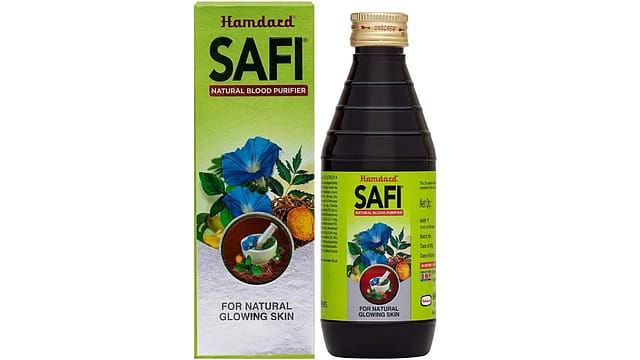
Brand familiarity in healthcare is often treated as a sign of strength. At times, it can simply reflect longevity, a product remembered because it has been present for decades. Safi sits somewhere in between.
The Unani formulation, positioned as a herbal blood purifier and often associated with skin-related concerns, has circulated in Indian households for years with limited marketing push. Its use has historically depended on practitioner advice, retail familiarity, and word of mouth within families. In many cases, consumers did not actively discover Safi as much as encounter it through existing household routines.
Those pathways have gradually expanded. While family recall and practitioner influence still shape purchasing in several settings, product discovery today also happens through retail visibility, digital search, peer recommendations, and greater consumer attention to ingredients and claims. In such an environment, familiarity can help sustain recognition, but continued visibility often determines whether a brand stays in active consideration.
The Modi Years
02 Oct 2026 - Vol 05 | Issue 40
A Nation Rebuilt
“Safi still carries nostalgia as a familiar legacy brand, but without sustained visibility it surfaces only when the need arises rather than staying top-of-mind,” said Ashita Aggarwal, professor of marketing at SP Jain Institute of Management and Research.
She argues Safi is remembered for one reason: clarity. Its functional positioning in the OTC space is sharp. Consumers link it to a specific use case. When that need surfaces, so does the brand. But memory has limits. Without steady investment in communication and presence, brands struggle to deepen associations. And in that vacuum, preference drifts toward what’s more visible, more talked about and more strongly recommended.
Within Hamdard Laboratories, Safi is not positioned as the company’s primary growth driver, but it is also not treated as a legacy product to be phased out. Instead, it forms one part of a broader medicines portfolio that the company is stabilising while expanding into newer areas.
That portfolio remains financially significant. The medicines division, separate from Hamdard’s foods business, generated gross revenue of roughly ₹397 crore last year, according to Chairman and Trustee Abdul Majeed, with profits near ₹100 crore. Because the organisation operates as a trust, a large share of this surplus is reinvested, a structure that tends to favour steady consolidation over aggressive expansion.
Some of that consolidation is visible in supply strategy. Hamdard has acquired nearly 200 acres to cultivate its own medicinal herbs, thereby stepping away from the outsourced sourcing model many expanding manufacturers rely on. The intent is control: tighter quality, steadier supply and fewer variables.
But will the gambit pay off? Backend muscle needs one thing to become frontline momentum: visibility. In a category where what gets seen gets sold, how Safi fights for shelf space, mind space, and recommendation will decide the shape of its future.
Competition in the herbal and Ayurvedic OTC segment now takes several forms. Some brands invest heavily in celebrity campaigns, others rely on strong retail placement, and many emphasise clinical language, ingredients, or digital engagement to build trust. In this environment, maintaining consumer attention often requires sustained communication rather than relying solely on historical familiarity.
Hamdard’s approach, by contrast, remains measured.
“You can mislead a consumer once,” Majeed says. “After that, trust is difficult to rebuild.”
This outlook shapes how the company introduces or promotes products. Practitioner validation typically precedes broader consumer outreach, a process that supports credibility but can slow market expansion compared to more aggressively promoted competitors.
Safi’s evolution reflects this cautious approach. The product tweaks are about usability and not repositioning. Alongside the traditional syrup, Hamdard has rolled out a tablet version of Safi, easing the taste barrier and offering a more convenient format for consumers wary of liquid formulations. While the syrup still meets resistance, especially among buyers alert to sugar content and dietary cues, the tablet smooths that friction. It improves access but doesn’t redefine Safi’s role in the category.
In that sense, the format has adapted while the core association remains similar. Safi continues to be linked to ideas of internal cleansing, skin support, and traditional wellness logic, themes that remain familiar but now exist alongside newer health narratives shaped by scientific language, online comparison, and evolving consumer expectations.
Hamdard’s wider commercial strategy follows a similar pattern of gradual adjustment. While ecommerce adds a digital flank, institutional supply networks widen the base and dilute distribution risk. Beyond that, the company is targeting ₹1,000 crore in medicines revenue over five years by diversification into lifestyle disorder management and wellness infrastructure. In that broader plan, Safi appears less as a spearhead product and more as a steady presence within the portfolio.
Such positioning is not unusual for long-standing healthcare brands. Products with established recall often continue to provide continuity and trust even as companies invest in newer opportunities. Safi appears to occupy that space, neither obsolete nor dominant, yet still relevant within Hamdard’s evolving strategy.
In that context, the real question isn’t whether Safi survives. It likely will.
The question is: how far can legacy recall carry it? In an OTC market now shaped by visibility, pharmacist recommendation, and constant consumer engagement, memory alone may not be enough.