Bumble Wants to Turn Dating Dilemmas Into a Content Business
The group chat has become an unofficial relationship helpline. A confusing text, an awkward conversation or a potential red flag can trigger a flurry of opinions from friends, with everyone offering a different interpretation and nobody necessarily having the final answer. For dating app Bumble, this everyday ritual offers an opportunity to take relationship conversations beyond private messages and into social media.
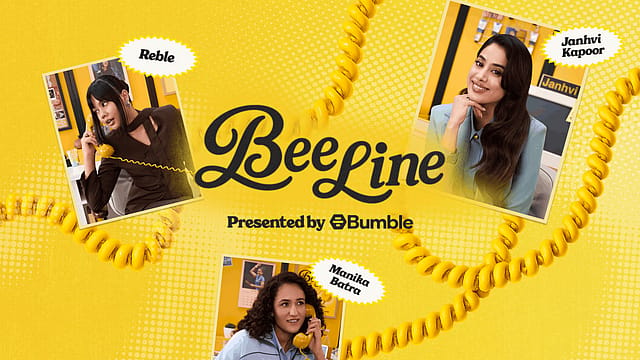
Its new series, Bee Line India, brings together actor Janhvi Kapoor, three-time table tennis Olympian Manika Batra and rapper Reble to respond to questions submitted by daters across India. Launched this week, the social-first series tackles the uncertainties of modern dating, from first-date expectations and red flags to the unspoken rules of meeting someone new.

Losing Memory
16 Oct 2026 - Vol 05 | Issue 42
The making of a medical and social emergency
The idea is simple: take the questions people discuss among friends and put them to women with different personalities, professions and perspectives. The business thinking behind it is more layered. Bumble is looking to build a relationship with its audience that extends beyond the moment someone opens a dating app, using content to participate in the wider conversations around relationships, identity and connection.
For a brand operating in a competitive category, that is an attempt to make itself relevant not just when people are looking for a match, but also when they are trying to understand what they want from one.
From dating advice to branded entertainment
Dating apps compete on more than the promise of introducing people to potential partners. They also need to maintain engagement, establish trust and give users reasons to return. In that environment, content can serve as an additional point of contact between a brand and its audience.
Bee Line is built around a format that lends itself to social distribution: real questions, recognisable personalities and answers that can prompt agreement, disagreement or further discussion. Rather than making the app itself the subject of every interaction, Bumble is placing the experiences surrounding dating at the centre of its content.
Kapoor, who leads the Indian edition, says she has often been the friend people call about their romantic dilemmas. “I’m a hopeless romantic with very high standards, which is a lot,” she says. One question submitted for the series was so unexpected that she called her sister for a second opinion.
“But most of the time they just need someone to say the honest things out loud, so whoever’s calling feels heard and hopefully a bit more sorted,” Kapoor says.
The quote captures the appeal of the format. The host is not necessarily presented as an expert with a definitive answer, but as someone willing to acknowledge the confusion and contradictions that accompany relationships. The emphasis is on candid opinions rather than a prescriptive set of rules.
That distinction matters for a social-first series. Celebrity recognition can attract initial attention, but the question itself must be relatable enough to hold it. A dilemma about mixed signals or personal boundaries has the potential to resonate beyond the immediate audience of a particular celebrity, giving the content a life beyond its initial release.
Three women, three perspectives
Bumble has chosen three hosts whose public identities offer different entry points into the conversation. Kapoor brings the familiarity of popular cinema, Batra the perspective of elite sport, and Reble a voice rooted in music and contemporary youth culture.
Batra draws on her experience as an athlete to make a point about individuality and support. “The best coaches back you without trying to change you, and the right person is the same,” she says. “Someone who respects who you are and supports the person you are becoming, rather than asking you to compromise who you are.”
Her comparison shifts the conversation from the mechanics of finding a partner to the question of what a healthy relationship should make possible. Independence, self-belief and personal growth are concerns that extend beyond romance, allowing the series to touch on broader themes of identity.
Reble's advice is more direct. “I feel like sometimes we try way too hard to look unbothered when really we’re just overthinking it all in our heads,” she says. “I do think it’s always better to just ask the honest questions and be prepared for the answers, even if sometimes it’s not exactly what you wanna hear.”
She describes Bee Line as honest advice without overcomplication or sugar-coating. Her approach, like Batra's, places authenticity above the performance of appearing effortlessly confident.
Together, the three perspectives give the series room to explore the same broad concerns without forcing them into a single formula. That variety is central to its format: audiences may identify with a host's personality, disagree with her advice or find themselves reconsidering a situation through another person's perspective.
Why relatability matters to the business
For brands targeting younger consumers, relatability can be an important way to cut through the volume of promotional content competing for attention on social platforms. But relatability alone does not guarantee commercial results. The challenge is to turn a familiar subject into content that audiences actively want to watch and share.
Dating gives Bumble a recurring source of material. Questions about communication, compatibility, expectations and personal boundaries are unlikely to disappear, while submissions from viewers allow the series to draw on situations people are actually experiencing.
The format also creates opportunities for individual episodes to circulate independently. A response to a particularly contentious question can become a conversation in its own right, potentially reaching people who may not otherwise seek out Bumble's content. Different hosts can attract different audience segments, while a consistent premise gives the series continuity.
The distinction is between using celebrities to advertise a product and using them to anchor a conversation. In the former, the celebrity is the main attraction; in the latter, the brand hopes the content itself becomes valuable to the audience. Bee Line is an attempt at the second approach, with Bumble's association with meaningful connections providing the underlying brand context.
There is, however, a difference between generating attention and delivering measurable business outcomes. Views, shares and discussion may indicate that the content is connecting with audiences, but they do not by themselves establish whether it leads to new users, stronger retention or greater engagement with the app. Bumble has not disclosed performance figures or commercial targets for the Indian series, making its impact on those measures difficult to assess at this stage.
An international format with an Indian cast
Bee Line first debuted in the US earlier this summer before expanding into Australia last month, where Grammy-nominated artist Troye Sivan shared his perspective on dating. The Indian edition follows the same broad premise while drawing on personalities from the country's entertainment and sporting worlds.
The rollout will begin with Kapoor, followed by Reble and Batra. This sequence allows each host to bring her own voice to the format while keeping the audience proposition consistent: real dating questions answered through personal experience and candid opinion.
The approach also gives the brand flexibility in how it presents the content across social platforms. Individual instalments can focus on a particular host or dilemma, while the larger series builds a recognisable identity over time. Whether that becomes a durable audience property will depend on the quality of the questions, the distinctiveness of the responses and the extent to which viewers return for subsequent episodes.
There is also a limit to celebrity-led advice. The hosts bring their own experiences and viewpoints, not necessarily professional expertise in relationships. The series is therefore strongest when it offers perspective rather than presenting one person's answer as a universal solution.
For Bumble, the larger ambition is to make the brand part of the conversation surrounding relationships, rather than confining its relevance to the app experience itself. Bee Line brings dating dilemmas into a public, shareable format, with the hope that audiences will see something of their own lives in the questions and answers.
The group chat may remain the first port of call for relationship advice. Bumble's bet is that there is room for a bigger conversation around it, and that being part of that conversation can be valuable to a dating brand.