Beta, Bring the Pads: Why Stayfree’s Daughter’s Day Film Talks to Sons
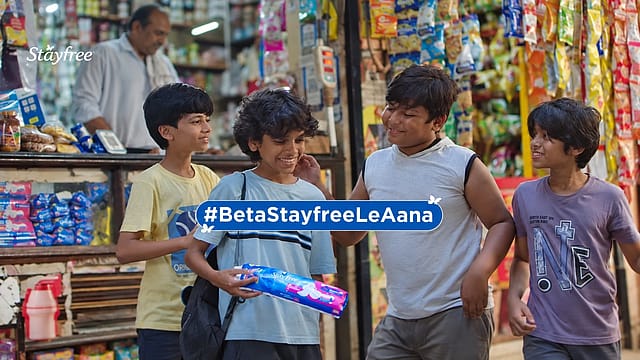
A mother needs a packet of sanitary pads. Her son is playing cricket. She asks him to buy it. The errand is ordinary. His friends’ reaction makes it a story.
In Stayfree’s Daughter’s Day film, Rohan becomes the subject of teasing after his mother asks him to fetch Stayfree. The boys have questions, discomfort and familiar misconceptions. He has an advantage they lack: he comes from a home where periods can be discussed without embarrassment. By the end, his friends can ask a shopkeeper for the pack themselves.
The film finds its drama in the distance between those two responses. For one boy, buying pads belongs to everyday life. For the others, it requires an adjustment in how they see themselves and the subject.

Zeroing In on ECI
09 Oct 2026 - Vol 05 | Issue 41
Constitutional legitimacy versus political opportunism
Stayfree has chosen an intelligent place to intervene. On an occasion dedicated to daughters, it examines what sons learn. The question travels backwards from the playground to the household: who taught the boys that a packet of pads was funny? And what might happen if home supplied a different lesson?
The first lesson is an errand
The brilliance begins with the mother’s shopping list. A household does not need to announce that menstruation is shameful to communicate unease. Imagine pads being mentioned only in lowered voices, a son being sent away when the conversation begins or a daughter being instructed to make sure nobody notices what she is carrying.
Each small action can make secrecy look like the appropriate response. Children can learn the rules of a subject before anybody explains the subject itself.
That is why the period conversation must begin at home, and why conversation alone is insufficient. A family might describe menstruation as natural while continuing to treat the products around it as embarrassing. The words and the behaviour would be teaching different lessons.
Buying pads brings the two together. It gives a boy a simple task with an unremarkable purpose. Someone at home needs something. He can help obtain it. The instruction carries no requirement to become a spokesman for women or make a grand display of sensitivity.
There is practical intelligence in that modesty. A sweeping appeal to change society can leave viewers admiring the intention without knowing where to begin. An errand supplies a beginning, a destination and something to bring back.
Marketing and branding experts reckon that a social message becomes easier to practise when the brand gives people a specific action. “Asking a son to buy pads turns an abstract appeal for openness into an ordinary family behaviour,” says Ashita Aggarwal, professor of marketing at SP Jain Institute of Management & Research.
The mother’s request also conveys confidence in the son. He is capable of understanding the need and completing the purchase. That expectation can itself be instructive. There is no elaborate ceremony in which the boy is congratulated for being mature enough to hear a forbidden word. “The normality arrives through being included,” she adds.
What the home sends to the playground
The next move is the campaign’s most useful one: domestic ease meets public embarrassment.
A boy can understand something at home and still find it difficult to say among friends. The group has its own rewards. Laughing along is easy; refusing the joke can make somebody the next target. That is the tension which makes the cricket setting more than a convenient collection of young actors.
The film offers a small reversal of authority. The group assumes that its discomfort sets the rule. Rohan’s matter-of-fact response introduces another possibility: perhaps the errand is ordinary and the reaction is the odd part.
The mother does not have to arrive and conduct a class. Nor does a girl have to explain her body to an audience treating it as entertainment. A boy can take responsibility for what happens in a group of boys.
This is where the home’s influence travels. What Rohan has learned becomes available to his friends through language and behaviour they can recognise. The lesson acquires a peer rather than another lecturer. That makes the Daughter’s Day association more substantial than a calendar greeting. A family can celebrate a daughter while overlooking the assumptions being passed to a son. Stayfree connects the two.
The social ease girls encounter will also depend on what the people around them have been taught to regard as normal. Teaching boys to contribute to that ease does not make them the owners of it. They do not get to confer legitimacy on menstruation.
They can, however, stop adding ridicule to an experience somebody else already has to manage. The responsibility is theirs to exercise. The girl should not have to earn it through another performance of confidence.
A small action in a crowded category
Stayfree is extending an existing direction. Its It’s Just a Period platform has involved families, including fathers and sons, for more than five years. The current #BetaStayfreeLeAana execution carries the conversation into the peer group.
That continuity matters because a recurring behaviour is a stronger foundation for a brand than an annual discovery of a social issue.
The creative challenge is to make the next chapter add something. Here, the addition is a new social setting in which the earlier lesson is tested. The home has produced one response. The friends offer another. The story asks which will travel further.
There are useful global parallels. Always launched #LikeAGirl in 2014 to challenge the use of a familiar phrase as an insult and the damage such assumptions can do to girls’ confidence. Its creative idea made everyday language available for scrutiny. Bodyform’s #BloodNormal took on the visibility of menstruation itself, showing blood and everyday situations rather than maintaining the convention that periods should remain discreetly abstract. The brand’s argument was that hiding something ordinary could help sustain embarrassment around it.
Stayfree works at the level of the household instruction. All three approaches make a large cultural problem graspable through something small: a phrase, an image, an errand. That is a valuable discipline for purpose advertising. “End stigma” can describe an ambition. It does not, by itself, tell a family what to do after the film ends. “Beta, Stayfree le aana” does.
The brand on the shopping list
There is commercial precision in the sentence too. The mother asks for Stayfree by name. The brand is attached to the action through which the campaign hopes to become useful. A viewer who remembers the instruction has also rehearsed the product name. The social proposition and the purchase occasion arrive together.
That connection gives the advertising an advantage over a moving film in which any sympathetic company could appear in the final frame. Menstrual care is directly relevant to the behaviour being discussed. The product belongs in the scene.
The brand has a credible role because the action is connected to its category. “The challenge is to become associated with everyday ease without making ordinary responsibility look like extraordinary male virtue,” says Aggarwal. Commercial benefit does not invalidate the intervention. A useful advertising idea can serve a social objective and help sell the product.
The more interesting question is whether the social invitation remains meaningful beyond the branded sentence. Would the boy perform the errand if a different pack were needed? Would he respect the preference of the person using it? Would he answer the next joke with the same ease when there was no story to resolve?
Those are the behaviours through which the campaign’s argument becomes larger than its logo. Normal should not require applause The film’s neat resolution is also where the assessment must remain measured. A group completing a purchase demonstrates the desired change within a commercial. It does not establish that the campaign has altered behaviour beyond it.
A more useful test would follow the errand into ordinary life. Can a son ask which product is needed without embarrassment? Can a father put it on the household list? Can friends hear the word “period” without feeling obliged to produce a joke? The burden should also be shared. The mother is the initiating figure in this story, but women should not acquire another permanent assignment: teaching everybody around them how to behave. Fathers and other adults can model the same ease. Schools have a role in providing accurate knowledge. Starting at home need not mean leaving the entire job there.
There is a further distinction worth preserving. Openness should make it easier for someone to speak when she chooses; it should not oblige her to disclose private details to prove that she is liberated from shame. A boy can learn to be comfortable with periods and respectful of another person’s privacy at the same time.
That is the standard the most confident reading of Stayfree’s campaign allows. Normality includes knowing when to help, when to listen and when another person’s body is simply none of your business. Nor can cultural ease substitute for affordable products, suitable facilities or informed care. The campaign addresses one part of a larger experience. Its strength is the precision of that part: the avoidable awkwardness a family and a peer group can help remove.
There is no need to inflate the errand into a revolution to recognise its value. Advertising is often tempted to make men heroic for participating in care. Stayfree’s idea is strongest when the boy remains ordinary. Buying a packet of pads should not confer special moral status. It should make the next purchase less remarkable.
The game of cricket can resume. The friends can find something else to laugh about. The household can get what it needs. The most meaningful ending would arrive a month later, when another packet is needed and nobody thinks there is a story in fetching it.