This Is Where the Serpent Lives: Unequal Lives

IT IS DIFFICULT not to root for Bayazid from the moment he appears in Daniyal Mueenuddin’s This Is Where the Serpent Lives—a little boy sitting in the streets holding a pair of new plastic shoes. He doesn’t cry even as it becomes apparent that he has been forsaken, before a tea stall owner informally adopts and names him. Yazid, as he comes to be called, grows up, “an ambling bear moving to his own North”, a pro at making chapattis who also teaches himself to read and observe the world, makes friends with college boys from prosperous family and cultivates a political opinion. His dreams crash when his intimacy with a friend’s family draws their servant’s ire. Yazid finds himself back on a pavement with a pair of new shoes that pinch his feet. This time he weeps, for his past and present and what the future will bring.
Yazid, inspired by Mueenuddin’s family driver, is one of characters anchoring his debut novel, This Is Where the Serpent Lives, strung together by setting—Pakistan, from its cities to the countryside, from the 1950s to the early 2000s—and characters whose lives overlap.
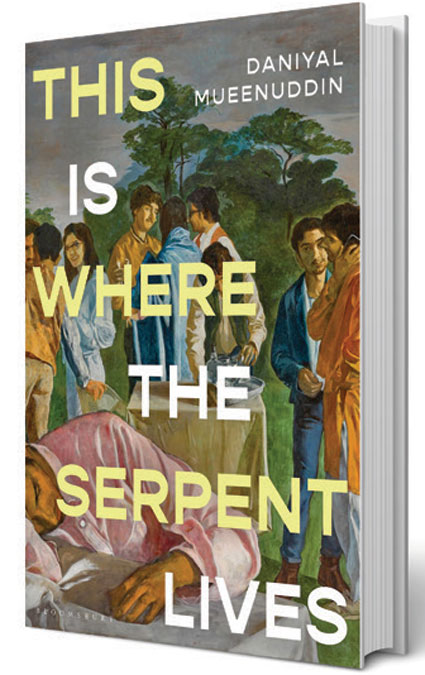
Yazid navigates poverty, violence and crime to become a chauffeur for Colonel Khuda Baksh Atar and subsequently for his older son Hisham and his wife Shahnaz who return after years of living in the US to claim their land and power while insulating themselves with intercontinental travel, raucous soirees, leisurely pursuits and occasional adultery. Mueenuddin writes of the lives of the rich in sensual detail— beautiful homes and gardens, art on the walls (Salman Toor’s painting, Garden Party, which adorns the book jacket, could well be in Shahnaz’s collection), but he doesn’t forget the labour that makes this lifestyle viable.

Zeroing In on ECI
09 Oct 2026 - Vol 05 | Issue 41
Constitutional legitimacy versus political opportunism
Yazid is Hisham and Shahnaz’s prized staff member. Another is Saqib, the young son of the family gardener who becomes the couple’s favourite and is handpicked to run their new farming venture. Saqib has an instinct for business and is fond of his employers, particularly Shahnaz. But he also realises that there is only so far his honesty and the Atars’ trust will take him. As his dodgy business associate says, “Rich sons get for nothing what we pay for with our souls and conscience.” In a society clutching on to its feudal past, staff members are almost expected to steal. But the bigger the theft, the tougher the punishment; employers may be affectionate but not at the cost of their power and wealth. And Saqib risks too much too quickly.
Mueenuddin takes his own risks as a novelist, writing the first three parts of the book as short stories; the final part expands into a novella, assembling the key characters. The structure displays his strengths as a short story writer— credentials established in his earlier book, In Other Rooms, Other Wonders—but it makes for a meandering read. Rustom’s story, drawing autobiographical elements from the author’s life, is a particularly weak link. A Western-educated, reluctant landowner, he demands attention for several pages before disappearing abruptly. Shahnaz could instead have her own perspective though she gets more attention than other women in the book. Mueenuddin writes with finesse but This Is Where the Serpent Lives isn’t quite successful in its formal experiment.
The ending is grim though unsurprising to readers familiar with South Asian societies and their class and caste divide. Class becomes destiny for Yazid and Saqib across decades—the world changes little when it comes to rubbling their aspirations and hard work. Saqib has ambitions that seem destined for downfall. But once, Yazid had dreams that had felt too precious to lose. The novel’s structure flattens his later life, but his losses haunt the pages.