Book review: An alternative Kerala spirals through paranoia, coups and mythmaking in S. Hareesh's 'August 17'
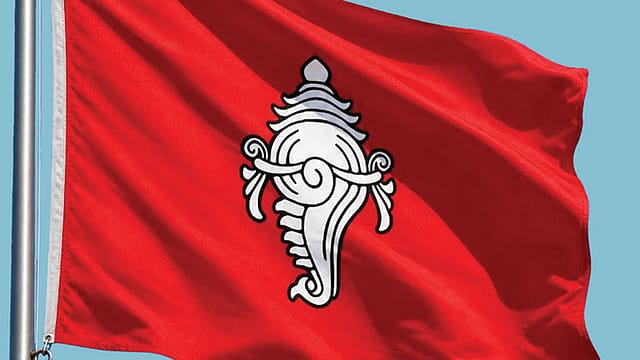
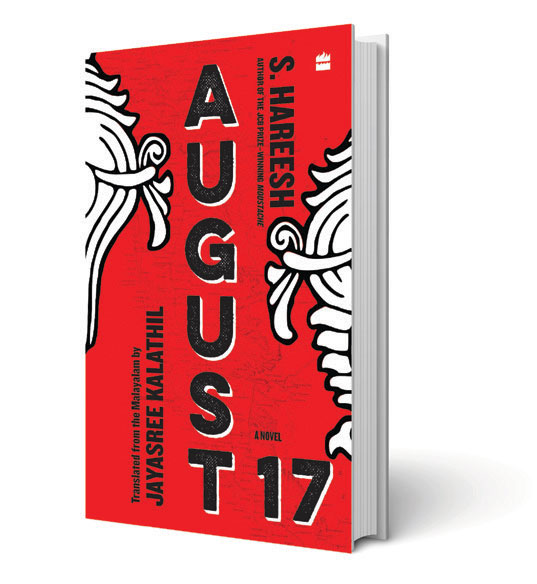
THE CONCEPT OF ‘what if’ is probably one of the thought experiments that everyone wonders about at least once in their lifetime. What if we could live for 200 years? What if the Earth were flat? Malayalam author S Hareesh, who won the JCB prize in 2020 for his novel Moustache asks another ‘what if’ question: what if Thiruvithamkoor or Travancore had declared independence in 1947. And this question becomes the premise of his novel, August 17, newly translated into English from Malayalam by Jayasree Kalathil.
The novel unfolds through the accounts of a spy, named Avarachan or Bhasi, who doesn’t chronicle events but is more of an observer and, more importantly, a manipulator of events. Through Avarachan, Hareesh explores the central theme of the novel—that citizens, policy or borders do not form a country; narratives do. That whoever controls memory controls legitimacy.

Losing Memory
16 Oct 2026 - Vol 05 | Issue 42
The making of a medical and social emergency
The authorities of independent Travancore unabashedly rewrite history to suit their own goals. The author does not comment on this fabrication of truth but hides them through rumours and gossips and manipulated documents, satirising the deemed utopia that has turned into a dystopia.
And in this dystopia, power doesn’t remain in the hands of a particular regime—communists, nationalists, reformers, military and all claim they will save the nation. But with each change in power, history changes too. Traitors become heroes and vice versa.
“There was, in this country, no such thing called reality. Those who think there is such a thing are not equipped to live in this country,” reads a fictionalised note of a Guardian reporter. “In fact, I suspect that, in the two hundred years we spent here, we were trapped. We might think we had ruled this place. But that, really, is only an illusion. We were here, that’s all, and it is good that we have now escaped.”
On the same vein, the novel also blends facts with fiction, invoking fictionalised versions of real-life personalities like politicians like Pattom Thanu Pillai and Akkamma Cherian as well as the author Vaikom Muhammad Basheer and puts them in bizarre situations. Basheer, for example, is shown as an eccentric man who is also a revolutionary and is wanted for the assassination of the king.
Even when dealing with dry and serious subjects like thought experiments, utopias, and power of memory and stories, the author’s writing is satirical, even claiming at the beginning of the book that he is not a historian. Just like James Joyce’s magnum opus Ulysses, Hareesh changes genre chaotically. One page may be about the idea of nationalism and another, a comically cynic account of some event. The result is chaotic but it is done intentionally.
But the book’s structure is likely to affect readers. It gets frequently disorienting; sometimes the narrative wanders away into incoherence. Intentional or not, this could be exhausting to read. But, given the theme of distorted narratives, a straightforward structure may not do justice to the novel.
The readers could also see the touches of magical realism, leaving them to compare Hareesh to Salman Rushdie or Gabriel García Márquez. However, the author’s imagination is rooted firmly in Kerala’s political and cultural landscape. The novel’s
anxieties are recognisably Indian even when its history is invented. In the end, August 17 is less interested in whether an independent Travancore could have survived than in how nations manufacture myths about themselves. Hareesh’s answer is both bleak and funny.