Flights of Freedom: Kings, spies and the politics of independence
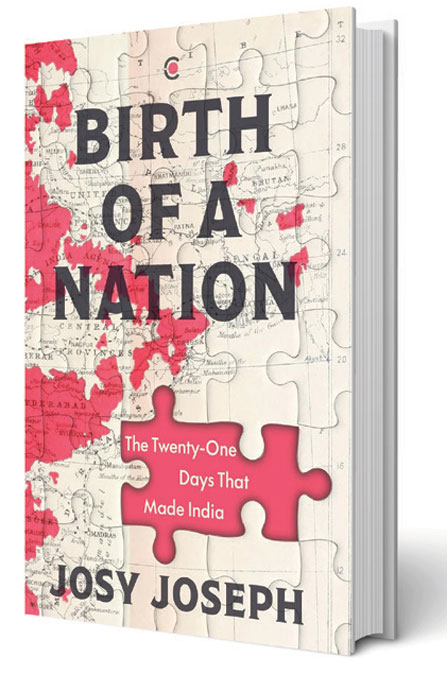
A FORMER INVESTIGATIONS editor at the Times of India and the Hindu, Josy Joseph has diversified his interests into media entrepreneurship by launching a new platform called Confluence Media, and by penning books about the Indian deep state’s interests and the deep flaws in our democracy. His latest book, Birth of a Nation: Twenty-one Days That Made India, digs deeper into how a free India emerged from the ashes of a colonial past.
The title appears to have been borrowed from the popular 1915 American film by DW Griffith and inspired by John Reed’s Ten Days That Shook the World. Whatever the inspiration, the book’s 31 chapters bring to the surface the various efforts at Balkanisation in what we consider free India, after the British withdrew their forces, not long after realising that they could no longer trust locals in the armed forces following the Naval Mutiny of 1946 and the actual transfer of power a year later.
Losing Memory
16 Oct 2026 - Vol 05 | Issue 42
The making of a medical and social emergency
This book, which the author states is the product of teamwork spanning over a decade, is based on thorough research, evident from the index. The personalities covered in the book, which Joseph notes “chronicles the three anxious weeks leading up to 15 August 1947”, include powerful people—at least they were then—especially the monarchs and princes of the time who wanted to carve out regions for themselves to rule and reign over, and the men who made modern India a reality, such as Jawaharlal Nehru, Sardar Vallabhbhai Patel, his right-hand man VP Menon, outgoing Viceroy Mountbatten and others.
One of the interesting findings in this book, which I haven’t come across elsewhere, is how KCS Mani’s knife attack on the Dewan of Travancore, Sir CP Ramaswamy Iyer, weakened centrifugal and secessionist tendencies in the tense pregnancy before the new nation was born. Mani had targeted Iyer’s jugular vein, but a silk shawl around the Dewan’s neck saved him, while in a way draining him politically as one of the foremost and fiercest legal minds advocating a free Travancore—a stand that had inspired several others too. The fact that a Dewan or ruler might have to risk his life for refusing to align with the Union of India had a domino effect of sorts. Call it a chain reaction or whatever, it was not just CP who stayed away from a meeting convened by Mountbatten soon to decide the future of free India following the near-fatal attack on him on July 15, 1947, by Mani, then 25, in Thiruvananthapuram after an evening music concert. Iyer was wounded in more ways than one and soon resigned as the Dewan.
The news of the attack on Iyer sent shockwaves across like-minded princely states, from Hyderabad to Junagadh, the book says, reeling out details from the archives. After all, Iyer was the prime architect of a princely coalition that wanted to break free, and yet noises continued to be made by this bunch of royal grandees about remaining autonomous entities.
Again, the chapter titled ‘The spy in the Nizam’s citadel’ is a great read about the ruler’s larger strategies, including securing access to Goa’s seafront for his landlocked kingdom. The author describes Hyderabad as the “keystone in the princes’ arch of resistance” to joining the new India. The spy in the Nizam’s administration was Dewan himself, Raja Bahadur S Aravamudu Aiyangar, who was committed to the idea of an independent Indian Union. He was the one, the book reveals, who sent secret cables to Delhi, “detailing the Nizam’s inner coterie’s most closely guarded moves”. Until he began helping, Delhi had to rely on second-hand information and rumours.
The book offers numerous such anecdotes about how India became a single sovereign entity officially for the first time in 1947 by dousing the fires of princely plots before embarking on the toughest mission yet of building a free and democratic country.