Homecomings: Amit Chaudhuri wonders about home as he wanders around Paris

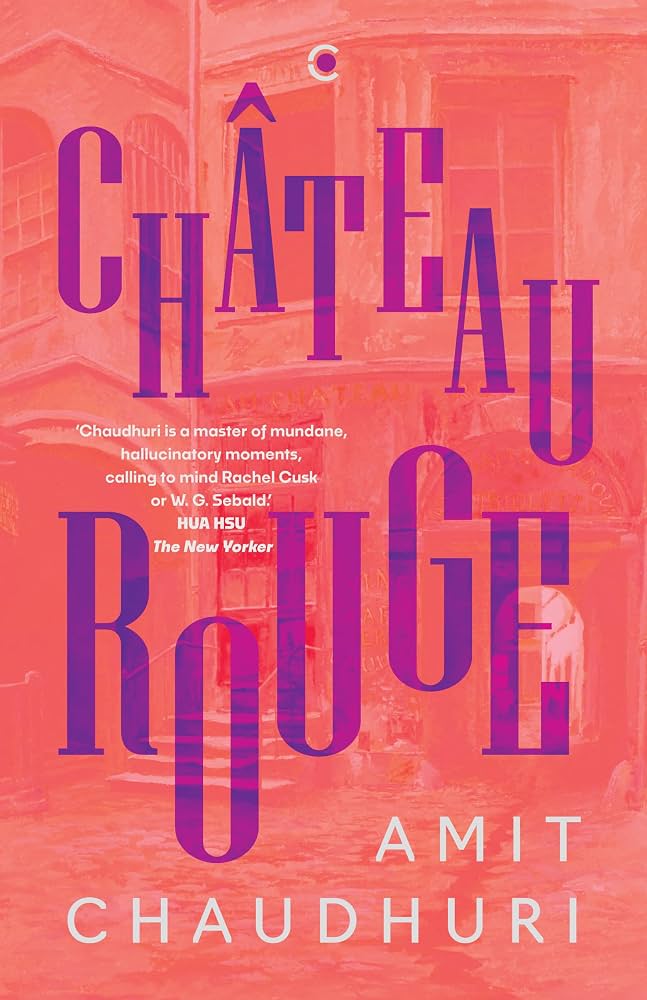
Over the years, Amit Chaudhuri has created his own oeuvre in novel writing. He has chosen meditations over plot, wanderings over narrative arc, asides over structure. He has made a strong case for the short novel, and has railed against the conventional diktats of ‘show don’t tell’. He has proved that an Indian novel does not need to be a big, fat and that something leaner can be just as meaningful.
In his latest work Chateâu Rouge, Chaudhuri furthers his oeuvre of revealing the city through ruminations. If his previous novel Odysseus Abroad (2015) was set in London, Friend of My Youth (2017) in Bombay, Chateâu Rouge travels to Paris. Friend of My Youth is the story of a narrator and novelist called Amit Chaudhuri visiting Bombay to meet an old friend. In Chateâu Rouge an unnamed writer lands up in Paris as he has been given money by the presumptuously named ‘American Centre for Thought’ to write a book. Told through vignettes, we meander with the author as he navigates Paris.

Losing Memory
16 Oct 2026 - Vol 05 | Issue 42
The making of a medical and social emergency
At first, he is disconcerted with his accommodation and feels he cannot live there, especially as his wife and daughter are soon to join him. His wife’s gentle admonition, “You know, if Hemingway were living in Paris now, this is where he’d be,” makes him look at the shabbiness of the place anew. He embraces its grittiness and moves beyond his own expectations. It is through such observations and exchanges that the book gently teases the idea of writerly ambitions, home and homecomings, farewells and returns; how the lives of our children and the death of our parents change us.
In the foreignness of Paris, encountering a Pakistani man selling fried chicken feels like a “homecoming”. He finds a similar affinity with our other neighbour Bangladeshis. He notes, “I like Bangladeshis—the hawkers, not the rich, whom I don’t know well—for one reason mainly: they’re always ready to say they’re homesick. Homesick yourself, you bring the conversation round to homesickness.” Anyone who has ever left home will identify with these laments.
Told through snippets, a reader will wonder if there is meaning to be found in their shape, size and placement. For example, these two lines: “The walls had exfoliated overnight: white precipitation on the floorboards near the drawing room entrance.”—take up an entire page. What do these sentences portend? And given that they are just two sentences on an otherwise empty page do they carry oversized significance?
Following the narrator’s trail of observations and musings, a reader will often ask herself, what is the writer trying to do? Is he giving us a literary Instagram version of Paris? Do all these posts tie in together to create a novel? Towards the end one gets a hint of the author’s enterprise at hand when he writes, “And though I was writing a book for my fellowship, I was writing this book too, except I still wasn’t using what’s conventionally called ‘language’—that is, words and sentences—but it was a language I’d entered and was bringing to existence by continuing to live there.” After a point, this new language, as it were, seems an intellectual exercise that only the author is privy to, rather than a shared language between author and reader.
More than a decade after reading Odysseus Abroad I still remember the nephew and uncle. I don’t remember all the details, but I know I was moved by their relationship. Will a reader remember Chateâu Rouge a decade later? Maybe that is an unfair ask from an author, and a book, but Chaudhuri’s latest impressionistic novel leaves less of an impression.