M John Harrison Wins Booker Prize for Dystopian Satire 'The End of Everything'
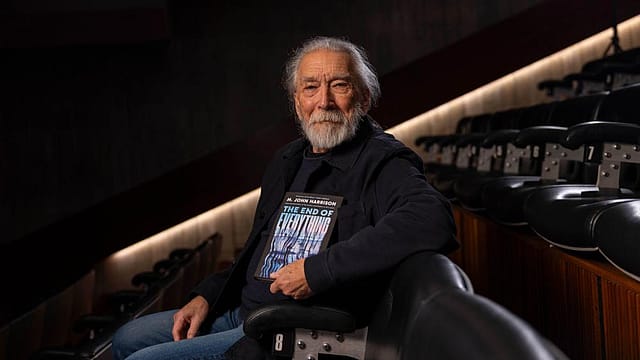
“In the beginning – if there could be said to have been a beginning – no one really understood what had happened.” The End of Everything, English author M John Harrison’s 13th novel unfolds in a version of England that feels both futuristic and familiar. An onslaught of the iGHetti, an amorphous and otherworldly life form many years ago, has changed the contours and very core of how humans live. As governments, media and society implodes, people make the best of “the bad patch”. Phillip Tennant is one of them, making his living as a beachcomber who collects artefacts from the sea (which has been full of strange things) and his elderly aunt Marnie who paints and lives between remembering and forgetting.

On November 9, The End of Everything won its author the Booker Prize 2026. Harrison, 81, became the oldest winner of the literary prize and received the award (£50,000 and a trophy) from David Szalay—author of Flesh and winner of last year’s prize—at a ceremony in London. The novel beat out five other titles to the prize: The Disappearers by Marlon James, The Things We Never Say by Elizabeth Strout, Black Bag by Luke Kennard, May We Feed The King by Rebecca Perry and John of John bu Douglas Stuart.

The Era of Forever Wars
30 Oct 2026 - Vol 05 | Issue 44
Coping with an explosive Middle East
This was the first Booker Prize nomination for Harrison, known for his genre-bending mastery over fantasy and science fiction. A former winner of the Arthur C Clarke Award, the Goldsmiths Prize and the Boardman Tasker Prize, his works include The Centauri Device (1975), Climbers (1989), The Course of the Heart (1992) Nova Swing (2006) and The Sunken Land Begins to Rise Again (2020) among others. In writing The End of Everything, Harrison conflated a well-established sci-fi trope with elements closer to our recent lived experiences, from the financial crisis of 2008 to the Covid pandemic, to create a dystopian, satirical and deliberately confounding story. “The art towns of the UK’s East Coast provided the setting. I love that coast, all the way round from Hastings to the Thames – even up into Suffolk. Current affairs provided the themes and the satire: what happens when all of our expectations and explanations of the world become an ongoing disaster, but we still have to make a life?,” the author said in an interview to the Booker Prize website.
At under 200 pages, The End of Everything was the shortest novel on this year’s shortlist. It also got Serpent’s Tail, an imprint of independent press Profile Books, which published the title its first Booker win. This year’s jury—which considered 163 books for the prize—included award-winning poet, writer and educator Raymond Antrobus; musician, writer and broadcaster Jarvis Cocker; journalist, editor and critic Rebecca Liu; and Booker Prize-shortlisted novelist, poet and essayist Patricia Lockwood. The jury was chaired by classicist, writer and broadcaster Mary Beard who said of the winning novel, “‘It’s a book that turns you upside down, raises a wry smile – and surprisingly, given the subject matter, leaves you with a twinge of optimism.”