Talk of the Town: A novelist charts the evolution of Shillong
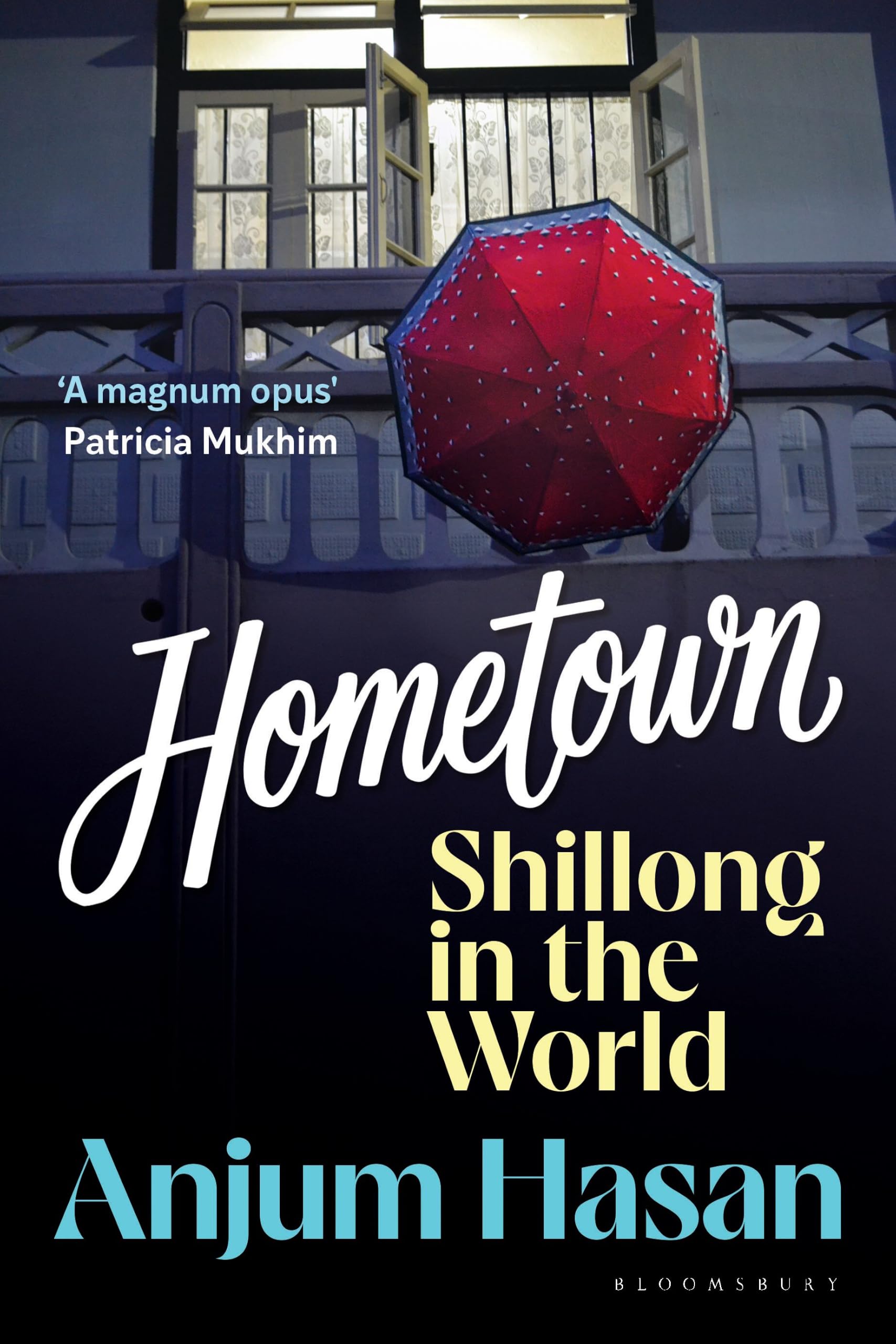
In June 1923, Rabindranath Tagore, on the second of his three trips to Shillong, wrote a letter to his young granddaughters. Shillong-er Chitti took the form of a charming, amusing poem, which includes these lines: “The horn blown by motorcars/Spraying mire on the gentle passers/Creates a lot of displeasure/That too, I couldn’t admire/Otherwise, Shillong’s a beautiful place… ”
This translation of Tagore’s paean to Shillong is by writer and educationist Uma Purkayastha, a Shillong resident who features—as does Tagore himself—in Anjum Hasan’s debut non-fiction work, Hometown: Shillong in the World. Tagore is, naturally, at a distance: one of the many people who came here and on whom Shillong made an impression. Purkayastha, or ‘Uma di’, in contrast, is very much part of the book, very present: conversing with Hasan, talking not just of Tagore and Shillong, but also of Partition, of her work as a teacher, her worries about how Shillong has changed.
Hot Pursuit
27 Nov 2026 - Vol 01 | Issue 02
The Shah Doctrine of Internal Security
The changes Shillong has seen, and continues to see, form an important element of Hometown. At the very beginning of the book, when Hasan talks of walking through Shillong, and of the great walkers who have explored this town, she writes: “… But on the whole, the middle-class that once walked have retreated into their cars and the streets are taken over by a new, more desperate lot.” What Shillong was, what it became, how it keeps on evolving, is the thread running through all of Hometown, and Hasan examines it in different ways.
The book, divided into 13 chapters and an epilogue, proceeds in a roughly chronological manner. Roughly, because while Hasan winds her way through the town’s (and Meghalaya’s) pre-colonial history, followed by the coming of the British, through the years up to Independence and beyond—this is not just a recounting of events. Instead, woven into the author’s (clearly extensive) historical research are also the stories, recollections and memoirs of various people, not the least Hasan herself. There are reflections; musings; at times memories (when discussing the ethnic riots of 1979, for example) that are deeply personal.
Nor is this merely a political history of Shillong. This is Shillong in its many and varied colours and moods. Hasan chats with rock star Lou Majaw. She travels to the limestone mines outside the city and sees, first-hand, the poverty of those who work in them. She traces the introduction and evolution of Christian evangelism in Shillong, and she bemoans the crumbling structure of the education system in the city. She dives into the world of thrift fashion. She spends time with a young woman, watching with helplessness as drug addiction wrecks the girl’s life. She explores the fragility of inter-ethnic dynamics and listens as old residents recall the high life during the post-war days.
Appropriately for a book about such an interesting, multi-faceted city, Hometown too wears many hats. It is a very personal memoir, its author firmly part of the story. It is a well-researched, well-written chronicle of a city. It is tribute; it has shades of the dirge. It is both introspective and objective, thoughtprovoking and informative.
And that subtitle—‘Shillong in the World’—makes its presence felt throughout the book. This is not just the story of a city and its people; it is also the story of how that city and its people interact with the rest of the world. There is Hasan herself, whose parents migrated to Shillong. There are famous people (Rabindranath Tagore and Subhash Chandra Bose among them) who have visited Shillong—sometimes people, too, who are famous by extension: William Makepeace Thackeray’s grandfather, ‘Sylhet’ Thackeray, is a familiar name in an unexpected place. There are the many ways in which Shillong connects to the rest of the world: through the colleges and workplaces Shillongites move out to; the music that people like Lou Majaw have made popular; the languages that overlap and intertwine.
Hometown is a gripping and insightful piece of non-fiction as well as a stunning example of storytelling. A fine debut in the realm of non-fiction by one of Indian fiction’s greatest contemporary names. n