In her new book ‘Peasants’, economic sociologist Maryam Aslany challenges the idea that small farming belongs to the past
In August 1672, an angry crowd of peasants at Den Haag (now called The Hague) killed Johan de Witt, the grand pensionary of Holland, roughly the equivalent of a prime minister. De Witt, who was being blamed for military failures, and his brother were shot, stripped and mutilated. Parts of them were cut off and sold; some reports claim that members of the crowd ate those parts in what remains one of the most gruesome episodes in the history of the Dutch Republic.
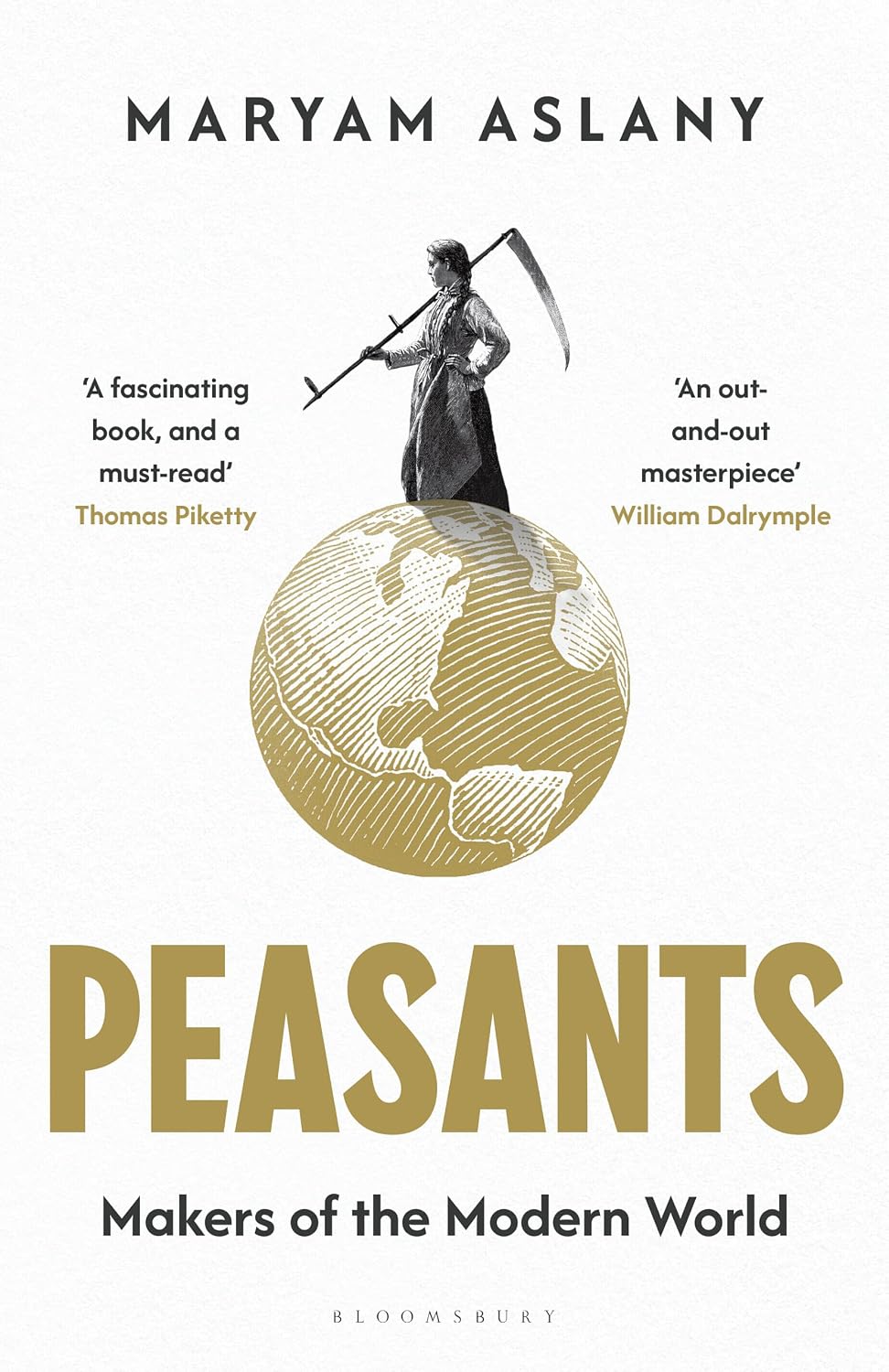
The incident is a reminder that ordinary people can alter the course of history, even when they rarely get the same space in history as kings, generals and politicians. Economic sociologist Maryam Aslany explores this neglected side of history in Peasants: Makers of the Modern World, her new book that embarks on a transcontinental journey of agricultural land around the world.
Losing Memory
16 Oct 2026 - Vol 05 | Issue 42
The making of a medical and social emergency
The book follows four crops across three continents: sugarcane in India, rice in Cambodia, coca in Peru and cocoa in Ghana. By choosing these crops, Aslany connects the peasants of faraway lands to everyday products that seem ordinary to consumers—a chocolate bar or a sugary drink. Their making begins often with a farmer whose name will never appear on the final product.
Aslany’s argument is straightforward: the peasant never disappeared. The modern world may have convinced itself that agriculture belongs to corporations, but billions of people still depend on small farms. Peasants continue to produce food and supply global industries, while striving to live with the consequences of decisions made for them.
India holds special significance for Aslany who lived and studied in Pune in the early 2000s. Her previous book Contested Capital was also rooted in the country—an examination of India’s rural middle class. In Peasants, she turns to the sugarcane farmers and migrant labourers in Maharashtra who work in difficult conditions and remain vulnerable to debt and changing prices. Visiting the farms, Aslany offers an intimate look at the lives of farmers trying to manoeuvre an economic system that gives them very few advantages.
That is one of the book’s strengths. Aslany does not romanticise rural life. The countryside can be harsh, exploitative and unequal—extra rain leaves a melon grower devastated. Failed crops, debt, climate change and weak economies can push families towards migration or more desperate choices.
The book also challenges the old notion that agriculture is simply a stage on a society’s path to modernity—villagers eventually migrate to cities and farming becomes an industrial undertaking. Aslany argues that small farmers remain central to food production and feed enormous populations. “Certain areas of the world became modern by eradicating their peasants. But that is not the only way,” she writes. “Many places became modern by preserving peasant systems and serving them to the global economy. India is one such place.”
Moving between economic history, field reporting and political analysis, Aslany writes less like an academic and more like a field researcher, taking the reader from one farmland to another. The prose can get onerous at times but it flows easily for the most part, especially when she stays close to the land and its people.
What makes Peasants worth reading is the essential question it asks: what happens when the people who fulfil the world’s needs are treated as though they no longer matter? Cheap food depends on labour that is often badly paid. Climate change makes farming uncertain. Rural economies weaken and people are forced to migrate. And yet, the people doing this work remain essential.
The Dutch mob that tore apart the de Witt brothers belonged to a different era. But its lesson remains relevant. Kings, parliamentarians or CEOs aren’t the only ones who make history. The small voices that appear at the edges of history can also decide its course.