In Many Tongues: Translations expand the map of regional stories

SITAI AND HER daughter-in-law, widows in a potter’s community, are only allowed to make clay saucers and earthen lamps. It is part of a tradition Sitai rigorously believes in. But what happens when society modernises and others stop following them? This is the question at the heart of Konkani writer Mahabaleshwar Sail’s translated story, ‘The Potter’s Kiln’.
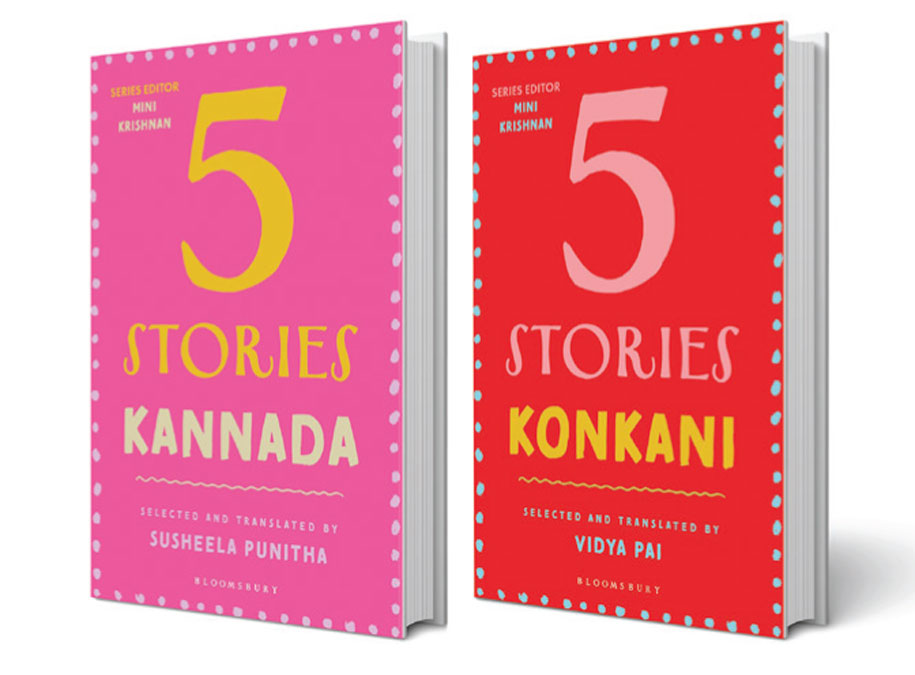
The Indian publishing ecosystem likes to talk about the language of diversity but readers still encounter only a small part of what is being written across the country. Bloomsbury India’s new 5 Stories series, edited by Mini Krishnan, is remedying this with each volume focusing on one language and containing five long short stories each. The Konkani collection, translated by Vidya Pai, makes the strongest case for the project, focusing on Goa, which enters the national imagination through beaches and cocktails. But its literature tells another story. Village remains central to the memory of work tied to the land. Writers return to small communities because that is where larger changes first become visible. A new road, a factory or a departing son can alter the life of an entire settlement. That sensibility runs through Damodar Mauzo’s story ‘Cry Now’, part of the Konkani series. The story follows a Catholic violin player and his incorrigible and wayward son who haunts the family as well as the entire village, going as far as snatching away the money meant for his mother’s tuberculosis treatment. Mauzo, who won the Jnanpith Award in 2022, writes the characters with a complexity that one finds in novels, focusing on weakness, vanity and morality.

Losing Memory
16 Oct 2026 - Vol 05 | Issue 42
The making of a medical and social emergency
Sail, a former winner of the Saraswati Samman and the Kuvempu National Award, chronicles a community outside the centre of public attention with his story. The anthology also contains Pundalik Naik’s ‘Victory’, highlighting the lives and people of rural Goa. ‘Victory’ traces the aftermath of a small transgression by a labourer that grows into a village-wide boycott of the landlord, riled up by jobless youths. The story lets readers know that dignity alone cannot fill an empty stomach. The Kannada volume, selected and translated by Susheela Pandita, highlights another set of concerns: social hierarchy, gender and faith. The writers in this volume belong to different generations, yet they share similar themes.
Banu Mushtaq’s inclusion gives the collection much of its urgency. Her fiction has consistently examined the pressures on women, particularly within poor and conservative communities. She writes with anger when required. In ‘Not a Woman’, Mushtaq, who won the International Booker Prize in 2025, tells the story of Sadiqa, sister of a jutkawallah (carriage driver), who falls in love with a businessman’s son and is expecting a child. Chaos ensues when Sadiqa’s brother finds about the pregnancy and is determined to get her married to her ‘rapist’. The tragedy in Mushtaq’s telling is that Sadiqa’s suffering remains almost incidental. Her brother worries about shame, the businessman’s family about social standing, while the young woman at the centre of the crisis is denied any agency over her own future.
Bolwar Mahamad Kunhi, through ‘Worship’, brings a humane vision to Kannada literature. Kunhi writes about faith, its role in society and how its meaning could change from one person to another. Javali Haji, a cloth merchant, considers himself to be a pious man who believes in god’s forgiveness. He brings a saint to his town who performs miracles, slowly shaking Haji’s understanding of faith. Beyond these volumes, the achievement of 5 Stories, which will also release translated works in Malayalam, Marathi, Urdu and Sinhala, lies in the fact that it reminds readers that Indian literature is not waiting to be discovered but already exists in full. Translation merely opens the door.