Being and Feeling: Michael Pollan shows why consciousness is real
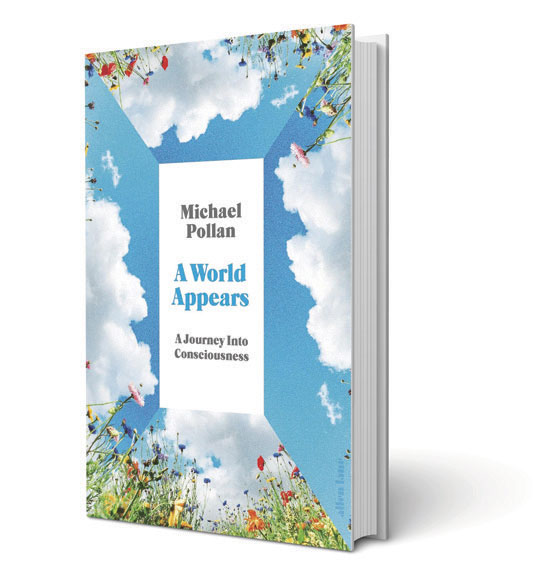
MICHAEL POLLAN is not someone who is in a hurry to take sides in an argument. His work is suggestive of curiosity than a need to draw conclusions. The Omnivore’s Dilemma, for example, was less about food and more about the hidden systems behind what we eat. How to Change Your Mind became an opportunity to ask, through psychedelics, what the mind is capable of becoming. With A World Appears, Pollan goes after the most elusive question of consciousness itself. It’s not about neuroscience or the philosophy of consciousness alone, but a deep dive into the very experience of being alive.
It is an audacious subject, perhaps the most ambitious project Pollan has taken on so far. And, wisely, he does not claim to have cracked it; instead, he goes looking for answers from scores of thinkers, from neuroscientists to meditation teachers, people who have spent their life circling the same mystery from different directions.

Zeroing In on ECI
09 Oct 2026 - Vol 05 | Issue 41
Constitutional legitimacy versus political opportunism
The book becomes an expedition on which you are invited to join; and if you do, you will realise that Pollan himself is surprised at times where the trail leads.
Reading it, I kept thinking of Anil Seth’s Being You. Seth’s central argument that consciousness is a kind of controlled hallucination has become one of the defining ideas in contemporary neuroscience. We never encounter the world raw; what we call perception is the brain’s ongoing negotiation between expectation and evidence—in other words, a controlled hallucination steered by reality.
Pollan is clearly drawn to this idea; he is drawn to it because it explains a lot, but it does not close the case. Even if we know how the brain generates a world, the question that remains is why should those predictions be accompanied by experience at all? Why should there be something it feels like to inhabit them? Pollan repeatedly drifts back towards what David Chalmers called the “hard problem”. (“Why doesn’t all this information-processing go on ‘in the dark,’ free of any inner feel?”)
Daniel Dennett occupies an altogether different place in this conversation. He spent much of his career arguing that consciousness is not a thing of mystery as philosophers have made it out to be and that it emerges from ordinary cognitive processes. Thomas Nagel, for example, suggested that a being is conscious if it is “like something” to be that being. In Pollan’s book I sensed a certain impatience with the confidence Dennett espouses. I imagine that it is because of Pollan’s firsthand experience with psychedelics which keeps some mystery for him standing. But he never declares for either side. His sympathy for scientific explanation aside, he is reluctant todismiss the intuition regarding subjective experience. The tension between Dennett’s confidence that the mystery dissolves and Chalmers’ conviction that it endures becomes a way of measuring every new theory of consciousness.
In that sense, Antonio Damasio feels like a more natural companion. For Damasio, consciousness starts with feeling and is not a matter of some abstract computation. For him the entity we call mind is something that grows out of life, which is at odds with Silicon Valley’s arrogance that computation after reaching a certain point will eventually produce consciousness. As the neuroscientist Christof Koch tells Pollan when asked what the world would look like absent all consciousness: “Particles and waves, that’s all. Dust! Just Dust!”
Pollan’s scepticism is not drawn from nostalgia or an anti-technology stance. It rests on a simple question: can intelligence become conscious without ever having inhabited a body that can feel hunger, suffer, heal, or die?
For all our algorithms and brain scans and super intelligent machines that are becoming more intelligent, the question of consciousness fact still resists reduction.
Pollan doesn’t solve the mystery, but makes it feel alive again. The rare achievement of A World Appears is that it reminds us that the mystery of consciousness is not an abstract puzzle to be solved but it must become the medium through which every other question is asked.