In Siddhesh Gautam’s 'The Blue Book', history is a graphic memory
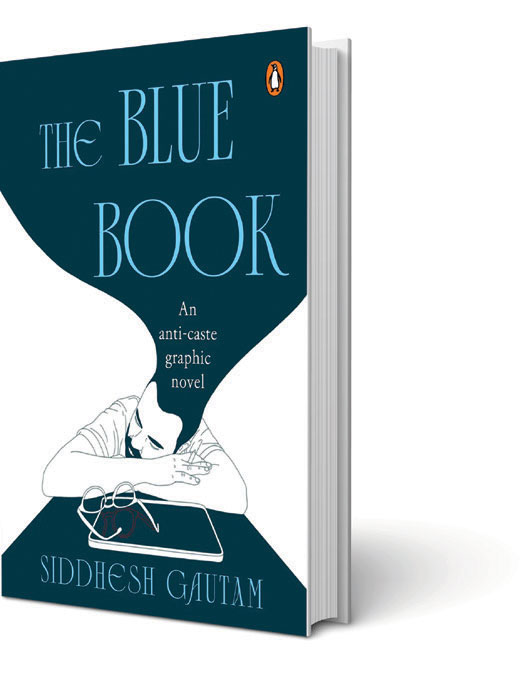
THERE HAS OFTEN been an old problem with books on caste— they ask readers to approach the subject through argument before experience. Siddhesh Gautam’s The Blue Book changes this. It begins with memory and feelings and only later arrives at politics. As a result, we get a graphic novel that is as fresh as it is thought-provoking.
Gautam places himself at the centre of the story. He is not an all-knowing narrator but a traveller moving through history, guided by questions rather than certainty. Dreams become doorways into encounters with figures from the anti-caste movement, including Savitribai Phule and BR Ambedkar, transporting the narrator, as well as others, through conversations across generations. The structure, a mix of poetry and prose, is fluid enough to move between biography, autobiography and political history without causing confusion.
Losing Memory
16 Oct 2026 - Vol 05 | Issue 42
The making of a medical and social emergency
ThetitleofthebookisanodtoAmbedkar, his blue-covered Constitution and the blue flag that have become enduring symbols of Dalit assertion. Yet, Ambedkar, in this book, has not been reduced to familiar quotations. Gautam seems to be interested in the movement that grew around Ambedkar, and especially, beyond him. Reformers and activists, as well as ordinary people, occupy the same importance.
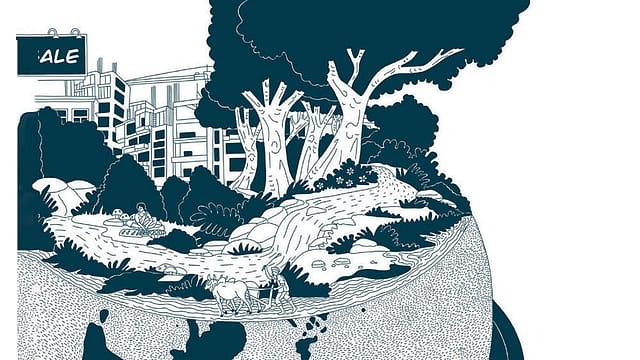
The artwork carries much of the book’s emotional weight. Gautam’s pages move comfortably between realism and symbolism. Crowded streets, railway stations, village lanes and public meetings are rendered with enough detail to ensure the stories are set in recognisable places. But in some places, the drawings are dreamlike with recurring motifs of blue skies, water and fractured landscapes suggesting hope in equal measure. The transitions rarely seem abrupt with Gautam skipping through the spaces of dreams. The transition feels normal, reflecting the way personal recollection and collective history often merge.
The Blue Book avoids extremes of too much text or visual to explain his ideas. Gautam trusts his drawings to carry meaning. A silent sequence can communicate defiance more effectively than several pages of explanation. That confidence gives the book its rhythm.
Its ambition also creates a few problems. The cast is large, and readers unfamiliar with the history of the anti-caste movement may occasionally wish for clearer signposts. Some conversations carry the burden of explaining historical context while advancing the narrative, making them feel heavier. There are moments when the dialogue sounds more like a public lecture than a conversation between people. These passages are relatively few, but they interrupt the flow.
The graphic novel arrives at a time when visual storytelling in India is growing more confident, though it still occupies a small corner of the publishing world. Gautam demonstrates that the form can accommodate complex political history without sacrificing emotional depth. His work belongs alongside the expanding body of Indian graphic literature that refuses to treat comic books as a lesser medium. The illustrations used here are not just decorative additions to an argument but they are the argument.
Readers looking for a conventional history of the anti-caste movement may find the book unconventional, sometimes even elusive. Gautam prefers associations, memories and echoes. That choice demands patience, but it also allows the past to feel alive.
The Blue Book succeeds because it shows as well as understands that movements survive through stories, not only just speeches. History here is in conversations, gestures and inherited memories. Gautam’s achievement lies in giving those memories a visual language that feels intimate without losing sight of the larger struggle. It is a thoughtful debut that broadens the possibilities of the Indian graphic novel while reminding readers that some histories are best understood not through a straight line, but through visualisation and nuanced storytelling.