The Power of Many: A novel set in the Depression era dramatises women’s solidarity

WHEN KATHRYN STOCKETT’S The Help came out 17 years ago, it became a global sensation. Set in 1960s Mississippi and following the lives of the Black maids who work for wealthy white families, the novel sold over 15 million copies and was adapted into an Oscar-nominated film starring Emma Stone and Octavia Spencer. It also caused a massive public outcry: reviewers and readers criticised the book for its ‘White Saviour’ narrative, and questioned if the protagonist—a White woman who becomes a confidant and aid for the Black maids—was the right narrator.
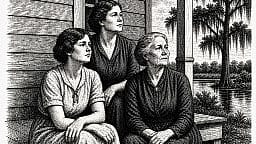
The Calamity Club, Stockett’s second novel, released after a long hiatus, is set 30 years earlier than The Help, in Oxford, Mississippi, in the aftermath of the Great Depression. Meg LeFleur is almost 12, an age she can’t wait to reach. At 12, she can leave the orphanage and work. The orphanage’s chairlady, Garnett Pittman, is needlessly cruel, banishing her from the schoolroom and locking her in a mouldy office. When Birdie, a bookkeeper who takes up a job at the orphanage arrives, Meg finds that she isn’t alone anymore. Despite their brief time together, their lives and goals become intertwined for the rest of the novel.

Losing Memory
16 Oct 2026 - Vol 05 | Issue 42
The making of a medical and social emergency
The Calamity Club doesn’t seem to take a single breath—each page is filled with discourse, plot, and movement, its characters complex and ripe with texture. While the novel touches upon the racial inequalities that were pervasive in the Deep South in the 1930s, it does so in a much quieter spirit—almost as if Stockett doesn’t want to induce the same response to this novel as The Help. Instead it is centred on gender inequalities in the South.
Exploring themes such as eugenics and reproductive rights, the novel feels timely especially in the context of the current state of women’s rights in the US and worldwide. In 1928, Mississippi passed a law that made it legal to sterilise any person deemed an imbecile, a term so vaguely defined it came to encompass the disabled, alcoholics, sex workers, and sexually promiscuous women. As Stockett writes in the author’s note, discovering this law inspired her when writing the book. In the story, women are both victims and perpetrators in the damaging system they exist within. Garnett encapsulates how these laws and systems have been historically weaponised; the harm she causes towards other women is legal and socially supported.
The men in the women’s lives constantly fail them. One deserts his family, leaving his wife and mother bankrupt. Another has a child with his mistress, then abandons her and the child. Birdie’s sister, Frances, is heartbroken when she realises her wealthy life is built on lies. She doesn’t know how to take care of herself without maids and her husband, let alone get a job and become financially independent. Birdie hopes to beg her sister for money but it is Frances who begins to depend on her. Then there is Charlie, recently released after from jail for “flirting with a colored man at the train station” and forcibly sterilised.
Together create a “dance club that was also a boardinghouse that was actually a speakeasy that was truly a brothel” in Frances’s home—which will soon be taken by the bank, unless their plan works out. At its heart, is a story of women’s resilience at every age. Meg is funny, insightful, and optimistic, even when her friend keeps telling her, “Mamas do not come back.” her friend keeps telling her. She doesn’t believe it. The novel makes readers root for a motherdaughter reunion. As Birdie, says in one chapter, she can’t live with the possibility of Meg not getting her happy ending. And neither can we.