Tharoor's Guru: Why the iconic reformer-saint Shree Narayana Guru matters more today
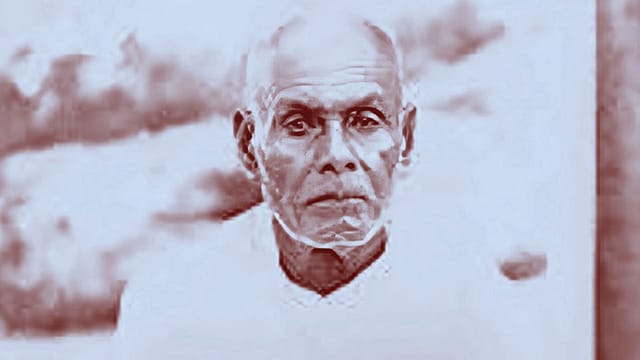
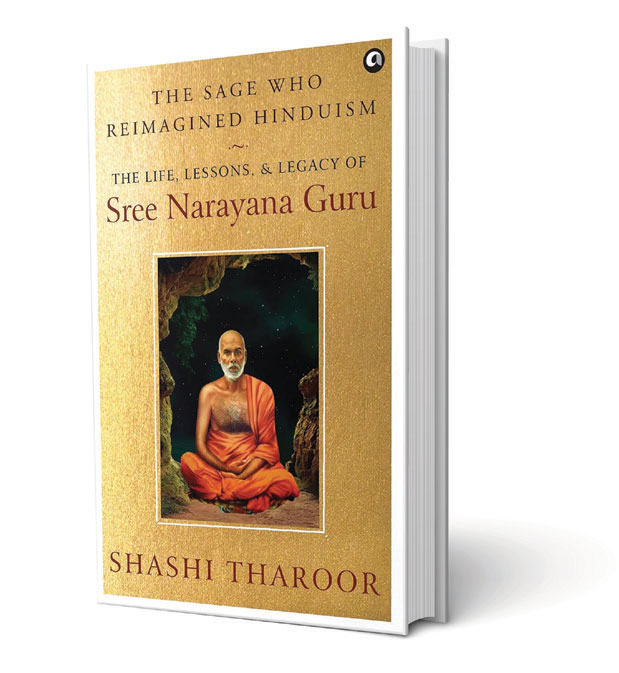
RAMACHANDRA GUHA had said a few years ago that it was a shame that there was no good biography of Kerala’s foremost reformer Sree Narayana Guru in English. Which was why although phenomenally popular inside the state, he is largely an obscure figure outside.
True, there were some books in English on Guru before Shashi Tharoor came out with his recent work titled The Sage Who Reimagined Hinduism: The Life, Lessons and Legacy of Sree Narayana Guru, but they were all either densely academic or hagiographical.
They include The Word of the Guru (1952) by Guru’s Sorbonne-educated disciple and scholar Nataraja Guru, Narayana Guru: A Life of Liberating Love (2019) by Nancy Yielding, and a few others. Nataraja Guru is a bit difficult to grasp while Yielding, for all her good intentions, couldn’t restrain herself from writing a hagiography.

Losing Memory
16 Oct 2026 - Vol 05 | Issue 42
The making of a medical and social emergency
P Chandramohan introduced Guru in good measure to non-Malayalis in his work Developmental Modernity in Kerala (2016), but it was not a biography. Writing The First Person: Literature, History, and Autobiography in Modern Kerala (2016) by Udaya Kumar falls in the same category. Perhaps the only English work that came closer to a biography is a collection of Swami John Spiers’ essays, compiled by PR Sreekumar, titled Philosopher Saint (2021).
Why did it take this long for non- Malayalam readers to gain access to the life and times of arguably the most successful social reformer of the last century? I have on my table at least 10 thick volumes penned in Malayalam on Guru by authors as scholarly as G Balakrishnan Nair, T Bhaskaran, MK Sanu, G Priyadarshan and Muni Narayana Prasad.
Guru is one of the most researched figures in Kerala. Yet, Tharoor’s is the first book—notwithstanding criticism from certain quarters about it being “Guru101”— that is intelligible and tries to offer an overview of the life of an underrated great man, a poet and a revolutionary. This is a man who was born in 1855 and later turned into a wandering monk before he was lured into leading a movement launched to correct age-old social injustices of the time. This is the story of a visionary who snapped ties with the organisation he himself had helped found when he felt that it was going astray. This is the story of a man who, having built temples with access to all—as opposed to Hindu places of worship that practised untouchability of the forms unheard of in north India— then said it is time to build schools and stop building temples.
However, the account contains many factual inaccuracies that could be addressed in a future edition. For instance, Tharoor writes that Guru consecrated the Shiva idol at Aruvippuram because the Brahmins had refused to do so, in the absence of any documentation of any such request. He also repeats the oft-misquoted version of Guru’s exhortation on education: “Vidya konduprabhudharaavuka” (Get enlightened through education). What Guru had said was to gain freedom through education (Vidya konduswathanthraraavuka).Tharoor also omits one of the most prominent figures invoked in Guru’s poem Anukambadasakam—Prophet Muhammed. Meanwhile, there has been criticism in some circles that Tharoor has tried to saffronise Guru.
But Tharoor is spot on when he writes, “In my book Why I am a Hindu, I have portrayed Hinduism as dynamic and adaptable—which it wasn’t in practice always, but reformers like the Guru saw its potential.” He adds that Narayana Guru’s legacy is “not merely spiritual—it is an enduring testament to the boundless potential of the human spirit, a blueprint for dignity, equality, and enlightenment.”
Thanks to Tharoor’s stature as an intellectual, author and politician, more people will now know about Narayana Guru.