Memory in Print: A new book revisits the politics, poise and the inner world of Atal Bihari Vajpayee
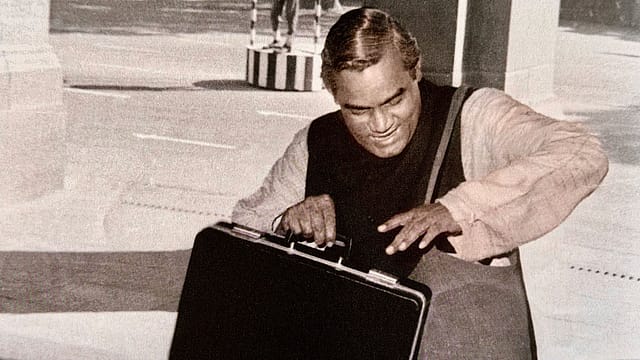
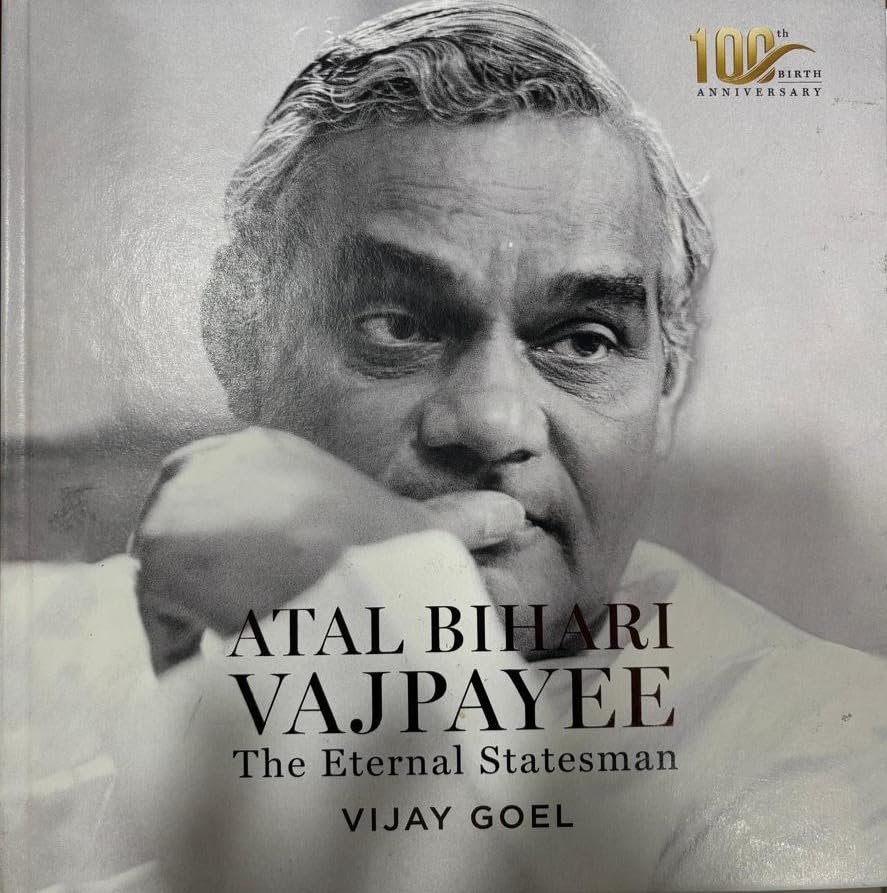
Atal Bihari Vajpayee filled a room with pauses. In Parliament, his silences were not theatrical devices or signs of hesitation. They were how he thought out loud, and over time, the Parliament learned to wait for them. That quality, the ability to hold attention without is what made Vajpayee singular. It is also what makes him difficult to capture in print. Vijay Goel’s Atal Bihari Vajpayee: The Eternal Statesman is a coffee table book, not a biography, and it does not pretend otherwise.
There is a moment from 1996 that the book returns to. Vajpayee’s first government had lasted 13 days. One vote short, the coalition had collapsed before it could properly begin. He walked to the podium to resign, before the no-confidence motion could even be put to a vote. It was the kind of exit that takes composure. The book does not dwell on it analytically, but the photographs from that period say something about a man who had made his peace with the distance between ambition and circumstance.

Zeroing In on ECI
09 Oct 2026 - Vol 05 | Issue 41
Constitutional legitimacy versus political opportunism
Goel spent 50 years watching Vajpayee up close, eventually from inside the Prime Minister's Office. Goel’s proximity to his subject is central to the book’s tone. Having shared a long political association with Vajpayee, he brings an insider’s perspective that lends the narrative a degree of intimacy. This closeness allows for a portrayal that feels personal, attentive to nuance in gesture and mood. The photographs, many of them not previously available to the public, were gathered over four years from personal collections and party archives. They run the length of a political life, but the images that work the best are the informal ones where nobody was posing for a camera. The photographs mostly work in black and white, which suits him. Vajpayee was never a man of visual excess. There is a photograph of him seated among colleagues, mid-conversation, his face caught between amusement and something more private. It does not draw attention to itself, which is probably why it stays with you longer than the bigger, more composed images do. That, in many ways, is how Vijay Goel chooses to remember Vajpayee. What the book captures well, and what most accounts of him tend to flatten, is that he was as much a listener as a speaker. Vajpayee’s political record is laid out plainly.

The rise through Jana Sangh under Syama Prasad Mookerjee and Deendayal Upadhyaya, the 13-day government, Pokhran in 1998, and then the full 1999 to 2004 term with the Golden Quadrilateral and the Lahore bus diplomacy. The partnership with Advani is dealt with honestly, with Vajpayee’s own line about not becoming Prime Minister without him included. So is his decision to back Indira Gandhi during the 1971 war, a gesture that cost him nothing politically in the short term and everything in terms of what his own party expected of him. Vajpayee was a politician who made people feel that civility in public life was not entirely lost. India has had louder Prime Ministers and more consequential ones, but very few who made even their opponents a little sad when they left. Goel has managed, across 312 pages, to make you miss someone you may never have met. That is harder to pull off than it sounds.