Forbidden Journeys: This historical fiction by Deepa Anappara is set in colonial India and Tibet and powered by the unknown
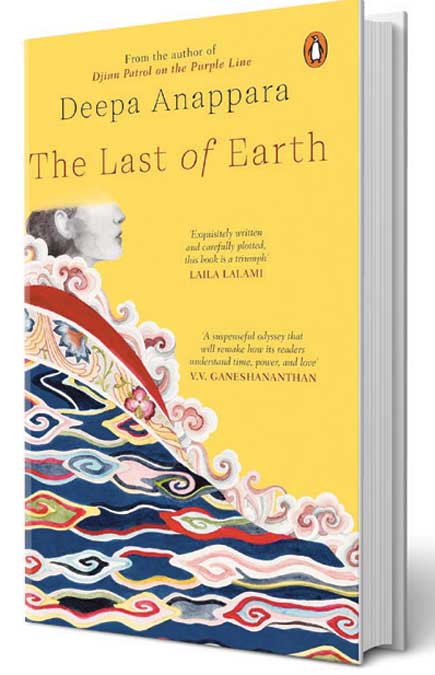
DEEPA ANAPPARA’S second novel The Last of Earth charts the topography of mountains and emotions, it surveys both the land and heart. It is a tale of adventure, but also of hauntings. It has the sweep of a historical novel and the intimacy of a chapbook. Unlike her highly acclaimed debut Djinn Patrol on the Purple Line (2020), which was set in the recognisable environs of contemporary Delhi, here she ventures far north into the mountains of Tibet. It is to Anappara’s credit that she writes of both regions with equal delicacy and familiarity.
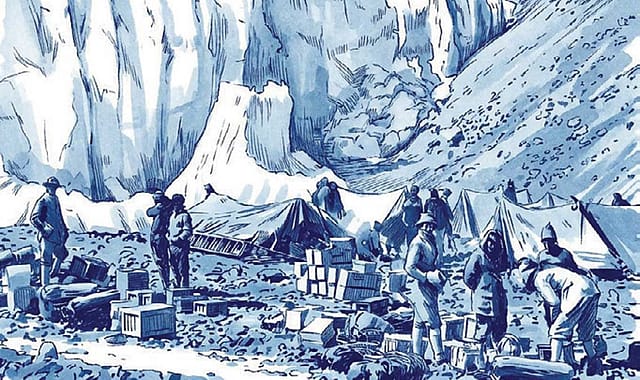
The Last of Earth tells the story of 19th-century European explorers venturing into Tibet, ‘the forbidden land’, as part of their expansionist agenda. The protagonists are an English captain in ‘brown face’ trying to pass off as a monk, who wants to chart a river that runs through southern Tibet, and another Westerner in disguise, 50-year-old Katherine who wishes to be the first European woman to reach Lhasa. The English captain and Katherine come with their own baggage. The captain was rendered nearly paralysed by a horse-riding accident as a child, but unwilling to succumb to the bed or fate, he decided to pursue a life of adventure. As an illegitimate child of mixed parentage, Katherine had always grown up as an outsider. Her pursuit of adventure as a white woman without a chaperon only further pushed her to the margins.

Losing Memory
16 Oct 2026 - Vol 05 | Issue 42
The making of a medical and social emergency
But these explorers would be nothing without the guidance of the locals. As Anappara writes, “This was the way the world worked. The white man had a want, and to sate it brown men gave up their lives.” The English captain employs Balram, a surveyor-spy, who is on his own mission to rescue his friend Gyan, believed to be imprisoned in Tibet. Similarly, to satisfy her derring-do, Katherine relies on Mani, a young monk.
Anappara writes of their journeys in cinematic detail, where the adventurers are undone by moody weather, meandering rivers, invisible snow leopards, clawing hypothermia, mysterious illnesses, falling rocks, marauding bandits, and the “Ro-lang” (“corpses woken up by an evil spirit”), which slay entire flocks of sheep in starless nights. Her vivid descriptions foregrounds nature, reducing humans to puppets in a landscape they attempt to document, but can never control.
While the colonial enterprise relies on compasses and trigonometry, the ‘natives’ have a far more in-depth understanding of the land. For Balram, “mountains and hills and lakes were like signposts…the shape of a ridge or the mouth of a cave telling him where to turn left or right.” While detailing “the height of the Great Game, when the British feared Russian incursions into India through Tibet,” Anappara masterfully excavates matters of the mind as well. This is an account of thwarted explorations, the pursuit of heroics, but also a narrative of love and loss, guilt and grief. Katherine mourning the death of her sister is especially poignant.
It is unlikely that The Last of Earth will be as feted as Anappara’s debut, named as one of the best books of the year by the New York Times, the Washington Post, etc. because it lacks its pace and resolution. Its unresolved ending risks leaving a reader a tad dissatisfied. I also wish there was more about Chetak, the bandit on the run. But what satisfies is Anappara’s moving recreation of rugged lands, and the reminder, “Ultimately no aspect of life could be changed by hope or effort alone. Always there was the unknown”. The unknown could be forces of nature, or the nature of humans and all that lies in between. It is this unknown that makes life an adventure, and reminds us that home is not found through maps, but the heart.