In ‘London Falling’, Patrick Radden Keefe Finds the Lies That Bind Families
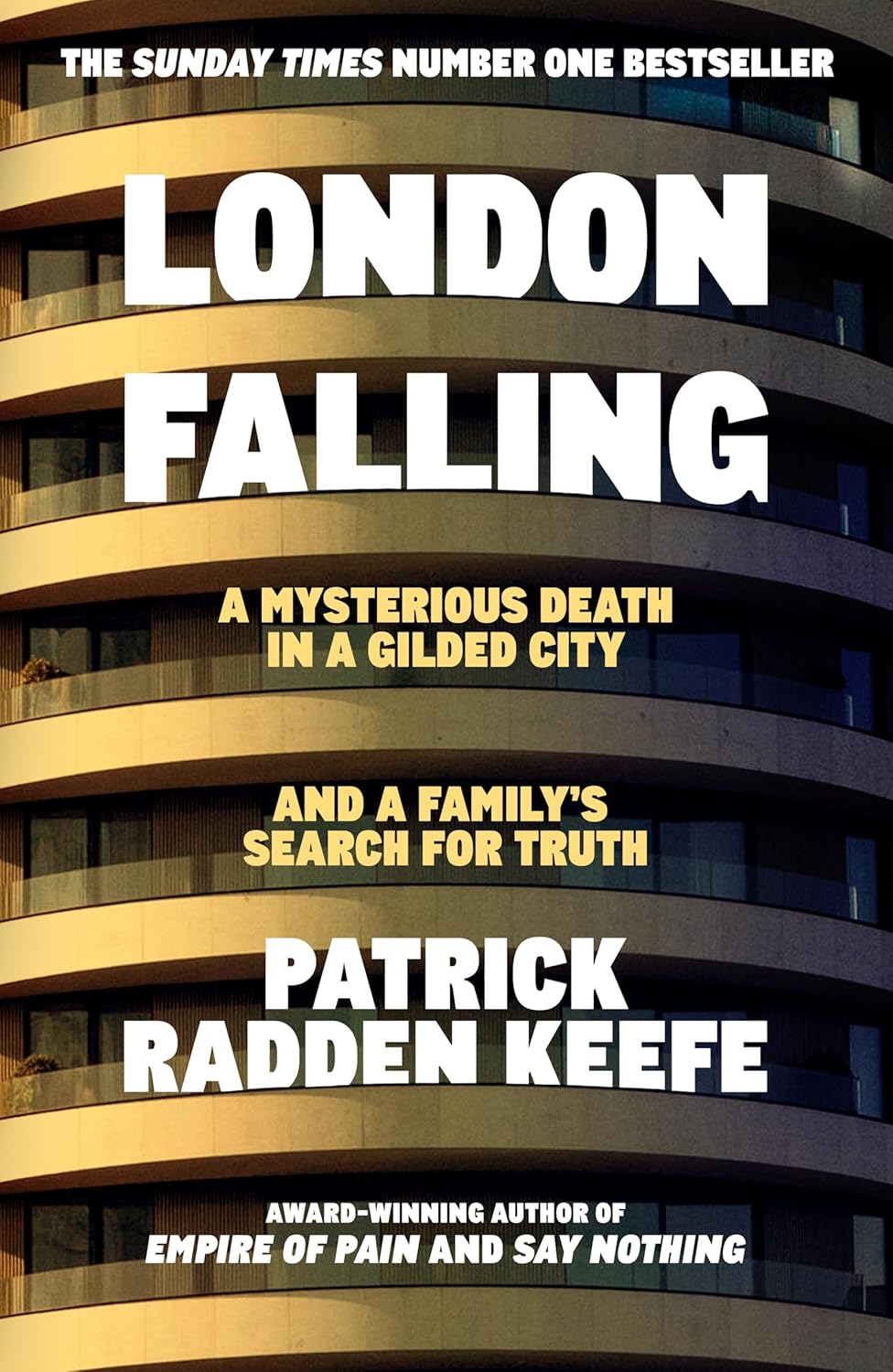
Do we ever truly know anybody, even those we consider nearest and dearest? In the social media era, with its thousand and one routes towards parallel lives, the answer is definitely, resoundingly ‘no’. On November 29, 2019, journalist Rachel Brettler and financial services director Matthew Brettler were confronted with this truth when their 19-year-old son Zac jumped off a balcony to his death into the Thames. After Zac’s death, his parents found out that their son had been leading a double life, hanging out with gangsters and loan sharks across London, pretending to be “Zac Ismailov”, the son of a billionaire Russian oligarch. The mysterious circumstances around Zac’s ‘Ismailov’ persona, and how they tied in with his tragic end, form the core of journalist Patrick Radden Keefe’s excellent new book London Falling: A Mysterious Death in a Gilded City and a Family’s Search for Truth.
There’s no doubt that young Zac was heavily influenced by social media, by the algorithm’s tendency to “blur the boundary between fantasy and reality”, as Keefe puts it. He would watch videos and reels of super-rich kids flaunting their lifestyles, showing off their latest acquisitions. But as the author is careful to point out, Zac, like so many youngsters of his generation, suffered from crippling economic anxiety, specifically the prospect of never reaching his parents’ (comfortable, upper-middle-class) socio-economic status, let alone improving upon it. London Falling strings together some illuminating interview segments from the boy’s school in this context, as well as longer and more directed conversations with the grief-stricken Brettlers.

Zeroing In on ECI
09 Oct 2026 - Vol 05 | Issue 41
Constitutional legitimacy versus political opportunism
Keefe is keenly aware that he is writing a tragedy. And yet, he never loses sight of the story’s other sociological implications: about 21st century London being a city of gross and unmissable inequalities, shaped by a heavy influx of Russian and American capital. He also has a great sense of character development and knows exactly how to use it in shaping the contours of his story. Here, he locates his central characters as a trio of conmen—Zac, 55-year-old London gangster Devinder aka ‘Indian Dave’, and 47-year-old cryptocurrency trader Akbar Shamji. All three of these people were charlatans and posers, making up stories, exaggerating aspects of themselves, manipulating those around them relentlessly. And it was clear that in the hours leading up to Zac’s death, the long-gestating battle of wits between them had reached somewhat of a boiling point.
In his previous book, Empire of Pain, Keefe told us the story of the opioid epidemic in America as a family drama, almost, featuring three generations of the Sackler family. In London Falling, too, Keefe’s usage of familial history is astute. We are told how Shamji’s father, for example, was imprisoned for perjury and hid the extent of his financial speculations from his wife and son. Zac’s maternal grandfather’s story is even more intriguing—a Holocaust survivor who becomes a rabbi but ends up fathering a secret child with one of his congregants. Deceit and secretiveness run in these families like self-fulfilling prophecies, or so Keefe seems to suggest.
Keefe’s style is brisk yet emotive and carries the unmistakeable whiff of no-nonsense, old-school narrative journalism, like so many of his New Yorker peers. In the passage excerpted below he describes an ominous meeting with one of Indian Dave’s gangster associates named Baker who had just been released from prison.
“Baker is a large man, with penetrating blue eyes, an intense handshake, and a monitor on his ankle. He commenced our conversation by inquiring after my wife and children—by name. It was a chilling introduction, but a revealing one. Baker wasn’t threatening my family per se. He was just letting me know, with a smile of exaggerated courtesy, that he knew who they were.”
Keefe knows how to strike the balance between cinematic flair and journalistic restraint. London Falling is another top-notch outing for a writer whose portfolio blends white-collar crime reporting with a Victorian novel’s sense of sprawl and scale.