Crown and country: The story of Jodhpur’s Gaj Singh II is a royal’s roadmap to a changing world
HEAVY IS THE HEAD that wears the crown. Its weight was perhaps a more physical sensation for Gaj Singh II in 1952, when he was crowned the Maharaja of Marwar-Jodhpur at a mere four years of age, following the sudden death of his father, Maharaja Hanwant Singh Rathore, in an air crash. The magnitude of the moment, and the grief woven into it, was more apparent to the adults—particularly his mother, Maharani Krishna Kumari, who was appointed the Titular Regent to the House of Marwar-Jodhpur. Yet, the young king must have been bewildered too; one is compelled to think seeing pictures from his coronation—a boy, wide-eyed and decked with finery, on the precipice of an undiscovered future.
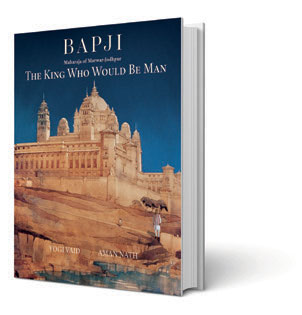
Over 70 years since, Gaj Singh II, known as Bapji, is innately associated with Marwar-Jodhpur, his crown sitting firmly if yet not lightly. In Bapji: The King Who Would Be Man, authors Yogi Vaid and Aman Nath mention Queen Elizabeth II who lamented the “historical burden” of her bejewelled crown. “But Bapji wears his crown like a beloved father,” they write.

Losing Memory
16 Oct 2026 - Vol 05 | Issue 42
The making of a medical and social emergency
Sparked by Bill Gates’ Jodhpur visit in 2012 when he met Gaj Singh, Bapji: The King Who Would Be Man is a sumptuous tome dedicated to the king—bolstered with personal stories and anecdotes, interviews and photographs. It is a portrait of a public figure whose life and place in society has evolved in tandem with contemporary India and its relationship with the monarchy.
If being born into royalty determined Gaj Singh’s destiny, his upbringing and youth shaped his outlook towards life and the evolving notion of what it means to be king. From the age of eight, he studied in England, completing his schooling from Eton before heading to Oxford in the heady latter years of the 1960s. In the book, Gaj Singh notes the significance of those years in helping him “re-establish my life and meet the challenges of our changed political circumstances in India”. He would visit home on holidays, keeping him connected to his heritage over the years before he returned at the age of 22 to a grand welcome.

During this time, the special privileges granted to royalty were removed following a constitutional amendment, turning kings into citizens—though in Jodhpur, communities continued to look up to the family and Krishna Kumari also won the Lok Sabha seat from the constituency. Through interviews, anecdotes and highlighting the projects Gaj Singh has undertaken over the years, the authors make an argument for how their protagonist renegotiated his heritage and royal legacy into a life of public service as well as cultural ambassadorship. On the one hand are initiatives like the transformation of Umaid Bhawan Palace into a luxury palace hotel and establishment of the Mehrangarh Museum Trust which placed Jodhpur on the radar of global travellers. On the other hand are endeavours such as Project Sahyog aimed at drought-proofing the water-scarce region (many kings in the past built lakes for the same reason) or setting up schools and hostels for girls. Gaj Singh’s stint as parliamentarian also finds mention and his concerns about the city’s expansion and contemporary challenges.
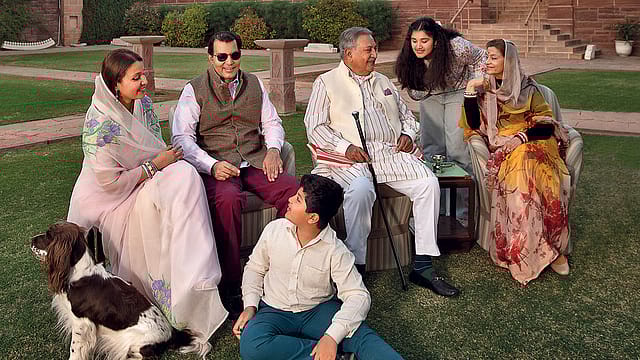
The book also travels through time, situating him in a history of the Rathore dynasty that spans more than 700 years. One chapter dwells on ancestral influences: Umaid Singh, Pratap Singh and Hanwant Singh. Their stories assemble details of their administration and governance as much as their inner lives—from Umaid Singh’s love for flying to Pratap Singh’s role in the invention of the Jodhpur trousers. Instances of Krishna Kumari’s outsized influence on the king’s life recur through the book, as do stories of his wife, Hemlata Rajye—the couple has been married for over 50 years. Their children—Shivranjani Rajye and Shivraj Singh—and grandchildren also appear, future custodians of the family legacy.
Bapji: The King Who Would Be Man is a personal chronicle, a fact it does not conceal. It argues in favour of his leadership and his vision, and his ability to navigate a changing socio-political landscape. The authors are familiar to their subject. Vaid and Nath have known each other since school, and Gaj Singh recounts in the foreword that he has known them since their “discotheque days” in Delhi during the 1970s. This intimate association gives the authors an advantage to draw out stories and details not only as chroniclers but as friends. Stories abound in the book, drawing a portrait of the king from various perspectives—his own, his wife, friends, acquaintances and children.
Readers may find themselves even more captivated by the images, laid out with flamboyance and creativity. Delightful archival images—the king as a chubby child atop a Shetland pony or with his wife on their wedding day— are juxtaposed with contemporary portraits by Amit Pasricha. Vintage photographs nod to nostalgia while newer ones shine a light on Jodhpur of the now. At all times, Gaj Singh—the king and the man—remains framed by Marwar-Jodhpur. Time may soften the edges of power and remake the laws of governance, but the king and his kingdom remain entwined.