Raghu Rai (1942-2026): The photographer who framed India in its historic moments and everyday poetics
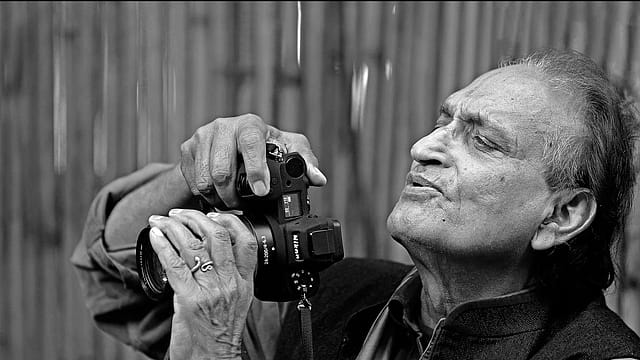
Raghu Rai’s images always seemed to live up to the adage that a picture could speak a thousand words—if one had the instinct for it. As he told Rachna Singh, who wrote the memoir Raghu Rai: Waiting for the Divine (Hawakal Publishers, 2025), “An instinctive response is free from the mind, from ideas, from all those trappings of the mind. Your instinct lives beyond your head. If you are photographing the world by your instinct, then no influence stands in your way.” One of India’s greatest photographers, Rai died on April 26 at the age of 83 leaving behind a vast body of work that spanned more than 55 years.
Born in 1942 in pre-partition Punjab, Raghu studied to be an engineer but found himself drawn to image-making in the 1960s, following his brother who was also a well-known photojournalist. Before he went on to photograph some of India’s most famous figures and landmarks, Rai learnt how to capture stillness and movement in photographs of a baby donkey in the village (Rai’s very first photograph) or sparrows in Delhi’s Chawri Bazaar. “I could constantly feel a sense of wonder and amazement at the gifts photography bestowed on me,” he said in Picturing Time: The Greatest Photographs of Raghu Rai (Aleph, 2015). “Whenever moments like this were offered up, I instinctively grabbed them.”
Losing Memory
16 Oct 2026 - Vol 05 | Issue 42
The making of a medical and social emergency
His journey took Raghu Rai across Indian newsrooms, from Hindustan Times to The Statesman where he was chief photographer, bearing witness to key moments such as Lal Bahadur Shastri’s death or Indira Gandhi during different stages of her tenure as prime minister—capturing some of her most well-known photographs. In subsequent years, Rai came to photograph many other icons including Mother Teresa and the Dalai Lama, his images becoming a chronicle of their lives—combining his admiration for his subjects with journalistic rigour. “When I take a person’s portrait, I am trying to capture the aura of the person,” he had said in the foreword of his book, People.
Rai did not merely see, or capture, the aura of the famous and influential. He could see it in a man and his wife pushing a loaded cart on the streets of Delhi (a 1975 image which filmmaker Satyajit Ray had apparently taken a great liking to): he could see it in men quietly reading their newspapers in train stations surrounded by a mass of moving bodies; he could see it in the curve of a body leaping into a pool of water. Photographed, for the most part in black and white, Rai’s images became a chronicle of the country, and its people, over the decades. His portraits were packed with power, but Rai could also shoot beautiful landscapes as seen in his images of the Taj Mahal.
Rai collected many awards and accolades, from the Padma Shri in 1972 to the Academie des Beaux Arts Photography Award – William Klein 2019. His instinct and talent caught the attention of Henri Cartier-Bresson who came across Rai’s work in the 1970s and nominated him to join Magnum Photos in 1977—the first Indian to be a member of the institution, and only one of two ever to do so (followed by Sohrab Hura decades later). Rai also expanded on his work as a photojournalist with many books and large-scale exhibitions that brought his work into gallery spaces. Rai became known and revered not only among photographers or those familiar with image-making, but also among the masses as a documentarian and chronicler.
“A photograph has picked up a fact of life, and that fact will live forever,” Rai had once said. In an age when selfies and quick smartphone camera shots has become more ubiquitous than ever and, by the same logic, more simplistic and increasingly devoid of meaning, his images serve as a reminder of the power of photography.