Jaya Asokan on art, ambition and the expanding world of India Art Fair
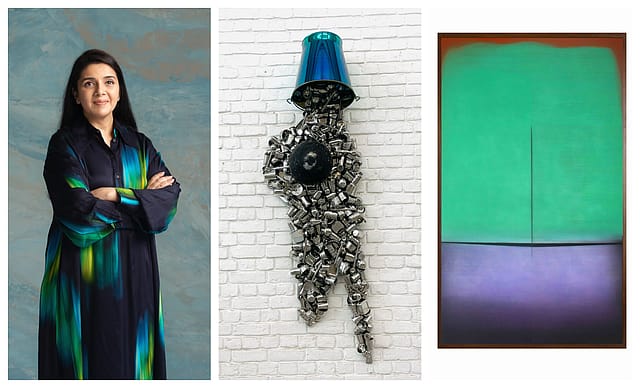
“There’s method to the madness,” says Jaya Asokan, fair director of India Art Fair set to open today in Delhi. The premier art fair, now in its 17th year, continues to draw art collectors, industry stakeholders and viewers from not only the city but across the country to see offering from art galleries, performances, talks and other engagement initiatives as well as a host of parallel events across galleries, museums and other public spaces. For a few days, the entire city transforms into an arts hub, the culmination of months of hard work by a committed team. This year, the scale of the festival is on a record high with 133 exhibitors and a number of new participants and initiatives. In the days leading up to the festival, OPEN spoke to Asokan on the year’s key agenda and highlights, regional expansion, new trends and consumer leanings, and plans for the future. Edited excerpts.
As we head towards IAF 2026, with what are the biggest talking points and agenda in Indian art today that the fair aims to engage with?
South Asian art is finally having a defining moment. Artists from the regions are finally receiving sustained international visibility, there’s a lot of market confidence and critical attention to South Asian practices. I think with a 17-year-old legacy, India Art Fair has a key role in building and strengthening this ecosystem, supporting galleries and institutions and bringing the market together. Our focus now is on deepening this growth, making it sustainable, resilient and also rooted from the inside out.
War on Iran: The War That No One Won
10 Apr 2026 - Vol 04 | Issue 66
And the price of surviving it
We are investing intentionally in regional art ecosystems. We did programming in Hyderabad, where we did IAF ED.IONS and a lot of Indian cities this year (2025). We feel that when the regional scenes are strong, the whole landscape becomes more resilient. We wanted to decentralise it from Delhi and Bombay and that was like a core kind of one of our agenda, this last year; and of course, accessibility remains central to our vision. I think, a very confident, inclusive artistic landscape is the foundation for long-term cultural growth, and whatever we do at the fair revolves around that.
IAF has over the past years curated special programmes for young collectors. What has been its impact? Can you give us a sense of this expanding demographic and the kind of art they are seeking?
We started our young collectors programme about four years ago and what we are really seeing is—the response sometimes shocks us as well. It is an overwhelming response. What we try and do is that we try and take elements off the fair and we have events through the year, which I'd say are less daunting than a white cube space. The demographic is generally, as we would say, young in their collecting journey—they don't have to be physically young, but most are 40-45 and under. We find that they approach collecting in a very different way; they want to be aligned with their own peer group, so it’s very much relationship based collecting.

I think collectors today are increasingly curious, they’re very informed and they’re also a research driven. There’s a strong interest in process-based practices, experimentation, and also in work that reflects social, political and ecological concerns. I think younger collectors in particular, are open to emerging artists and less traditional media—sound, light, textiles, archives, interdisciplinary practices. We really feel that this is something that we want to grow and nurture, because their patronage can enable these artists to follow their practices. Rather than only acquiring objects per se and paintings or sculptures, these young collectors also seeking context—conversations with artists, understanding influences, histories, long-term trajectories.
One of the emerging market trends is the role of architects and interior designers seeking art for their clients. Have you observed this at the Fair as well?
We do get a lot of interior designers and architect, which is great because then collectors are relying on informed decisions. Also, I think, that it is also a question of building confidence. The collectors who may have been doing that in the past are now making their own decisions because they’re confident enough to say ‘I like that, I want that in my house’. It’s at the early stages when they’re building houses when they're not so sure that they rely a lot on outside opinions.
We have also been hearing of the rising popularity of digital art. What kind of potential does it have?
There has definitely been curiosity around digital art among Indian collectors, particularly during the pandemic when questions of virtuality and access became unavoidable, I don't think that interest has entirely displaced a long-standing preference for material object-based work but what we’re seeing right now is a more measured engagement. I think collectors are taking time to understand the medium—context, long-term implications of buying. So for us, at the Fair, digital art represents a very important frontier. We find many younger artists using tools such as AI, AR or VR not as novelties but as serious artistic language.
I think of the market as still evolving. Yes, we do have certain buyers buying digital art, but while these practices are reshaping the contemporary art landscape, we have to also see and observe the openness among collectors to engage with this work. We also need to look at frameworks for payments, what is legally allowed, and reflect on the security of buying in this space.
With so many galleries and artists coming together, do you see any common features, or trends, for lack of a better word, among the offerings?
There is a noticeable shift toward material intelligence—artists deeply engaging with craft practices, labour, archives, traditions like inherited knowledge systems. So many practices are responding to questions about identity, memory, belonging through, mixed media, hybrid and interdisciplinary forms. The galleries, therefore, are also taking a little more risk, presenting research driven bodies of work rather than purely commercial selection.
Are there any enduring ideas from past editions that will continue to resonate this year or even in India art in the foreseeable future?
I think commitment to regional diversity continues to shape the fair and emphasis on dialogue. We have a huge non-commercial aspect of the fair which not many people know about. But we have talks, performance art, tours; we have workshops for differently able people. Accessibility remains important to us and long-term ecosystem building—they're not really trends, but they're very much ongoing commitments.
Over the years, we have seen a lot of programming at the Fair, a lot of geared towards conversation. Art is often seen as a financial investment and do such events help collectors engage better and develop a more personal relation to the art?
Absolutely. Although I feel that people who are more concerned with value per se could be those who are already buying in the secondary market—in auctions, and they veer a little bit more towards the Masters. That side of the market is a lot more transparent, because there are benchmarks, pricing.
I feel that these events do help [collectors], but I think that it’s more in the space of not only emerging but let’s say contemporary practices of living artists—where they can also then interact with them and define for themselves what they want to spend on, who is doing well. Basically, the way art is being experienced is quite different now—it’ss not only like a white cube space. We find that there are very interesting ways to engage and that's why we've started doing a lot of things for the rest of the year—some small format, some large, some academic, some more social to grow these interactions.
What are your plans for the future, and your vision for IAF?
I think it would be to maybe break the silos a little bit. We launched the design pavilion (at IAF) three years ago. I was very keen to do that, because I really felt that design in India stands on this 2000-year-old tradition of craft. We’ve always showcased craft to the fair, so I feel like it was a natural segue into design. We have an architectural pavilion at the Fair (this year), and so I feel that all these practices—art, design, architecture—they live with each other but we kind of put them in silos and present them separately, We need to have conversations amongst this whole cohort of people, and it’s really then about pushing the envelope together in terms of what all of us do.
Highlights from India Art Fair 2026
The facade created by Afrah Shafiq features embroidery motifs and practices; an interactive AR layer allows visitors to explore the meanings and histories of the motifs
The Outdoor Art Projects showcases ‘Extinction Archive’ by Kulpreet Singh (KNMA), ‘The Charpai Project’ by Ayush Kasliwal x Goji (Serendipity Arts) and ‘Recycle of Life’ by Paresh Maity (Art Alive Gallery)
The Design section has become a key part of the fair, and this year’s debut participants include Sabyasachi Art Foundation Gallery, Ardee Foundation and Mapin Foundation while past participants such as Vikram Goyal returns with
The performance art programme, curated by Nikhil Chopra with HH Art Spaces includes artists such as Yuko Kaseki, Uriel Barthélémi, and Suman Sridhar/Black Mamba
Artist Natasha Preenja aka Princess Pea is in the spotlight as the first recipient of the inaugural Swali Craft Prize, presented by Karishma Swali and the Chanakya Foundation in partnership with IAF
An exhibition titled Omens. Organisms. Objects. Order, curated by Wribhu Borphukon, is on showcase at Triveni Kala as part of the Young Collectors’ Programme (YCP)
Parallel programmes include a Jitish Kallat exhibition at Bikaner House; Ai Weiwei’s first solo exhibition in India by Nature Morte; a retrospective of Tyeb Mehta by KNMA; a new body of work by Sudarshan Shetty by GALLERYSKE and solo exhibitions of Manjit Bawa and Atul Dodiya by Vadehra Art Gallery