Mani Sankar Mukhopadhyay: The Man Who Gave Kolkata a Soul
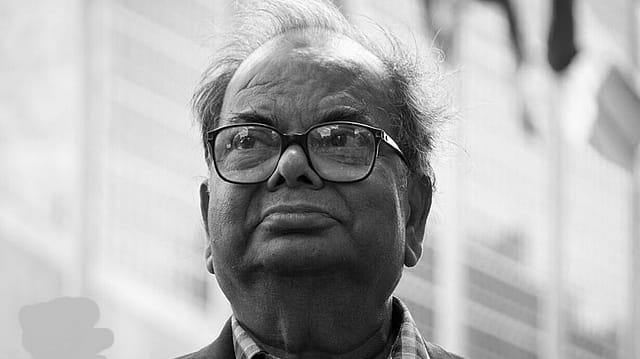
Mani Sankar Mukhopadhyay, the celebrated Bengali novelist known to generations simply as Sankar, died in Kolkata on Friday. He was 93 and had been undergoing treatment at a private hospital. With his passing, Bengal loses one of its most widely read storytellers, an author who transformed the anxieties, ambitions and moral tensions of urban life into enduring fiction.
Best known for his 1962 novel Chowringhee, Sankar built a body of work that captured the changing face of post-Independence Calcutta with rare immediacy. The novel, set in the Shahjahan Hotel, followed a young man forced to rebuild his life after the sudden death of his English employer. What unfolded was more than a workplace drama; it became a layered portrait of class, aspiration and quiet desperation in a city learning to survive on its own.
Chowringhee was adapted into a landmark 1968 film featuring Uttam Kumar, cementing its place in Bengali popular culture. Two of his other major novels, Seemabaddha and Jana Aranya, were adapted by Satyajit Ray in 1971 and 1975 as part of the filmmaker’s Calcutta Trilogy. Through corporate boardrooms, job markets and middle-class households, those stories explored the ethical compromises and rat race of a rapidly modernising city.
Born on December 7, 1933, in Jessore (now in Bangladesh), Sankar grew up in Howrah after his family moved before World War II. His early life was marked by hardship. After losing his father as a teenager, he worked as a clerk to Noel Frederick Barwell, the last English barrister practising at the Calcutta High Court. That experience became the basis of his first novel, Kato Ajanare, which established him as a powerful new literary voice. Ritwik Ghatak began adapting it for the screen in 1959, though the project remained incomplete.

The MissOil Strike
03 Apr 2026 - Vol 04 | Issue 65
The War on Energy Security
Over a career spanning decades, Sankar wrote nearly a hundred stories and novels. Alongside fiction, he authored several research-based works on Swami Vivekananda, including a major project completed in 2022. In 2021, he was awarded the Sahitya Akademi Award, one of India’s highest literary honours.
His fiction, often rooted in offices, hotels and the everyday machinery of urban life, resonated deeply with middle-class readers. In the 1960s and 70s, his books were as common in Bengali households as the works of Tagore and Sarat Chandra, readers recall.
Prime Minister Narendra Modi described Sankar as a “towering figure in Bengali literature,” while West Bengal Chief Minister Mamata Banerjee called his death an “irreparable loss” to the state’s cultural world. Sankar is survived by his two daughters.
For decades, he documented a city negotiating ambition and compromise. In doing so, he ensured that Kolkata’s struggles—and its stubborn hope—would remain on record.