Work From Home Again? South Korea Cuts Shower Time, Asian Nations Struggle to Save Energy
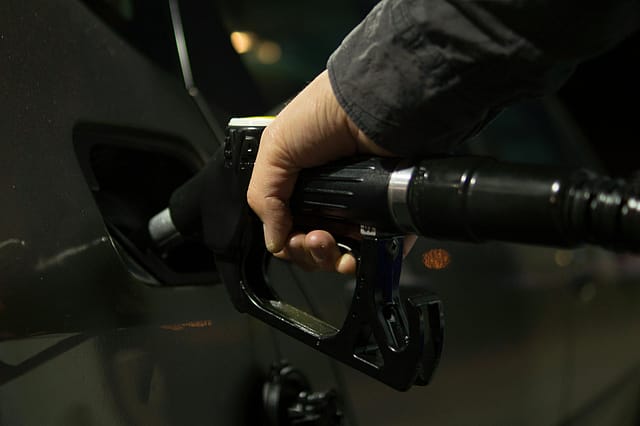
The global oil crisis triggered by the US-Israeli war on Iran is prompting governments across Asia to revisit pandemic-era strategies such as work-from-home policies and stimulus measures, as fuel shortages intensify and energy prices remain elevated.
It is not just PM Narendra Modi who has drawn parallels with the Covid-19 pandemic. Countries across the region are weighing similar responses as they grapple with supply disruptions.
Asia remains at the frontline of the crisis, purchasing more than 80 per cent of crude that passes through the Strait of Hormuz, which has been almost entirely blocked by Iran since the conflict began on February 28.

Zeroing In on ECI
09 Oct 2026 - Vol 05 | Issue 41
Constitutional legitimacy versus political opportunism
With fuel costs surging, governments worldwide are being urged to reduce driving speed limits and encourage remote work.
While no Asian country has yet implemented work-from-home mandates, several have indicated that such measures are under consideration.
How Is Asia Considering Work-From-Home to Tackle the Global Energy Crisis?
"I think it is a good idea," South Korean energy minister Kim Sung-whan said on Tuesday when asked about recommendations from the International Energy Agency.
The IEA has proposed 10 measures to reduce global energy consumption, covering transport, residential use and workplace practices.
Its executive director Fatih Birol told the BBC that the world was facing "the greatest global energy security threat in history" and it was time for governments to become "more vocal" about energy use.
Such steps may be politically sensitive, he acknowledged, but high prices mean people have a "big incentive" to adapt.
The agency has already agreed to release around 400 million barrels of oil from strategic reserves and has suggested measures such as working from home and avoiding air travel to ease price pressures.
How Are Asian Countries Implementing Energy Consumption Curbs Amid the Oil Crisis?
Birol reiterated these recommendations at a conference in Sydney this week.
Several Asian nations have already introduced consumption curbs. Bangladesh has capped air conditioning at 25 degrees Celsius, while Thailand has set a 26-degree limit.
Some countries are shortening school and university hours and restricting official travel. Pakistan and the Philippines have introduced a four-day work week for public servants.
South Korea has launched a public campaign encouraging citizens to cut shower time, charge phones during the day and run vacuum cleaners on weekends.
"We will consult with relevant ministries and actively consider measures for work-from-home,” Kim said.
How Is the Philippines Responding to the Energy Crisis with Shorter Work Weeks?
The Philippines, heavily reliant on Middle Eastern oil, has shortened the work week in some government offices.
President Ferdinand Marcos declared a state of national energy emergency, warning the conflict poses an "imminent danger" to the country's energy supply.
Pakistan has closed schools for two weeks and advised office workers to work more from home. Sri Lanka has declared a public holiday every Wednesday to conserve fuel.
Singapore has urged citizens and businesses to adopt energy-efficient appliances, switch to electric vehicles and increase air conditioning temperatures.
Thailand’s Prime Minister Anutin Charnvirakul has ordered bureaucrats to suspend overseas travel, set air conditioning above 25 degrees Celsius, avoid suits and ties, use stairs instead of elevators and work remotely.
The IEA has also recommended promoting public transport, allowing private vehicles into city centres on alternate days, encouraging carpooling and improving driving efficiency.
How Are Countries Preserving LPG and Managing Fuel Consumption Amid the Crisis?
It has called for preserving liquefied petroleum gas for essential uses by shifting biofuel vehicles to gas and reducing consumption elsewhere.
Governments are also turning to fiscal support as rising fuel costs strain households. Japan plans to deploy 800 billion yen in reserve funds to subsidise gasoline prices at around 170 yen per litre, at a potential monthly cost of 300 billion yen.
New Zealand has announced temporary weekly support of NZ$50 for low-income families.
"We know these families will be hit particularly hard by the global fuel-price shock. We are delivering them timely relief," finance minister Nicola Willis said.
In Australia, shortages have led to panic buying, with remote regions particularly affected. The government has introduced legislation to double penalties for fuel price gouging.
Several countries have also released fuel from domestic reserves and relaxed quality standards to boost supply. The IEA indicated that further stock releases remain an option.
"If we believe that there is a need" to "alleviate the pain on the economy", Birol said, adding that discussions were ongoing with global leaders.
"I believe the world has not yet well understood the depth of the energy security challenge we are facing," he said. "It is much bigger than what we had in the 1970s... It is also bigger than the natural gas price shock we experienced after Russia's invasion of Ukraine."
Unlike during the pandemic, central banks are not moving to cut interest rates.
Instead, many are considering hikes as inflation risks mount. The Reserve Bank of Australia has already raised rates twice this year, citing energy risks as a key driver of inflation.
In India, households are now waiting up to 35 days for cooking gas cylinder refills. The government maintains the situation is "worrisome" but under control for now, with future stability hinging on developments in the Strait of Hormuz.
(With inputs from ANI)