Who Was Israel’s Agent M? Mossad Chief Reveals Covert Operative’s Death In 2023
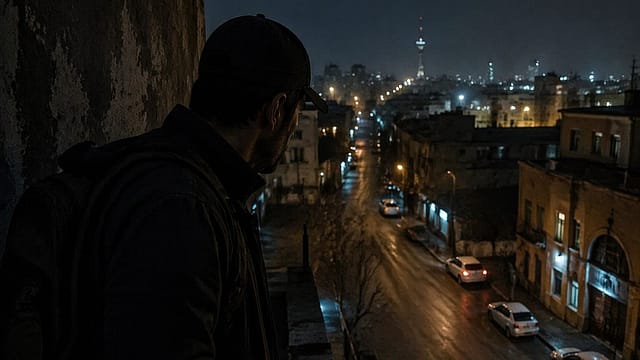
As Israel paused to honour its fallen, a rare disclosure from its intelligence leadership cast new light on the shadow war against Iran. The revelation came amid emotional ceremonies, political tensions, and stark warnings about ongoing threats.
What did the Mossad chief reveal about the Iran campaign?
Dedi Barnea publicly confirmed that a Mossad operative was killed in 2023 during operations tied to the campaign against Iran, marking the first acknowledged fatality of its kind.
Speaking at a memorial ceremony, he identified the agent only as “M.” and noted the operative was killed outside Israel, though not inside Iran itself.
“During the Lion's Roar campaign, my thoughts and heart were filled with pride in the figure and actions of M.,” Barnea said.
He added, “the operations led by M. combined creativity, cunning, and technology and significantly influenced the success of the campaign against Iran.”

Zeroing In on ECI
09 Oct 2026 - Vol 05 | Issue 41
Constitutional legitimacy versus political opportunism
The statement offers a rare glimpse into Israel’s covert activities, which are typically shrouded in secrecy.
How did Israel frame the broader threat from Iran?
At the state ceremony on Mount Herzl, Prime Minister Benjamin Netanyahu placed the conflict within a historical narrative of existential threats.
“In every generation, people rise up against us to destroy us - even in this generation,” Netanyahu said.
Focusing on Iran’s nuclear ambitions, he claimed Israel and the United States had averted a catastrophic scenario, warning that Iranian nuclear sites “could have joined Auschwitz, Majdanek and Treblinka.”
Why was October 7 mentioned during the ceremony?
Netanyahu linked the Iran conflict to the Hamas-led attack of October 7, 2023, arguing it reinforced Israel’s enduring mission.
He said the events underscored the need “to protect the home, the people and the state.”
In a personal moment, he invoked his brother, Yoni Netanyahu, who died during the 1976 Entebbe operation, saying: “There is not a day that I don't think about you.”
What warnings did Israel issue to its regional adversaries?
Defence Minister Israel Katz issued a stark warning to Hezbollah leader Naim Qassem.
He said Qassem would “pay with the loss of his head” for attacks against Israel, while asserting that Israeli military operations would continue even during ceasefires to maintain deterrence and protect northern communities.
What political tensions surfaced during Memorial Day?
Despite the solemn occasion, ceremonies were marked by visible public dissent.
At cemeteries in Tel Aviv, Dimona, and Ashdod, some attendees protested, shouted during speeches, or walked out in response to remarks by government officials.
In the northern Druze village of Isfiya, spiritual leader Mowafaq Tarif criticised the government over long-standing infrastructure and housing concerns.
During remarks by Energy Minister Eli Cohen, attendees shouted accusations of neglect, claiming state policies were harming local families.
What is the significance of Israel’s Memorial Day?
Israel’s Memorial Day commemorates more than 25,000 soldiers and over 5,000 victims of hostilities since the country’s founding.
The day is marked by a nationwide two-minute siren and ceremonies attended by top leaders, including President Isaac Herzog and Knesset Speaker Amir Ohana.
It transitions directly into Independence Day, symbolised by a nationally televised torch-lighting ceremony at sundown.
What does this moment reveal about Israel today?
The public acknowledgment of a Mossad casualty underscores the intensity of Israel’s covert confrontation with Iran, even as official narratives remain tightly controlled.
At the same time, the protests and emotional disruptions during Memorial Day highlight internal divisions, suggesting that alongside external threats, Israel is also grappling with domestic strains over leadership, policy, and national direction.
(With inputs from ANI)