What Went Wrong? The East India Company’s Luxury Comeback Ends in Liquidation
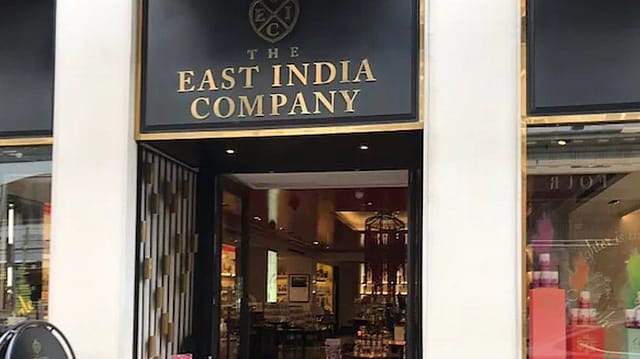
The East India Company - once the most powerful commercial enterprise in the world - has shut down again. Its modern revival as a London luxury retailer, owned by Indian entrepreneur Sanjiv Mehta, has gone into liquidation. The company appointed liquidators in October 2025.
Here’s a more detailed insight.
What is the East India Company?
A British trading corporation founded in 1600, it grew from a spice-trading outfit into a corporate-state hybrid that administered large parts of India. At its peak, it reportedly commanded armies of around 260,000 soldiers - twice the size of the British Army at the time.
After the 1857 Rebellion, the British Crown took direct control of India. The Company was formally dissolved on June 1, 1874.
Who revived it and how?
Mumbai-born British businessman Sanjiv Mehta. In the early 2000s, a group of shareholders still holding the East India Company name were attempting to relaunch it as a wholesale operation. Mehta tracked them down, acquired the brand rights reportedly around 2005, and officially launched the revived company in 2010 as a luxury lifestyle brand. He reportedly invested over 12 million euros ahead of the relaunch.

Zeroing In on ECI
09 Oct 2026 - Vol 05 | Issue 41
Constitutional legitimacy versus political opportunism
What did the revived brand sell?
It operated a 2,000 sq ft flagship store at 97 New Bond Street in Mayfair, London, selling premium teas, chocolates, confectionery, and spices. Mehta positioned it alongside heritage retailers like Fortnum & Mason, with wider ambitions in jewellery, gin, and furniture.
Why was this seen as a big deal?
The acquisition was widely framed as a symbolic reversal in Indian history - the colonised taking ownership of the coloniser's most powerful instrument of trade. Mehta told the media in 2010, "I had this huge feeling of redemption - the feeling of owning a company that once owned us."
He told The Guardian in 2017 that the new company was built on compassion, in contrast to the aggression of its predecessor.
So what went wrong?
A contracting post-pandemic luxury retail market in the United Kingdom. Sustaining a high-rent flagship on New Bond Street proved unviable. The firm owed more than £600,000 (approximately Rs 6.3 crore) to its British Virgin Islands-registered parent group, £193,789 (approximately Rs 2.03 crore) in unpaid taxes, and £163,105 (around Rs 1.71 crore) to employees.
When did it officially collapse?
The East India Company Limited appointed liquidators back in October 2025. A related entity - East India Company Collections Limited - was reportedly hit with a winding-up petition. The Mayfair store is now empty and listed for rent. The company website is down.
Are other Mehta-linked entities affected?
Several other companies bearing the "East India" name and linked to Mehta have also been dissolved. The full scope of the wind-down has not been detailed in public records.
What happens to the brand now?
Liquidation proceedings will determine the disposal of brand assets and intellectual property. Whether the name gets acquired again - by Mehta or anyone else - remains unknown, although another revival seems unlikely.
(With inputs from yMedia)