What Is Seven-Layer Tea? How Romesh Gour Turned a Local Idea into Global Fame
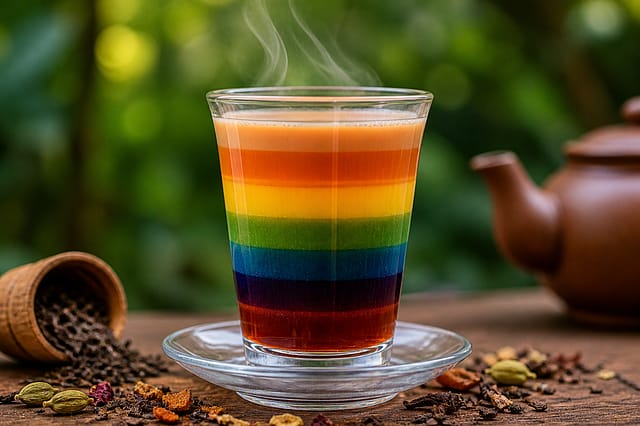
In the tea-rich town of Sreemangal in Bangladesh, a simple experiment turned into a global attraction. Romesh Ram Gour’s seven-layer tea is not just a beverage, it is a story of innovation, secrecy, and tourism-driven transformation.
How did Romesh Ram Gour invent the seven-layer tea?
Romesh Ram Gour, credited as the first inventor of colour and layered tea, began his journey in 2002 in Sreemangal, a region located 183 kilometres east of Dhaka. What started as a two-layer experiment soon evolved into something far more complex.
He gradually added layers over time. First two, then three, four, five, and eventually seven—each layer distinct in both colour and taste. His innovation gained massive attention after being featured on a popular Bangladesh Television magazine show, making him an overnight sensation.
What makes the seven-layer tea unique?
The defining feature of this tea is that each layer has a different flavour profile, making it a multi-sensory experience rather than just a drink.
Greening the Future
23 Jul 2026 - Vol 05 | Issue 30
Securing a sustainable India
"Each layer of this tea has a different taste, meaning each layer offers a distinct flavor. The former Prime Minister of Bangladesh, Sheikh Hasina, along with her family, the former President, Badruddoza Chowdhury, and many celebrities from India also came--many celebrities drank this tea. And special individuals, celebrities, and notable people from 112 countries came to Sreemangal to drink this tea", Romesh Ram Gour told ANI in an interview.
Another remarkable aspect is its stability. The layers remain separate for hours before gradually blending.
"This seven-layer tea does not mix between the layers for about six hours. After six hours, they gradually mix. However, I will not sell the process or the patent of making this seven-layer tea to anyone. Up to now, many people from Bangladesh and 11 other countries have offered me millions of taka, but I have not sold it. As long as I am alive, I will keep it, and if I am gone, my son or my descendants will keep it. But we will never sell it. Now, it is seen that many are selling fake versions of this seven-layer colored tea. So, I would say, stay away from the fake ones", he added.
How did this tea transform a remote area into a tourist hub?
Before Gour’s invention gained popularity, the area where he sold his tea—Manipuri Para—was relatively secluded. However, the fame of the seven-layer tea drew visitors from across Bangladesh and abroad.
As tourism increased, the locality underwent rapid development. Markets, particularly those selling Manipuri textiles, flourished, turning the once-quiet area into a bustling commercial and cultural hotspot.
Is the seven-layer tea safe to drink?
Despite its unusual appearance, the tea has undergone multiple scientific examinations to verify its safety.
"In 2004, a special team of 30 experts from Japan took samples from each layer using their equipment. They tested it, and after testing, they found that there was nothing harmful, no chemicals, and for this reason, they also promoted this tea on Japanese television. Besides this, the Bangladesh Tea Board, Bangladesh University of Engineering and Technology (BUET), and the Bangladesh Tea Research Institute each conducted studies on this tea, tested it, and none of them found anything harmful; rather, they declared it safe for consumption", Gour said.
These endorsements have further strengthened its credibility and global appeal.
(With inputs from ANI)